Also known as the Ornate dog tick, Meadow tick
Hosts
Most medium-sized mammals: sheep, cattle, dog, horse, pig, human
Distribution
Widespread across western Europe.
Dermacentor reticulatus is mainly found in wooded areas across Western Europe. However it is largely found in coastal areas within the UK (West Wales and SW England, with a recently discovered population in Essex).
Pathogenesis
Dogs: Babesia canis
Other pathogens and diseases that have been associated with D.reticulatus include:
Babesia ovis
Theileria ovis
Coxiella burnetti (Q fever)
Francisella tularensis
Brucella
Rickettsia conorii (Boutonneuse fever)
Anaplasma ovis
Babesia caballi
Theileria equi
Infectious encephalomyelitis
Description
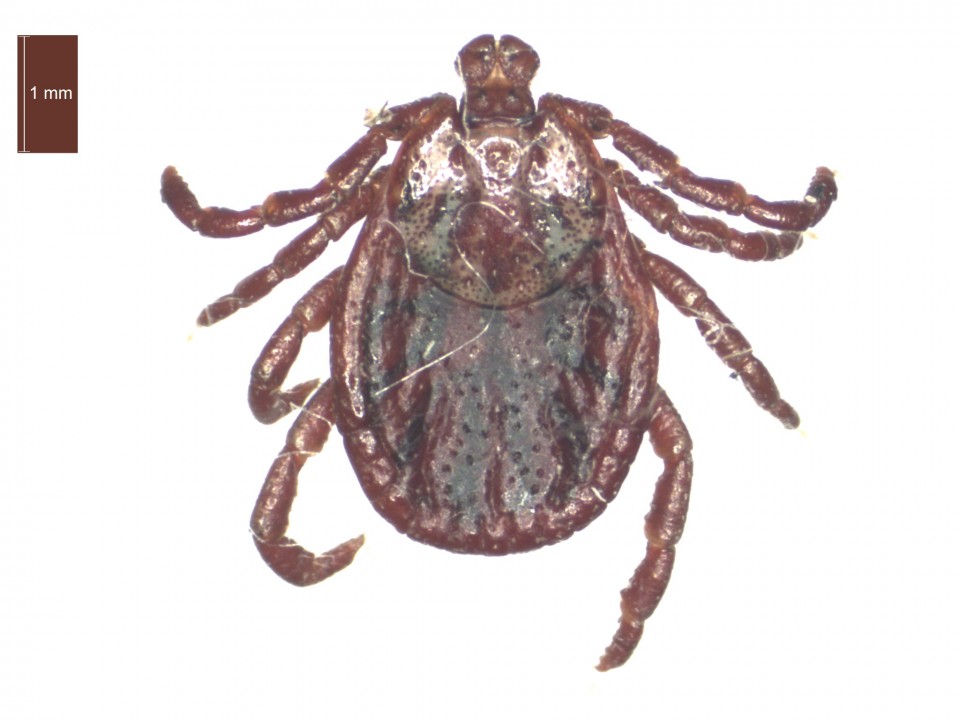
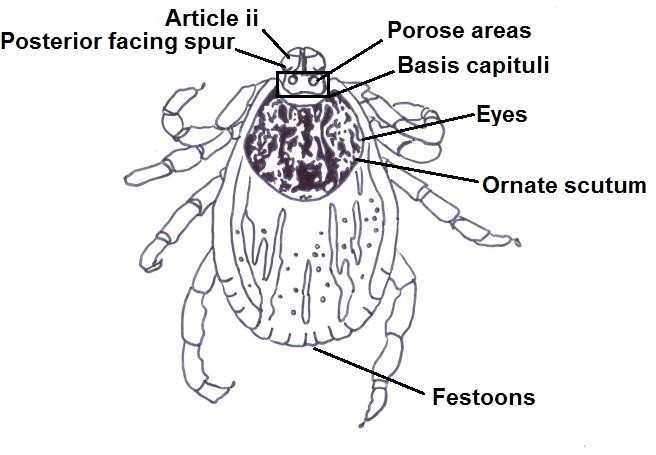
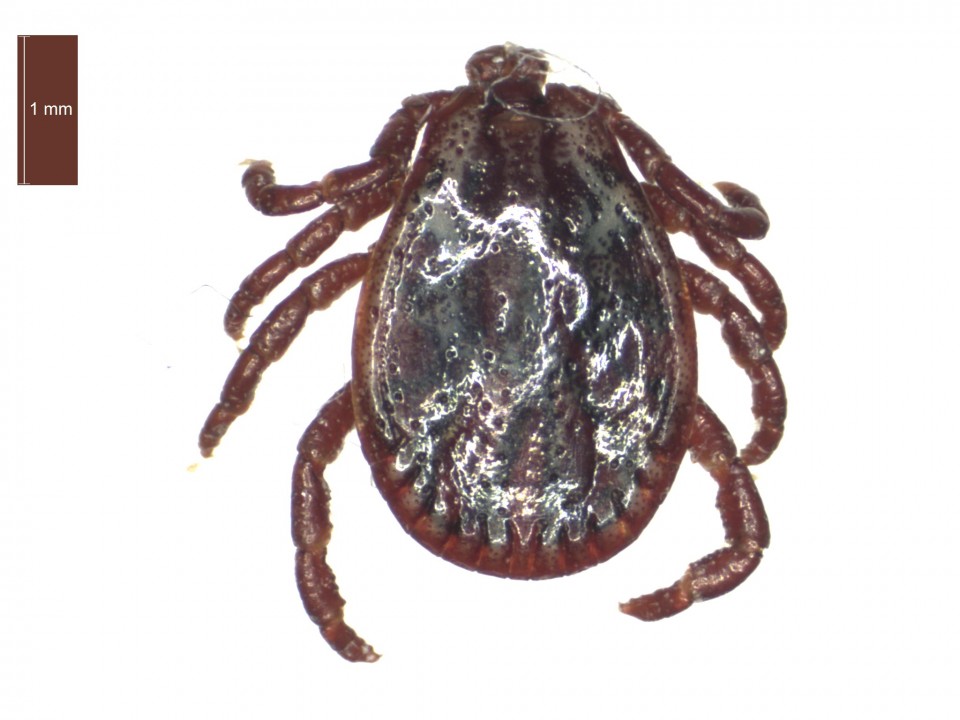
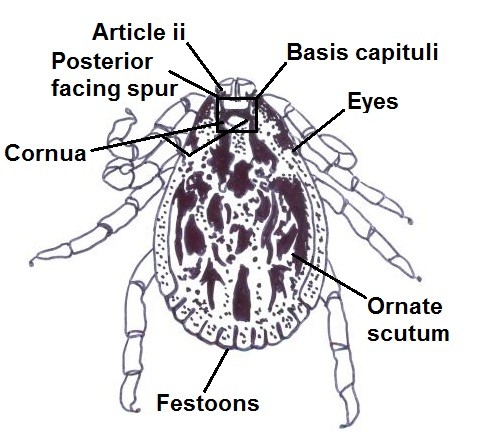
Adult female dorsal features
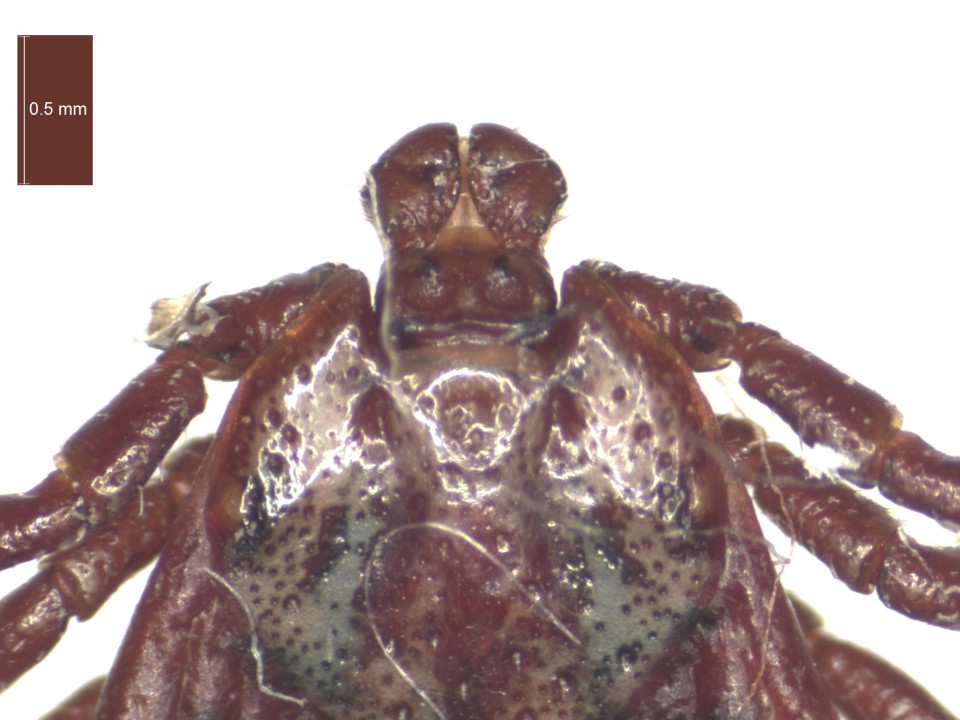
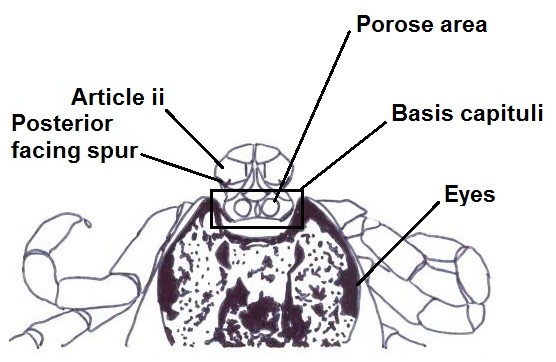
- Porose area is broad and oval in shape
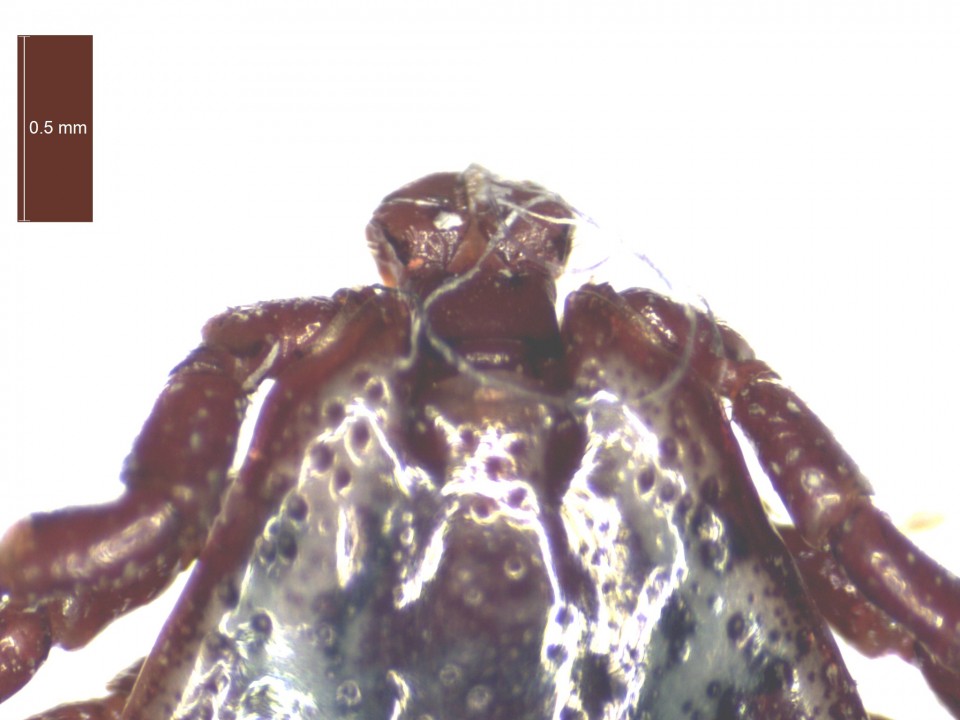
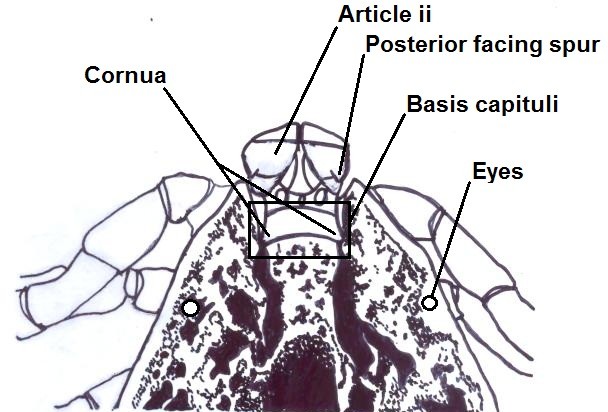
- Article ii of palps has a posterior facing spur
- Basis capituli is rectangular in shape and broader than long
- Overall length unfed: 3.8-4.2mm
- Length of engorged female: 10mm
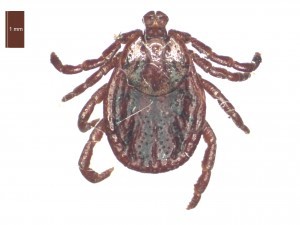
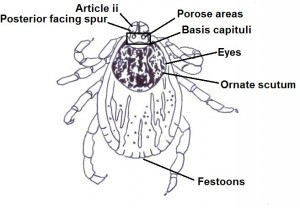
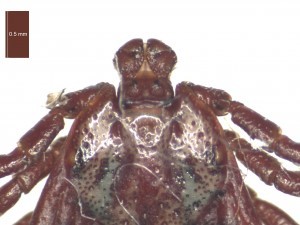
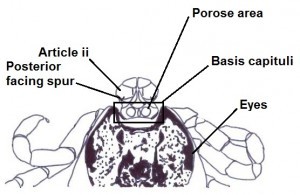
Adult female dorsal view and adult female close up of gnathosoma. (Click on pictures for a close up)
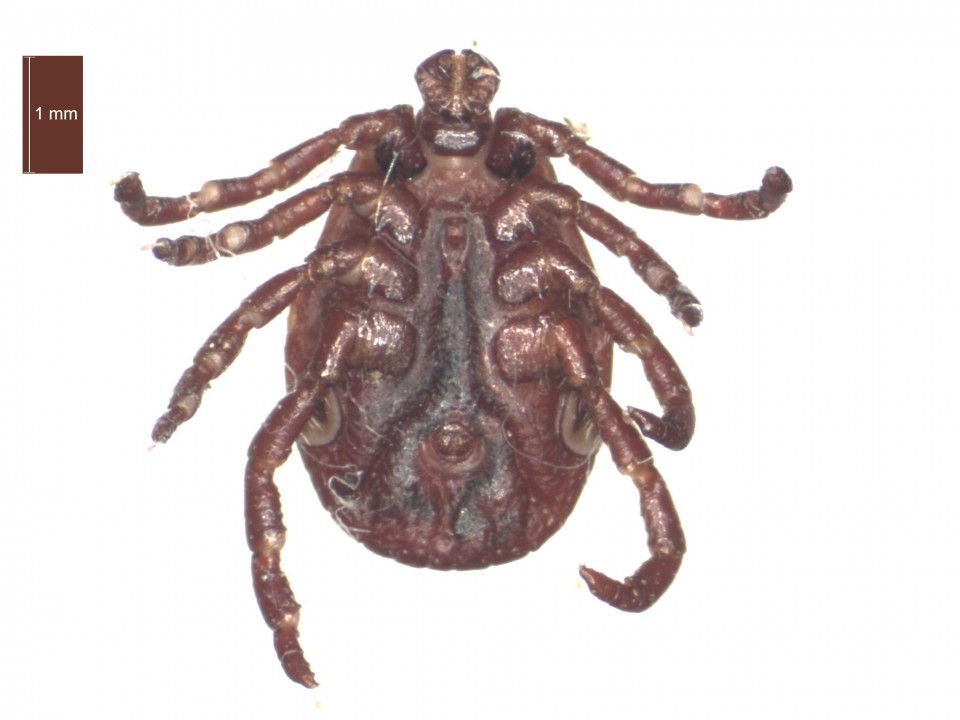
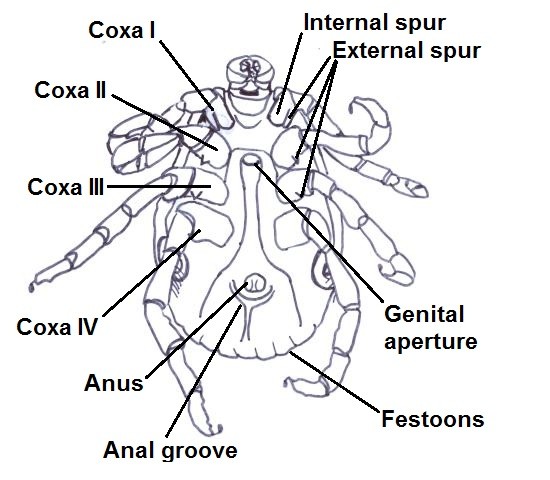
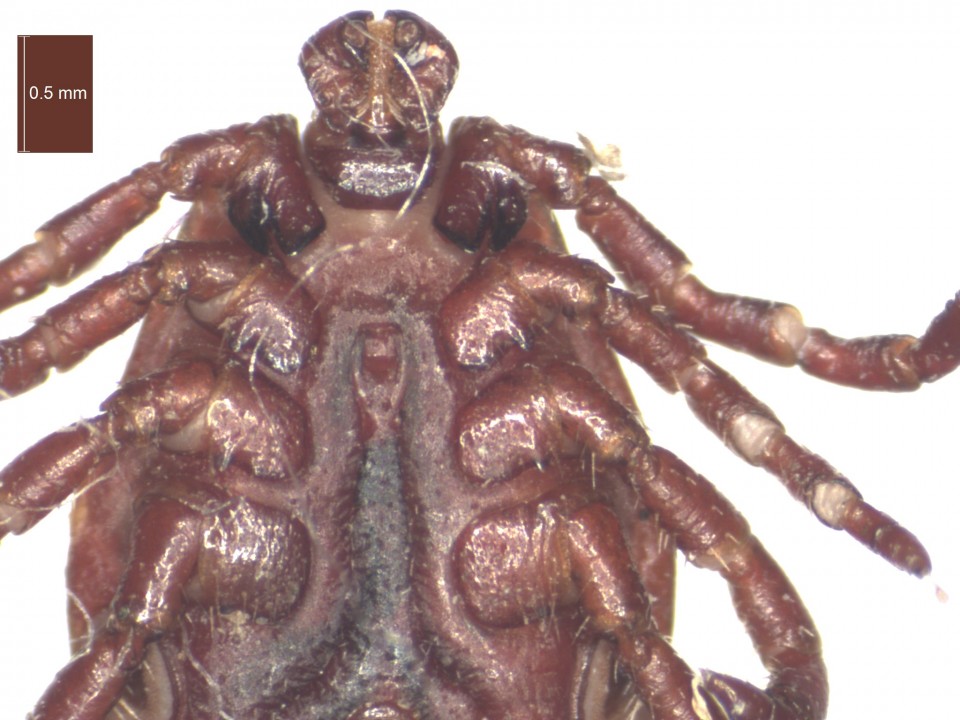
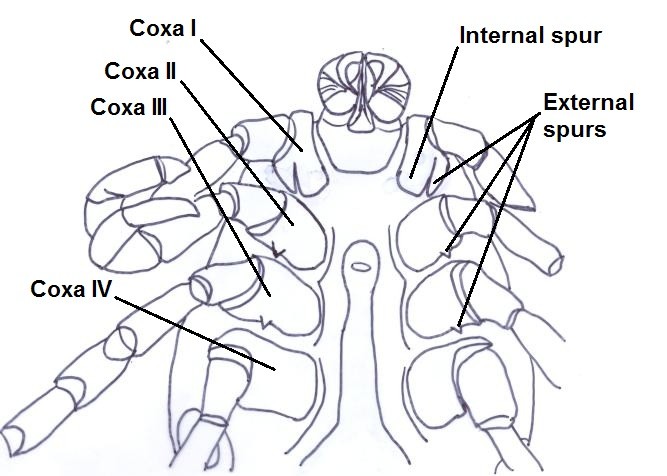
Adult female ventral features
- Coxae I: external and internal spur present, gap between each is considered narrow
- Genital aperture forms a broad ‘U’ shape
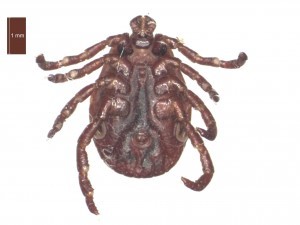
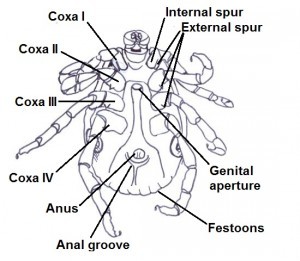
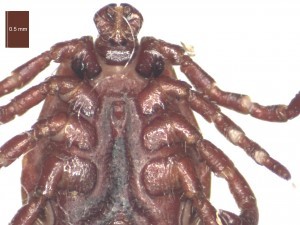
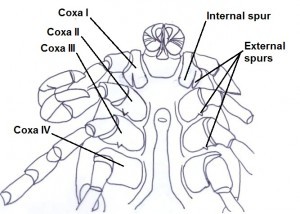
Adult female ventral view and adult female close up of coxae/ventral gnathosoma. (Click on pictures for a close up)
Adult male dorsal features
- Cornua length is long
- Article ii of palps have a long posterior facing spur
- Lateral groove present as punctations only
- Overall length of adult male is 4.2mm-4.8mm
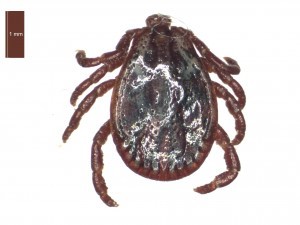
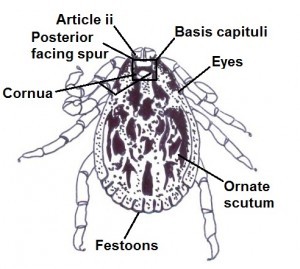
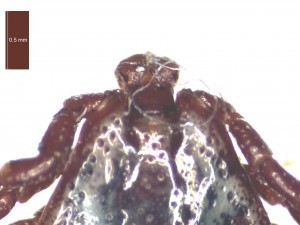
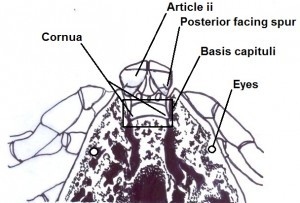
Adult male dorsal view and adult male close up of gnathosoma. (Click on pictures for a close up)
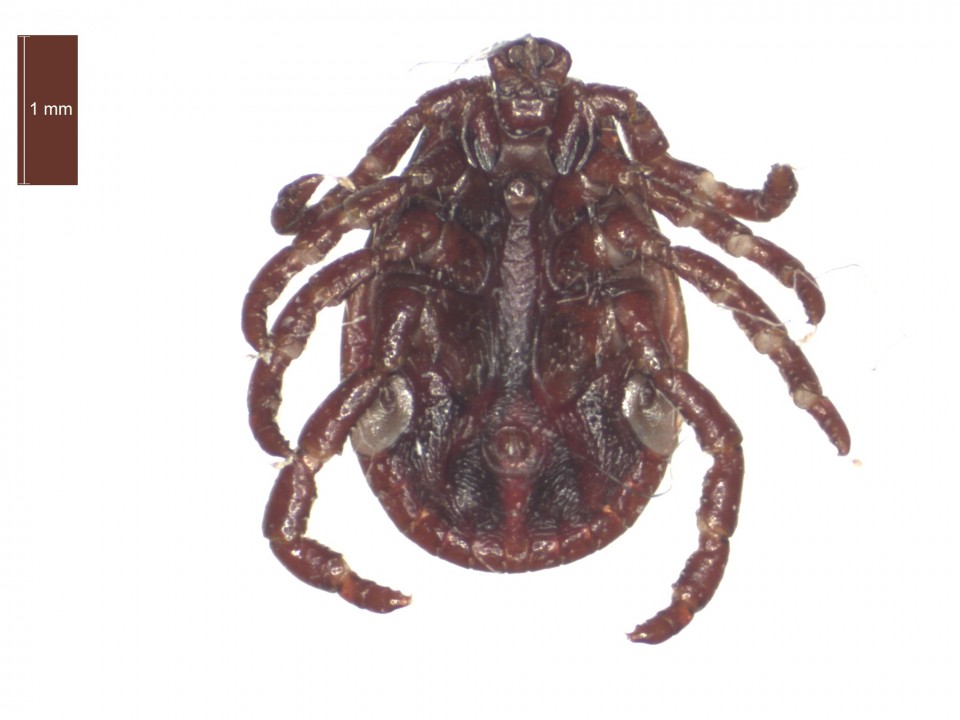
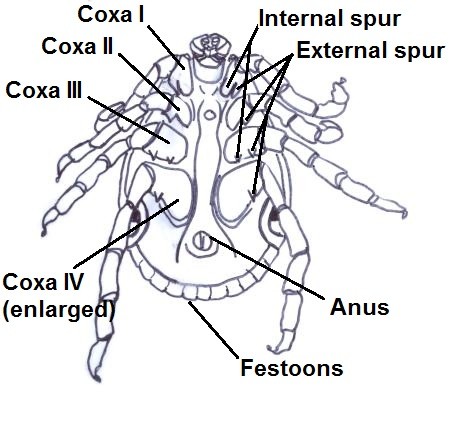
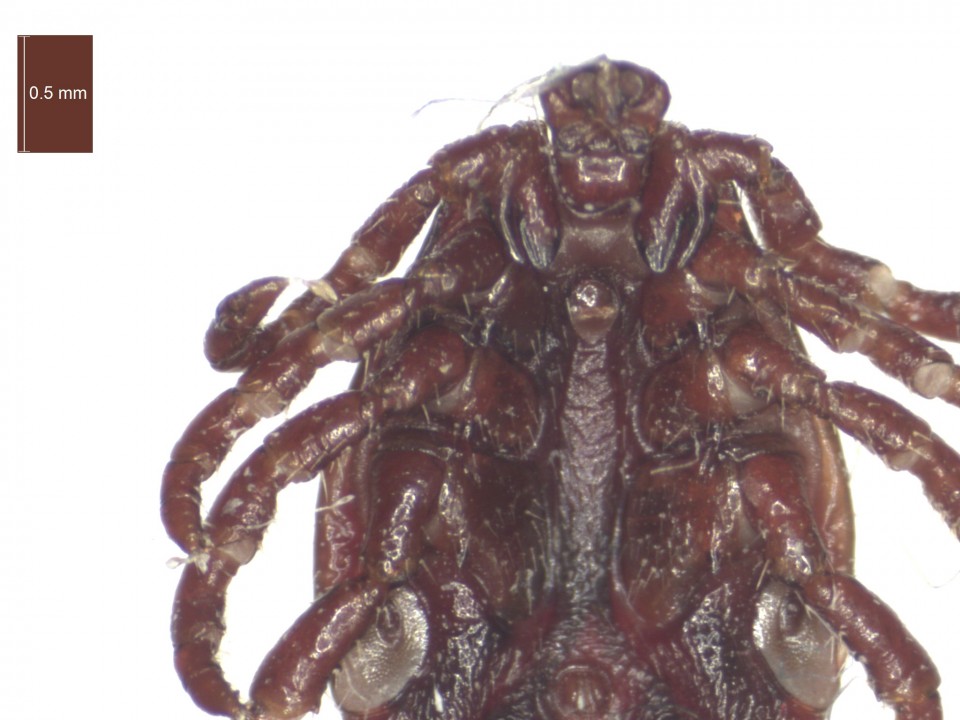
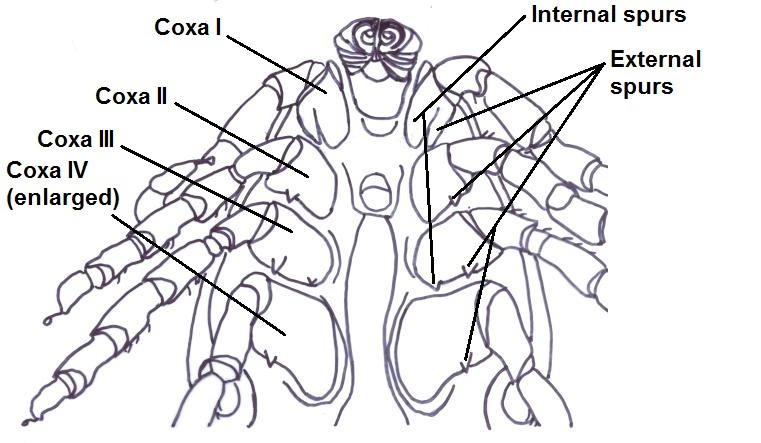
Adult male ventral features
- Coxae I: external and internal spur present, gap between each is considered narrow
- Coxae IV: enlarged
- Coxae II-IV: Short external spurs
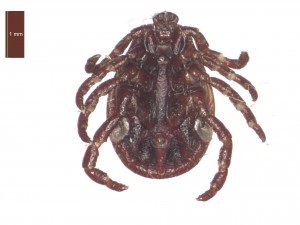
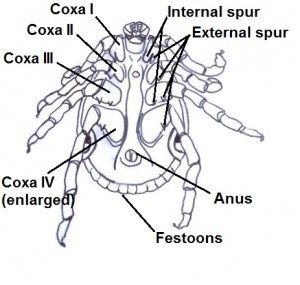
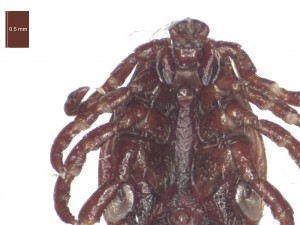
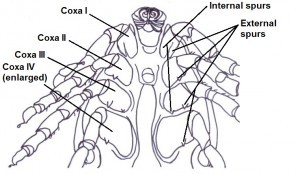
Adult male ventral view and adult male close up of coxae/ventral gnathosoma. (Click on pictures for a close up)