Also known as the Bush tick and Relict tick.
Hosts
Mainly sheep, however has also been found on; deer, cattle, horse, dog, cat and hares.
Distribution
France, Germany, Poland
Haemaphysalis coninna is particularly found in forest areas where the environment remains relatively constant, for example regions of the Paris Basin; Complegne, Fontainbleau and Chantilly.
Pathogenesis
Francisella tularensis
Tick borne encephalitis
Other pathogens and diseases that have been associated with Haemaphysalis concinna include Bunyavirus (Bunya fever).
Description
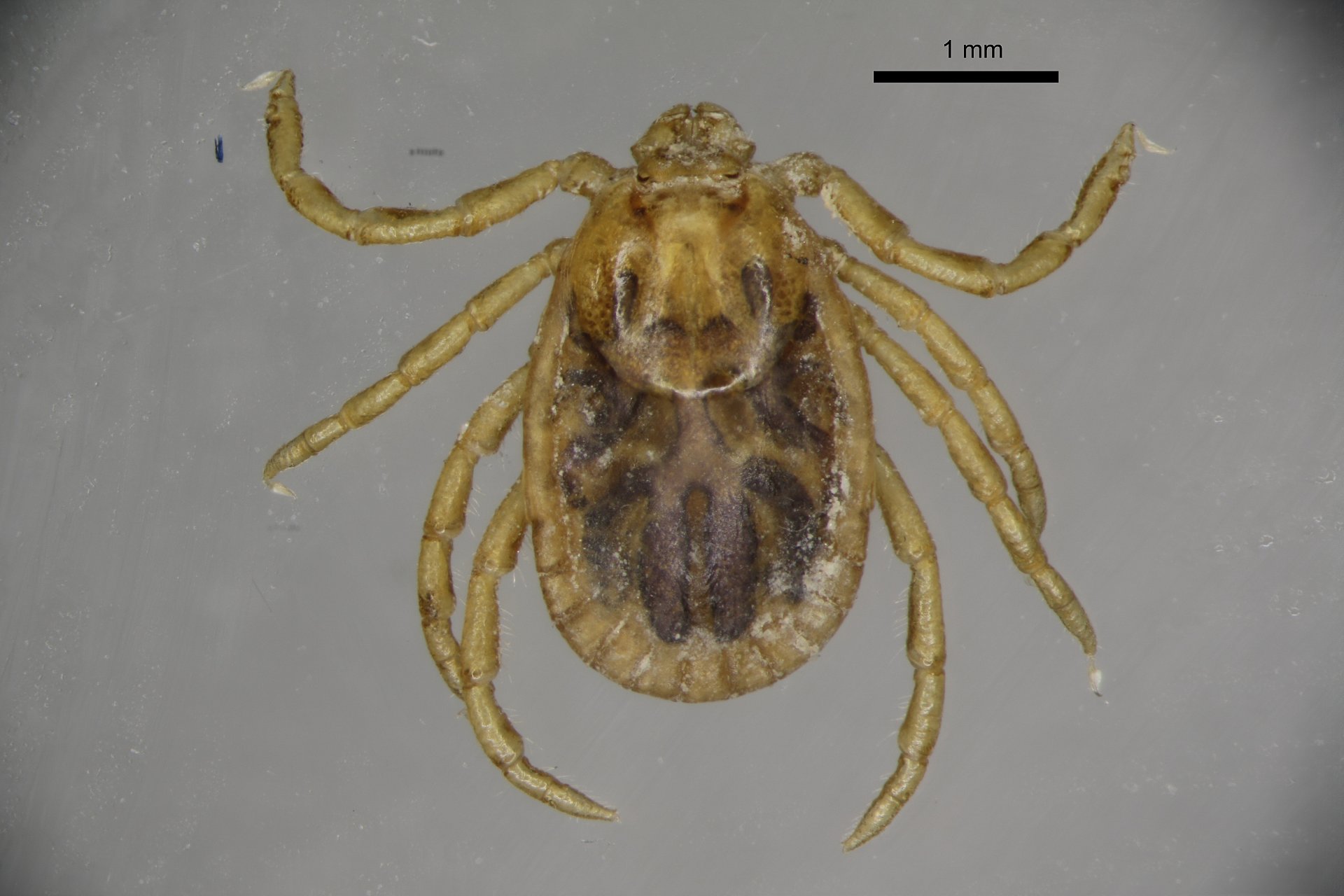
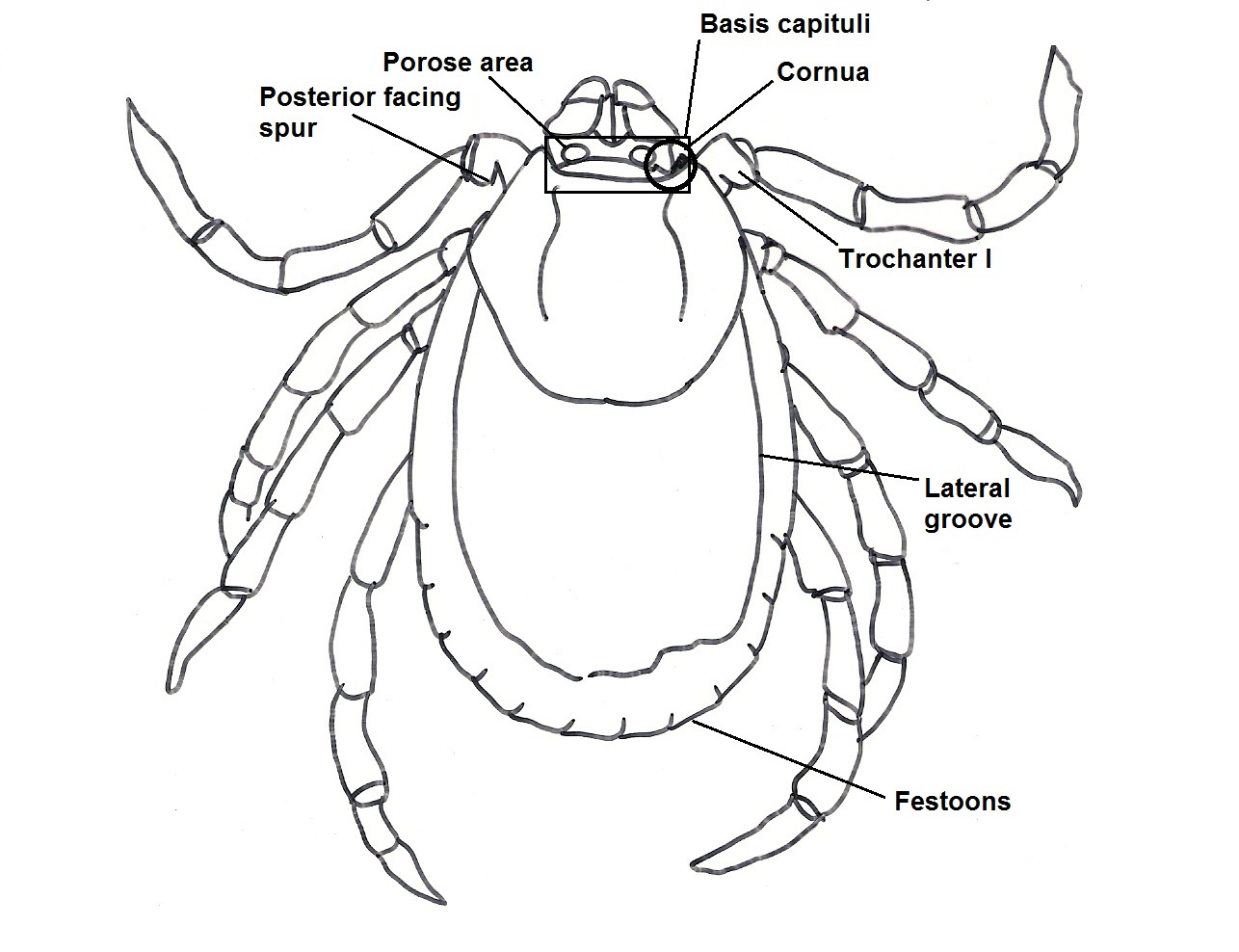
Adult female dorsal features
- Basis capituli broad and short
- Cornua blunt
- Trochanter I has a prominent posterior facing spur
- Overall length unfed is 3.0mm-3.8mm
- Length of engorged female : 10mm
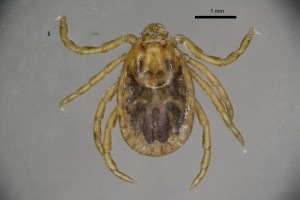
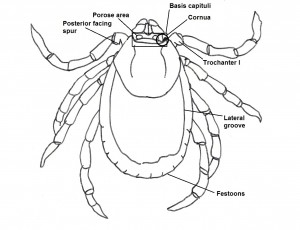
(Specimen courtesy of the Natural History Museum, London)
Adult female dorsal view. (Click on picture for a close up)
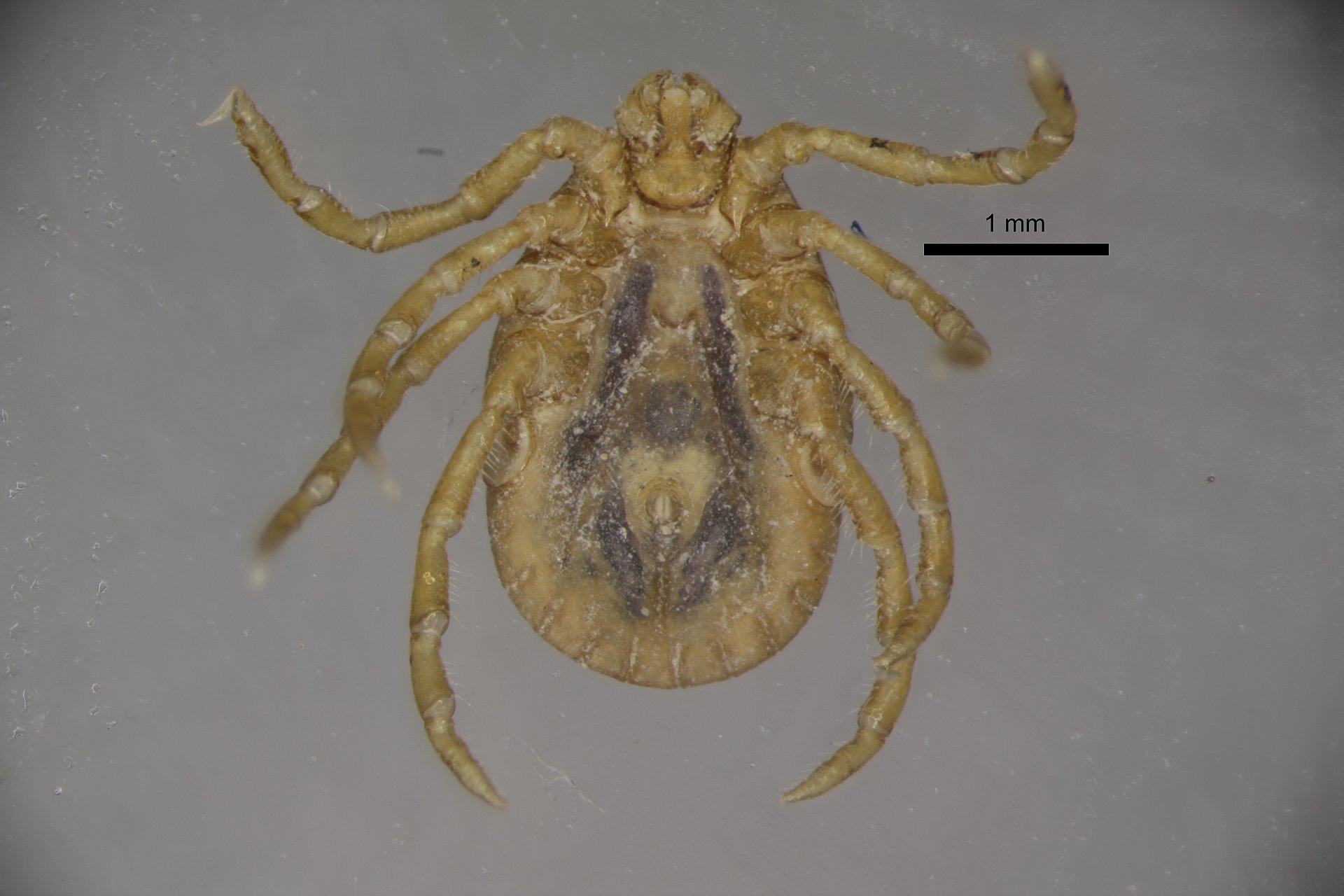
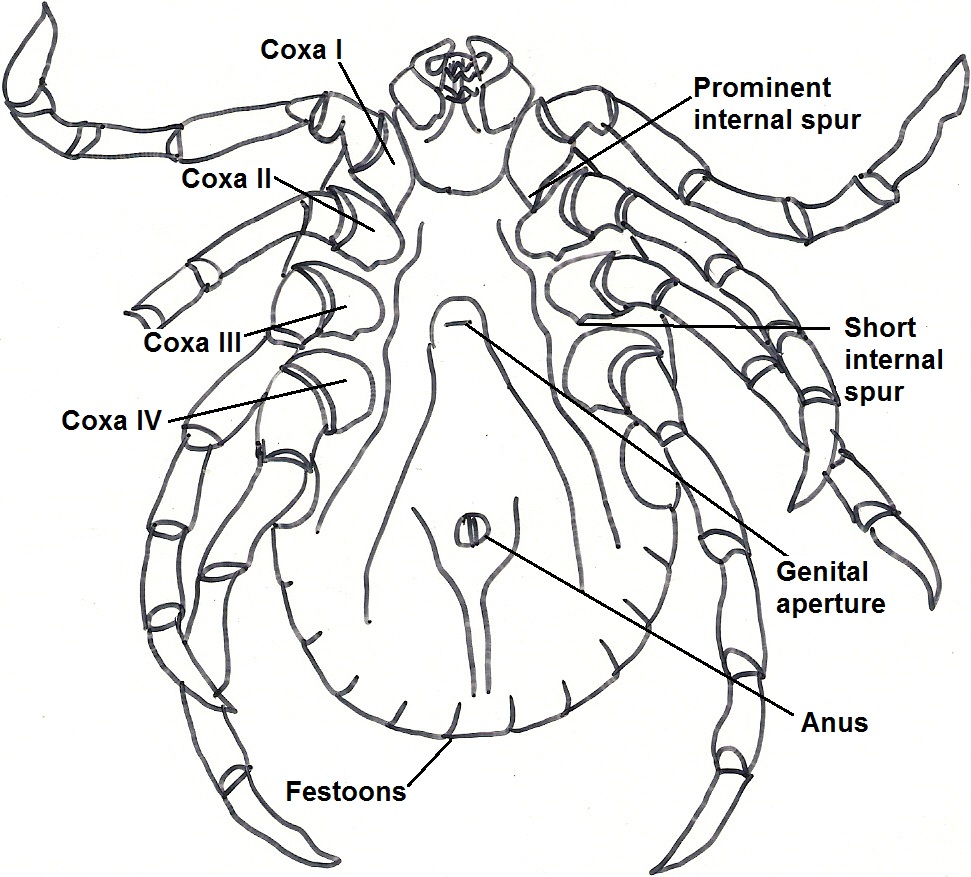
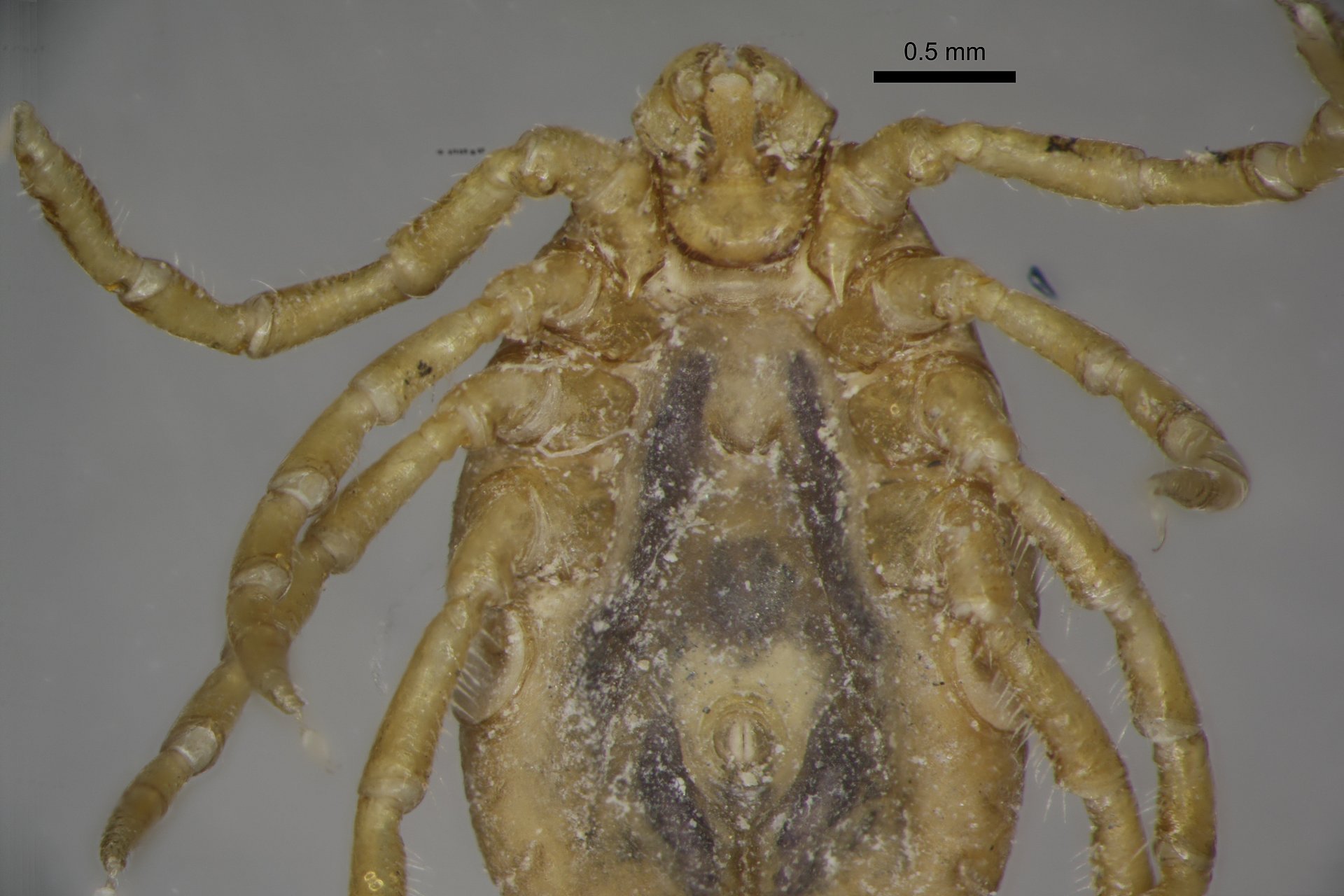
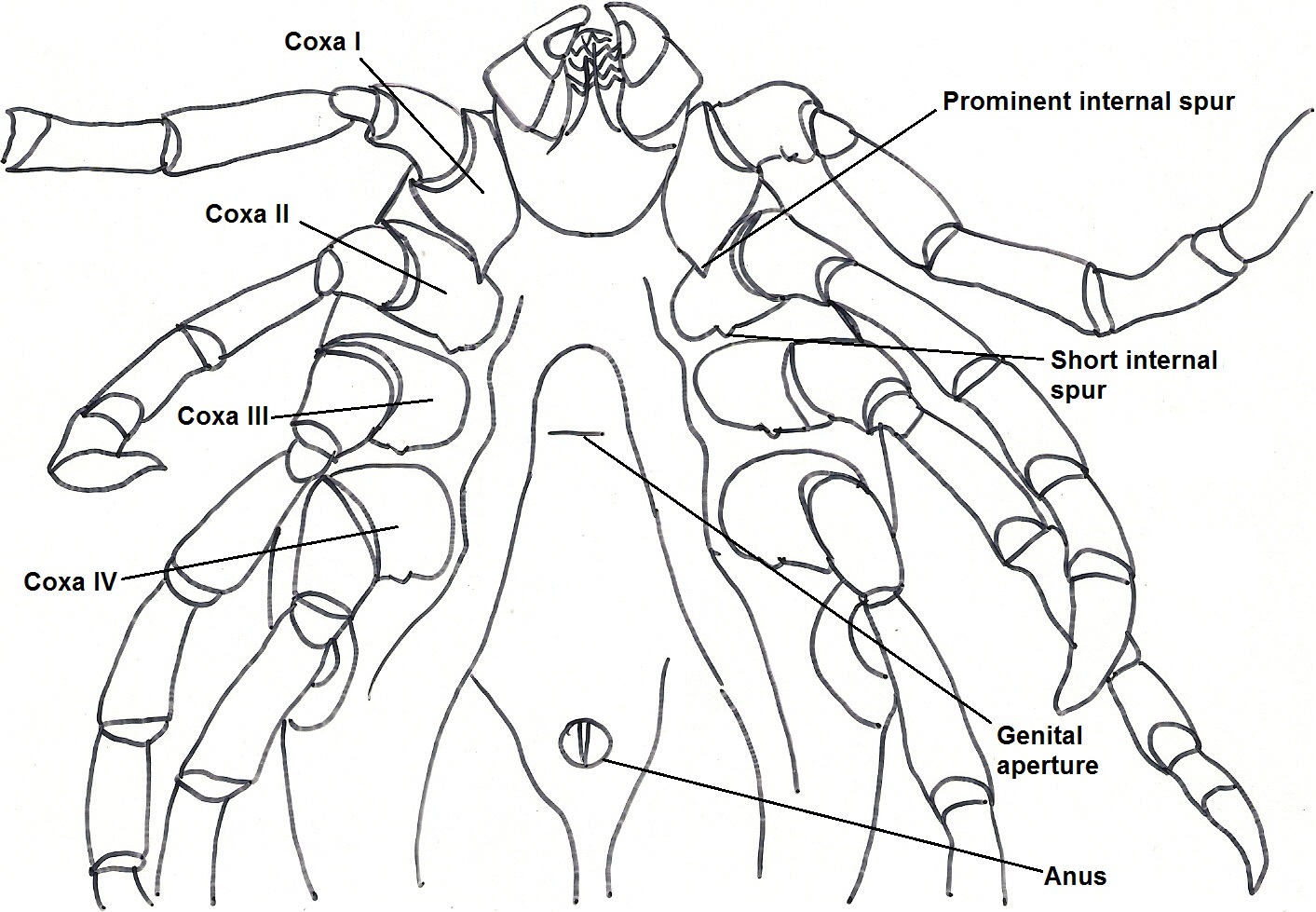
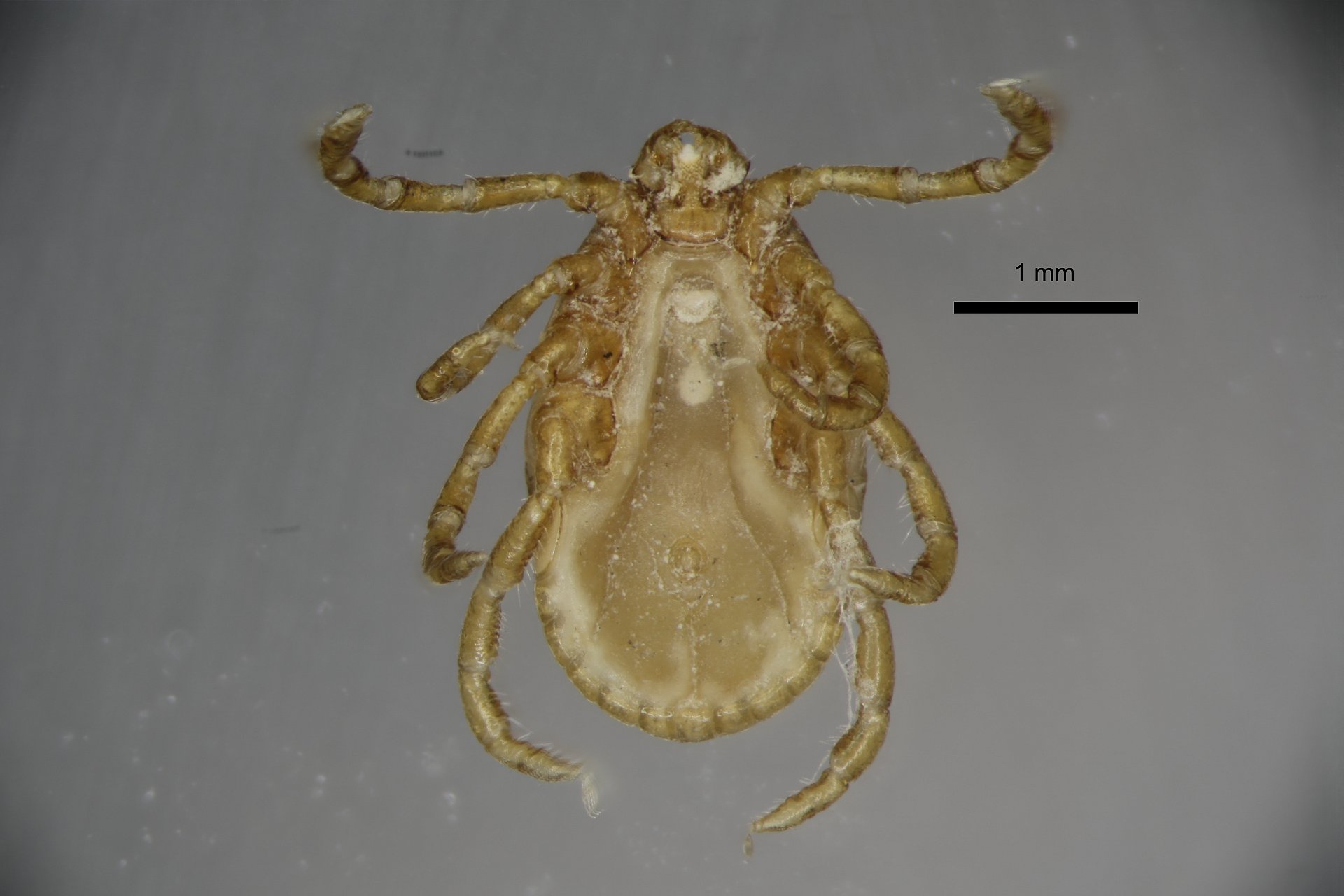
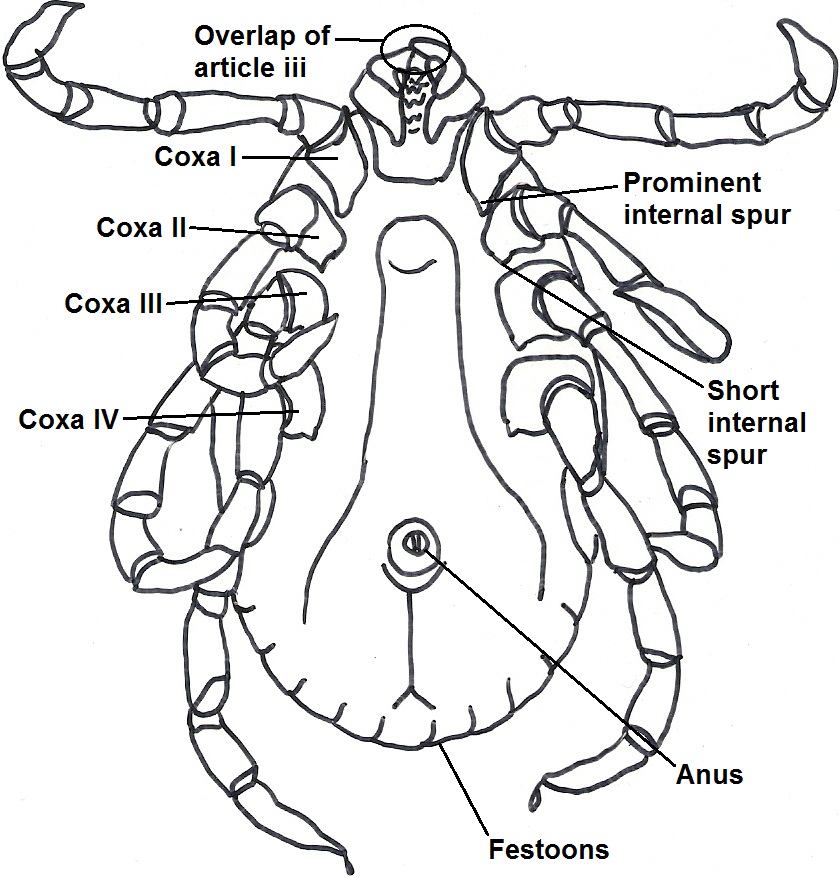
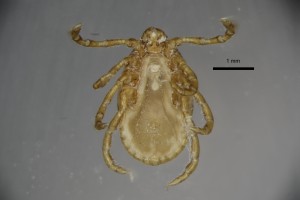
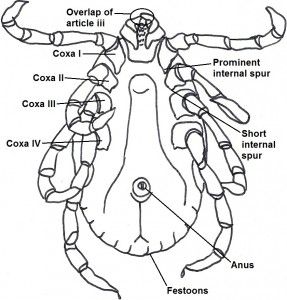
Adult female ventral features
- Coxae I: prominent internal spur
- Coxae II-IV: short internal spurs
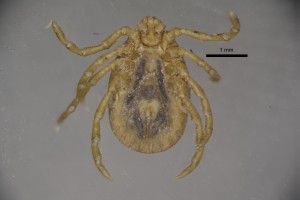
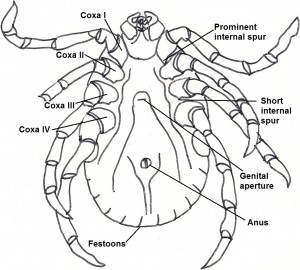
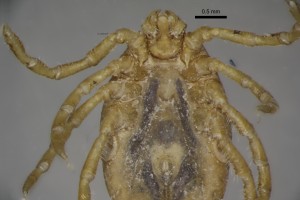
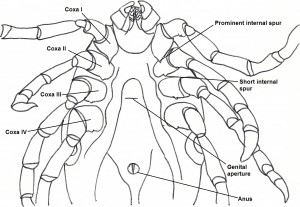
(Specimen courtesy of the Natural History Museum, London)
Adult female ventral view. (Click on picture for a close up)
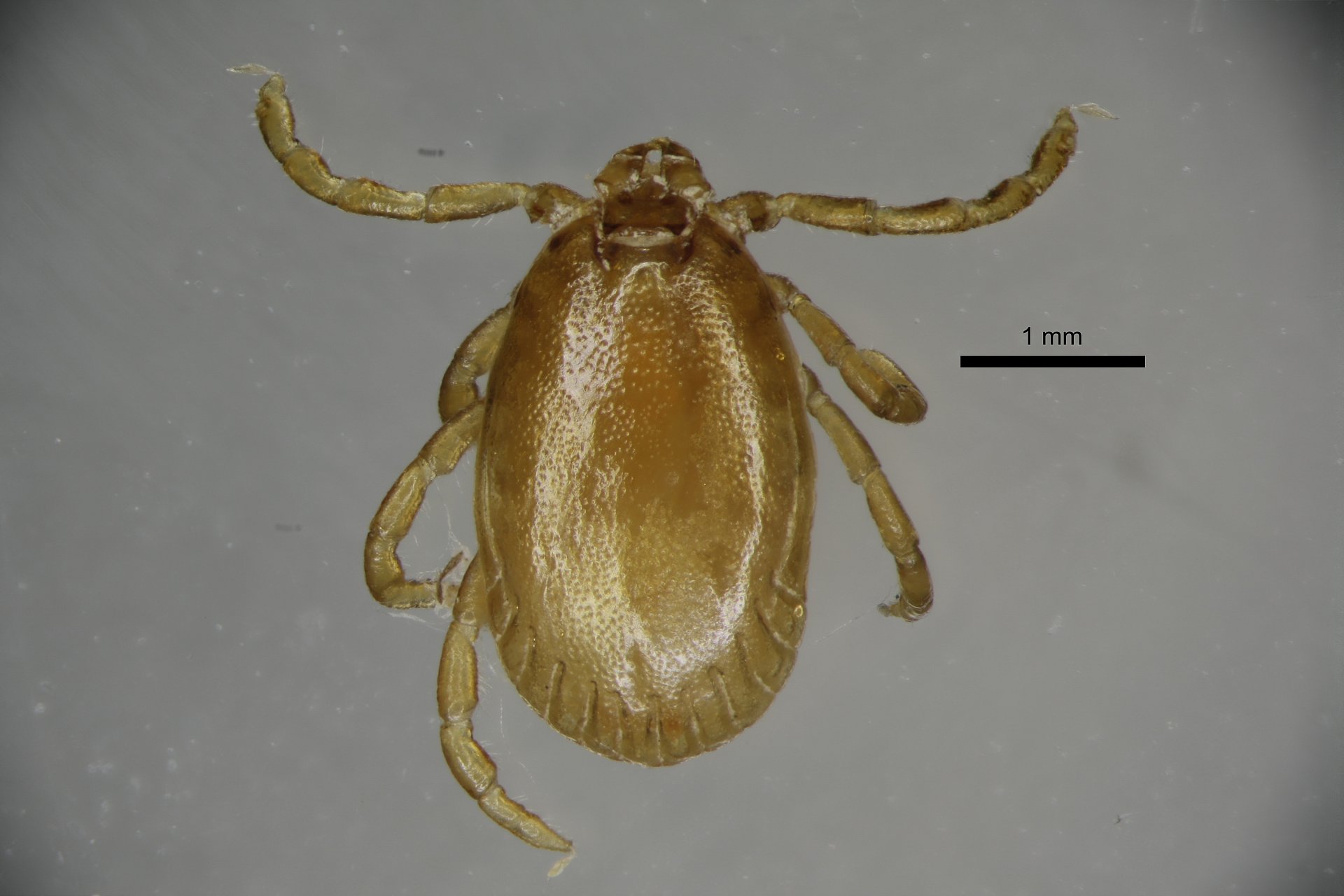
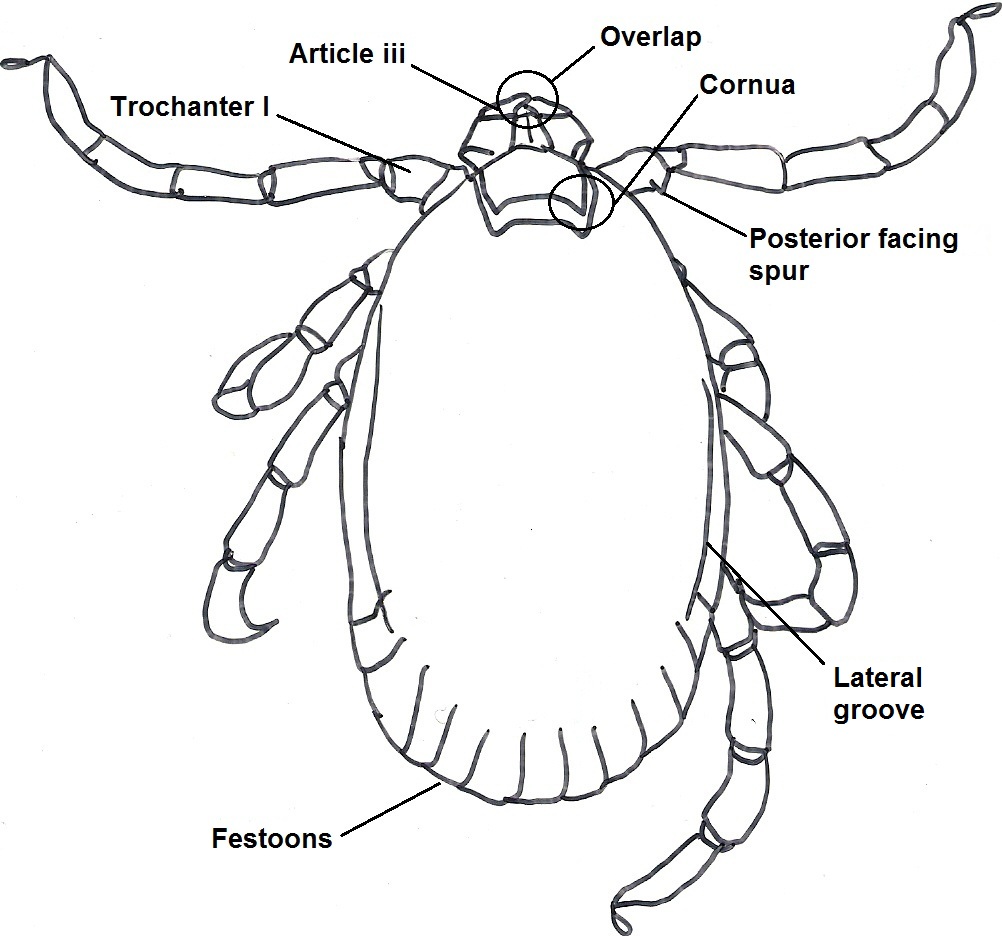
Adult male dorsal features
- Cornua are prominent
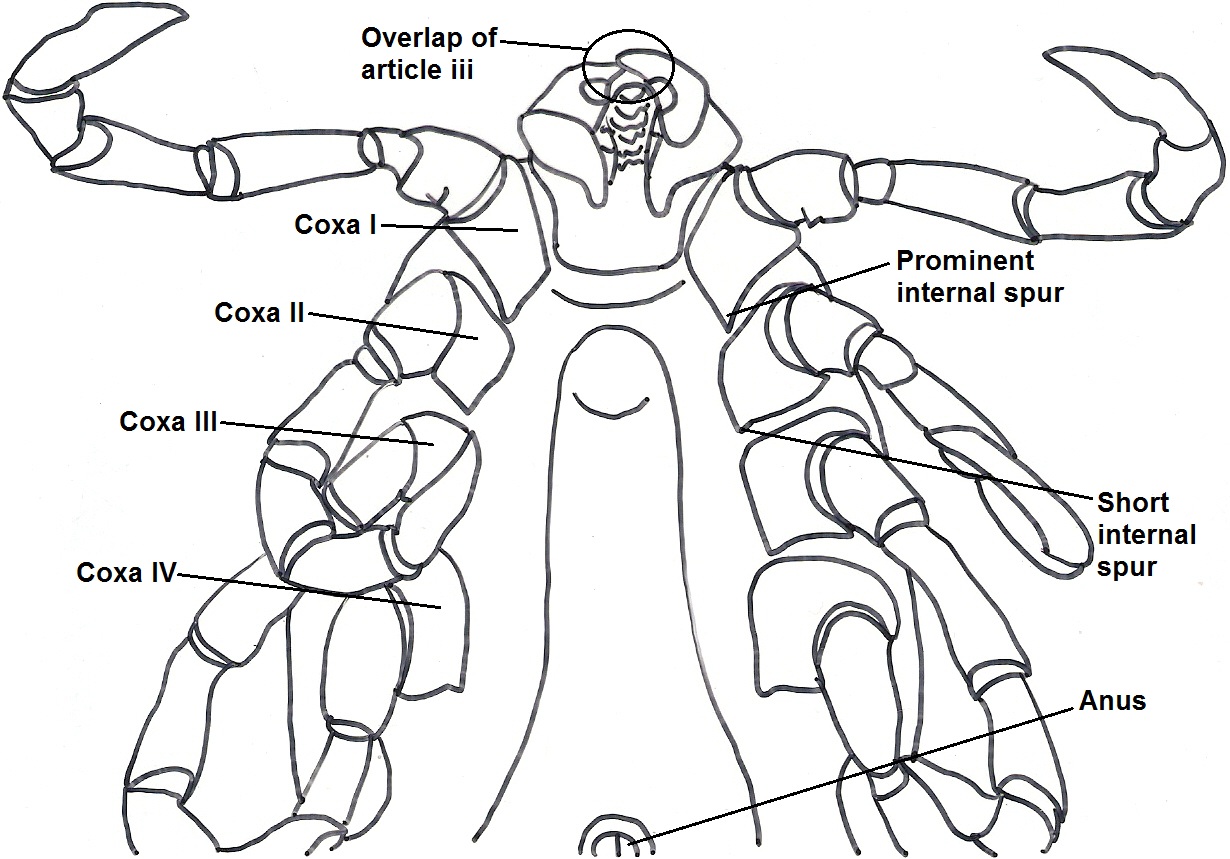
- Article iii of the palps overlap
- Trochanter I has a prominent posterior facing spur
- Overall length is 2.8-3.3mm
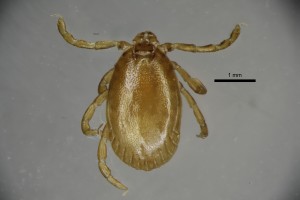
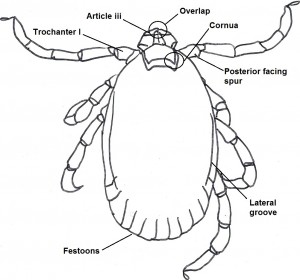
(Specimen courtesy of the Natural History Museum, London)
Adult male dorsal view. (Click on picture for a close up)
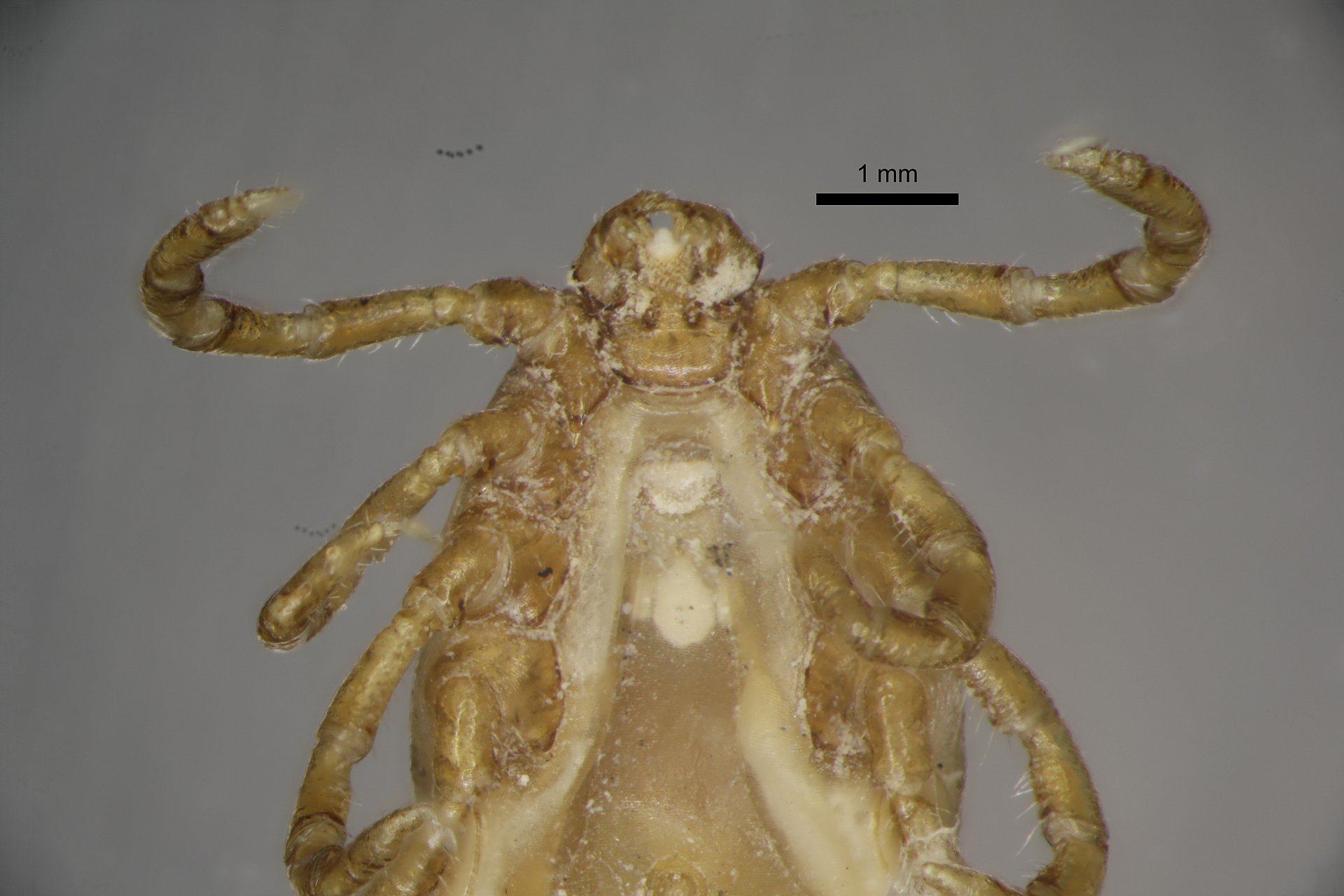
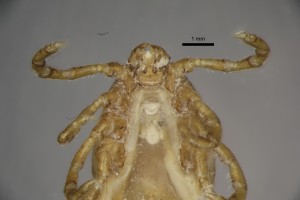
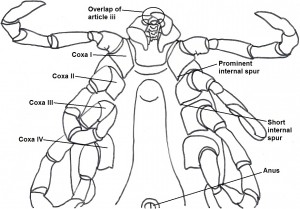
Adult male ventral features
- Coxae I: prominent internal spur
- Coxae II-IV: short internal spurs
(Specimen courtesy of the Natural History Museum, London)
Adult male ventral view. (Click on picture for close up)