Also known as the Brown ear tick
Hosts
All mammals: cattle, sheep, horse, dog, human
Distribution
Mediterranean regions, Switzerland, Bulgaria, Romania
Rhipicephalus bursa is generally found in areas ranging in latitude from low to medium. They can also range in environment from mountainous slopes to semi- desert, but are generally found in grassy areas.
Pathogenesis
Cattle: Babesia bigemina, Babesia bovis, Anaplasma marginale
Horse: Babesia caballi, Babesia equi
Sheep: Babesia motasi, Babesia ovis, Theileria separata, Anaplasma ovis, Ehrlichia ovina
Other pathogens and diseases that have been associated with R. bursa include:
Tick paralysis
Crimean-Congo haemorrhagic fever virus
Description
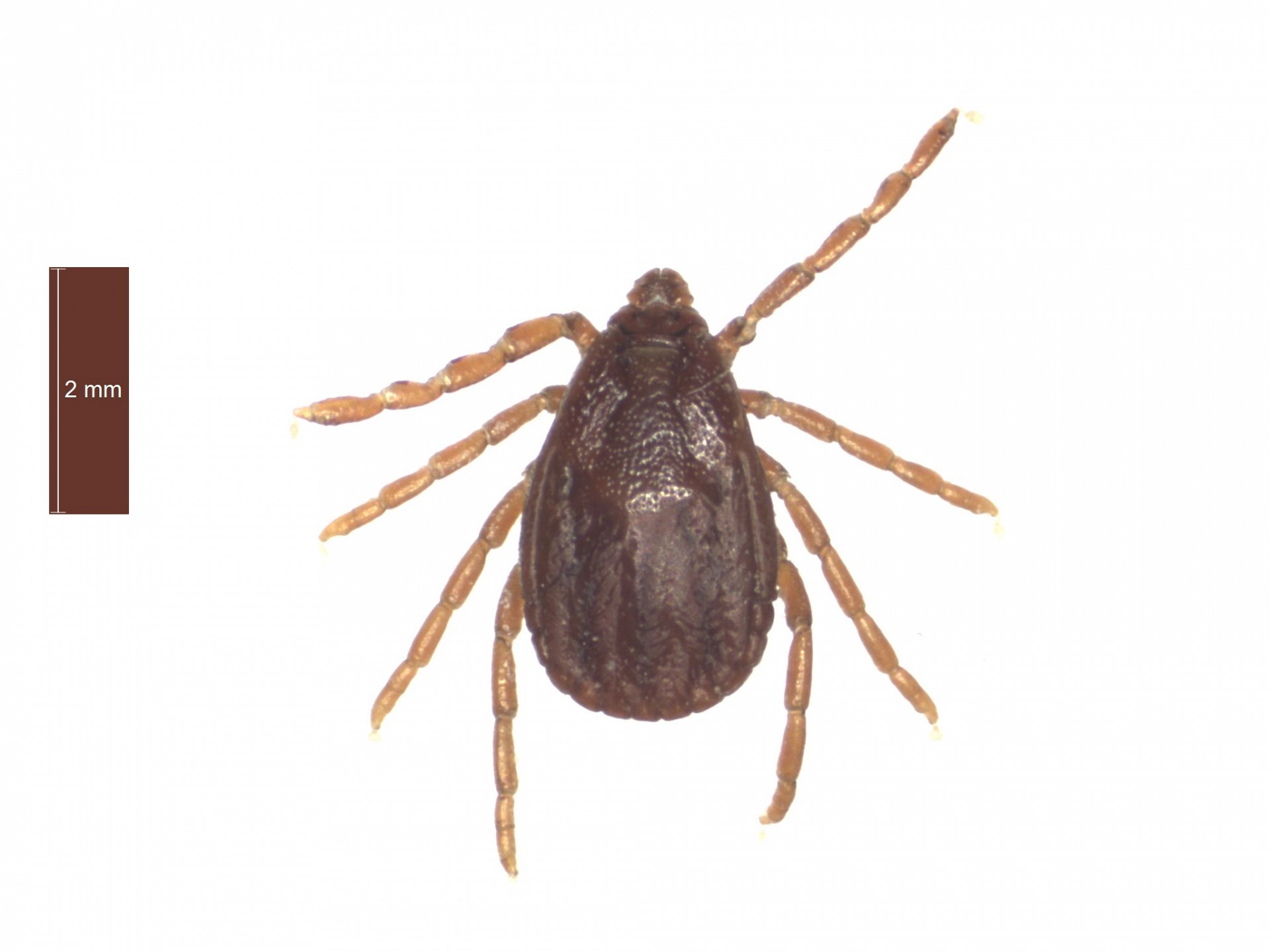
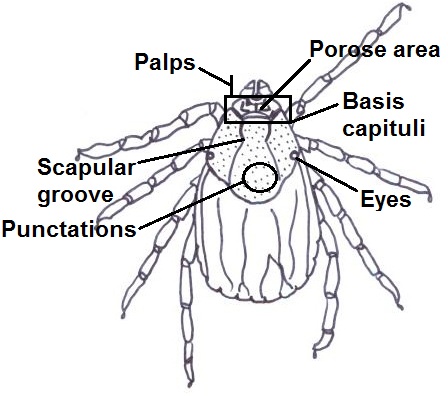
Adult female dorsal features
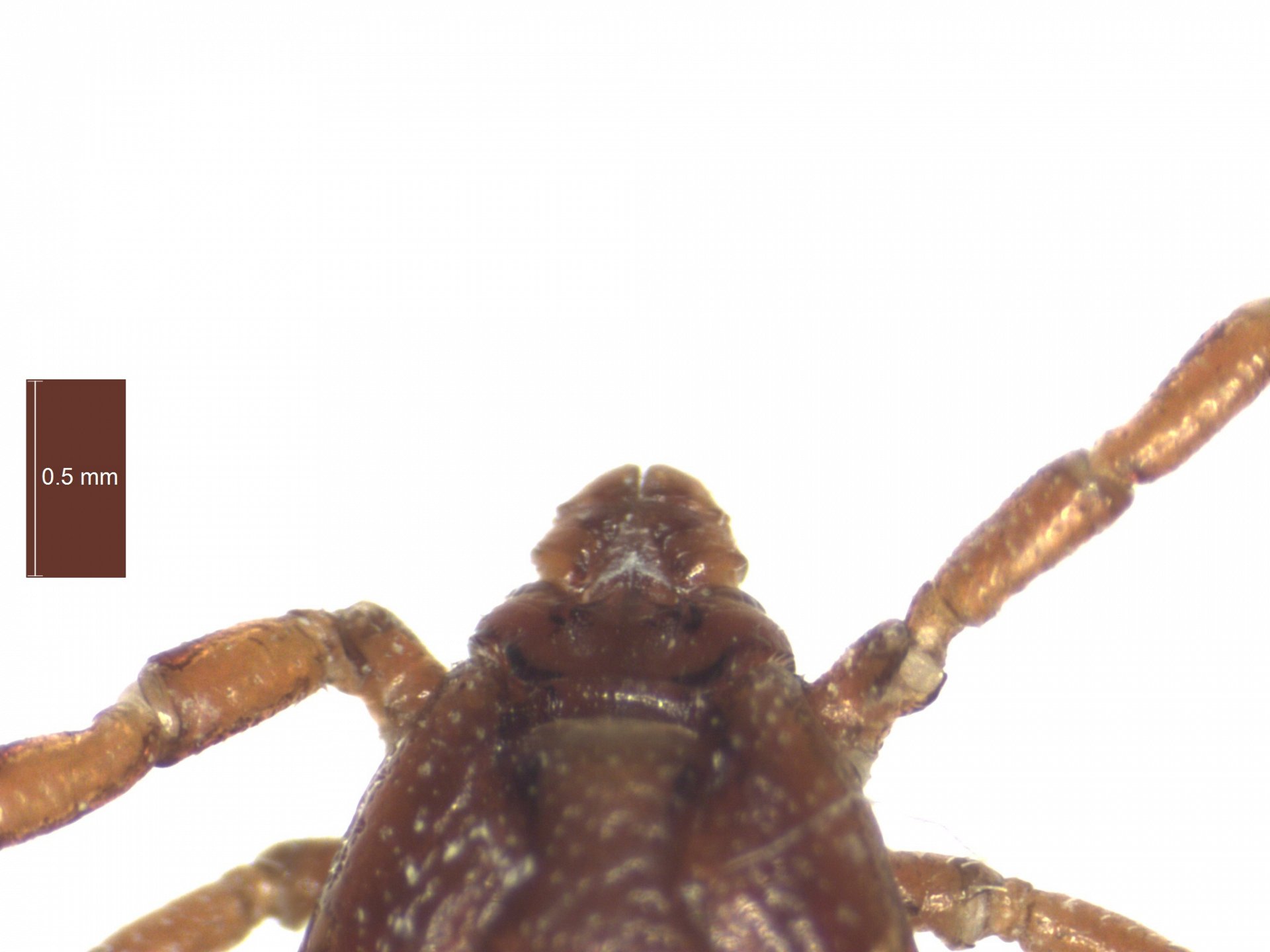
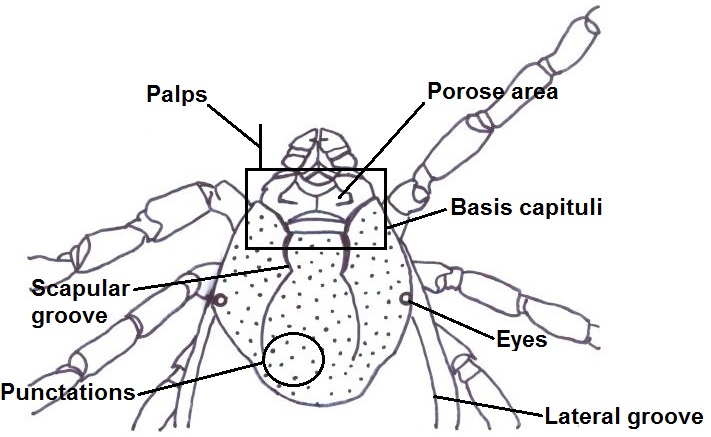
- Basis capituli lateral angles are sharp
- Porose areas are oval and close together
- Palps are short
- Scapular groove is shallow
- Interstitial punctations are medium- large and dense
- Scutum is dark
- Unfed females can measure between 4.2mm-4.5mm in length
- Engorged females can measure up to 10mm
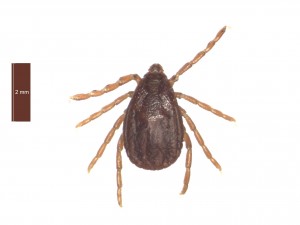
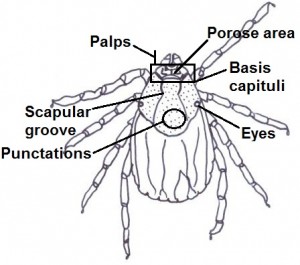
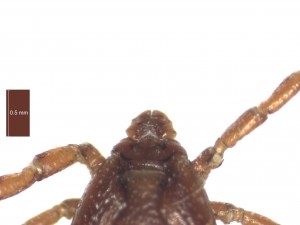
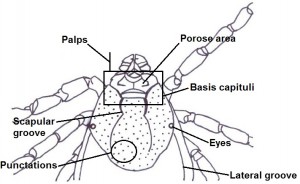
Adult female dorsal view and adult female close up of gnathosoma. (Click on pictures for a close up)
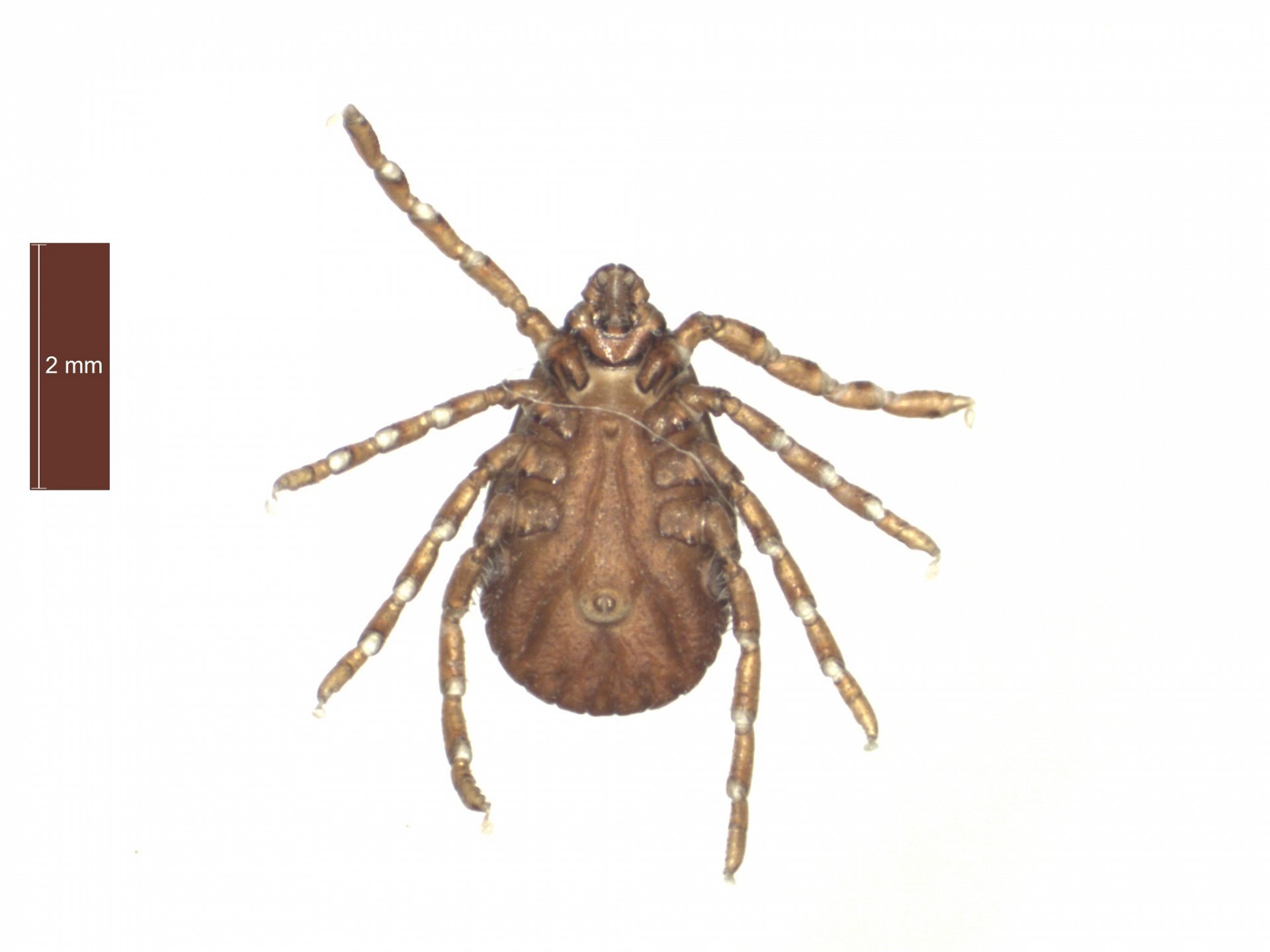
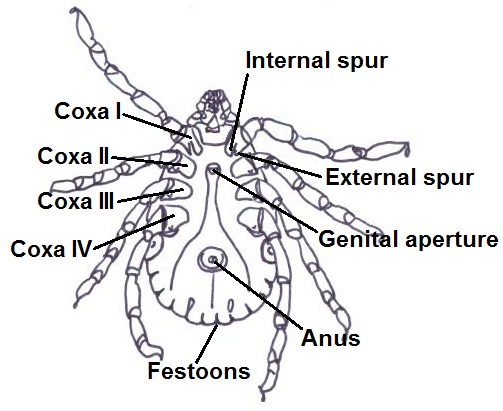
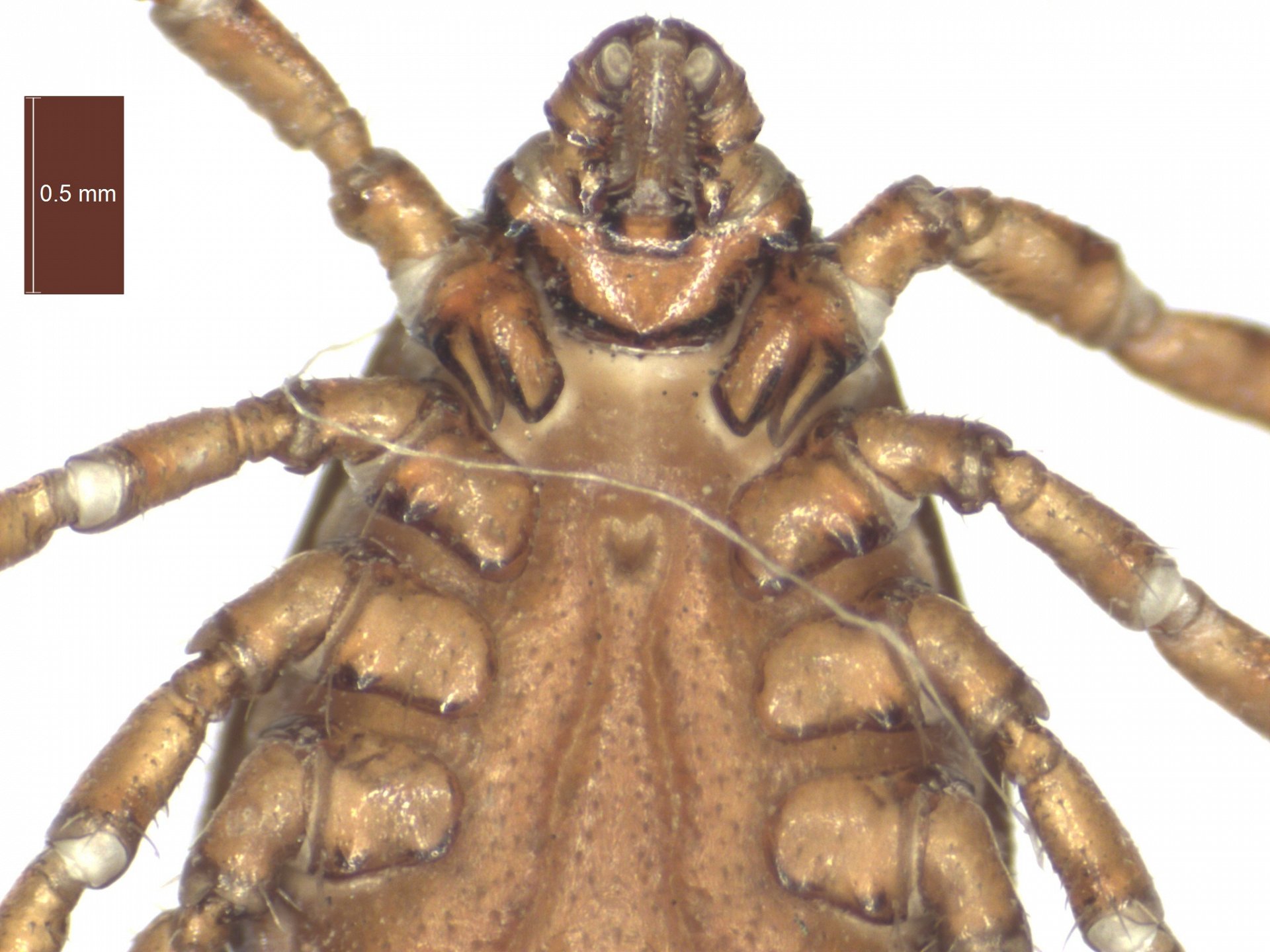
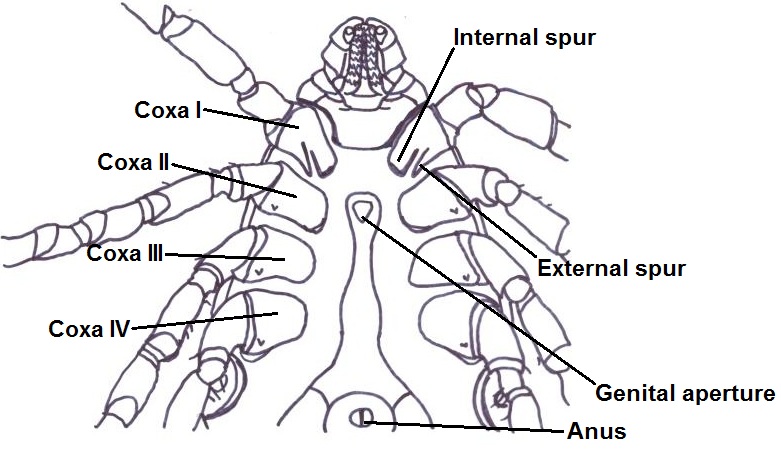
Adult female ventral features
- Coxae I: large, distinct, equally paired internal and external spurs
- Coxae II-IV: indistinct external spurs
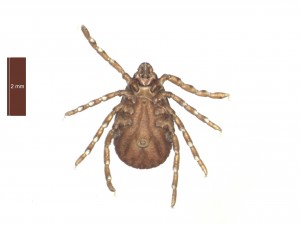
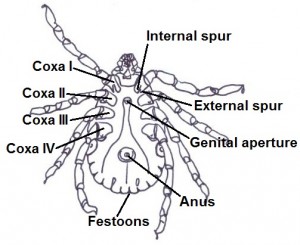
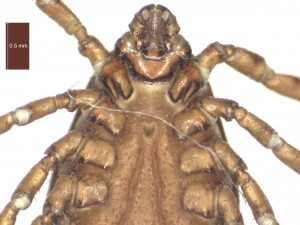
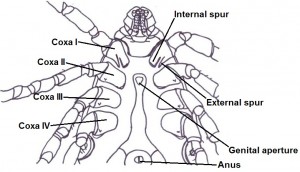
Adult female ventral view and adult female close up of coxae/ventral gnathosoma. (Click on pictures for a close up)
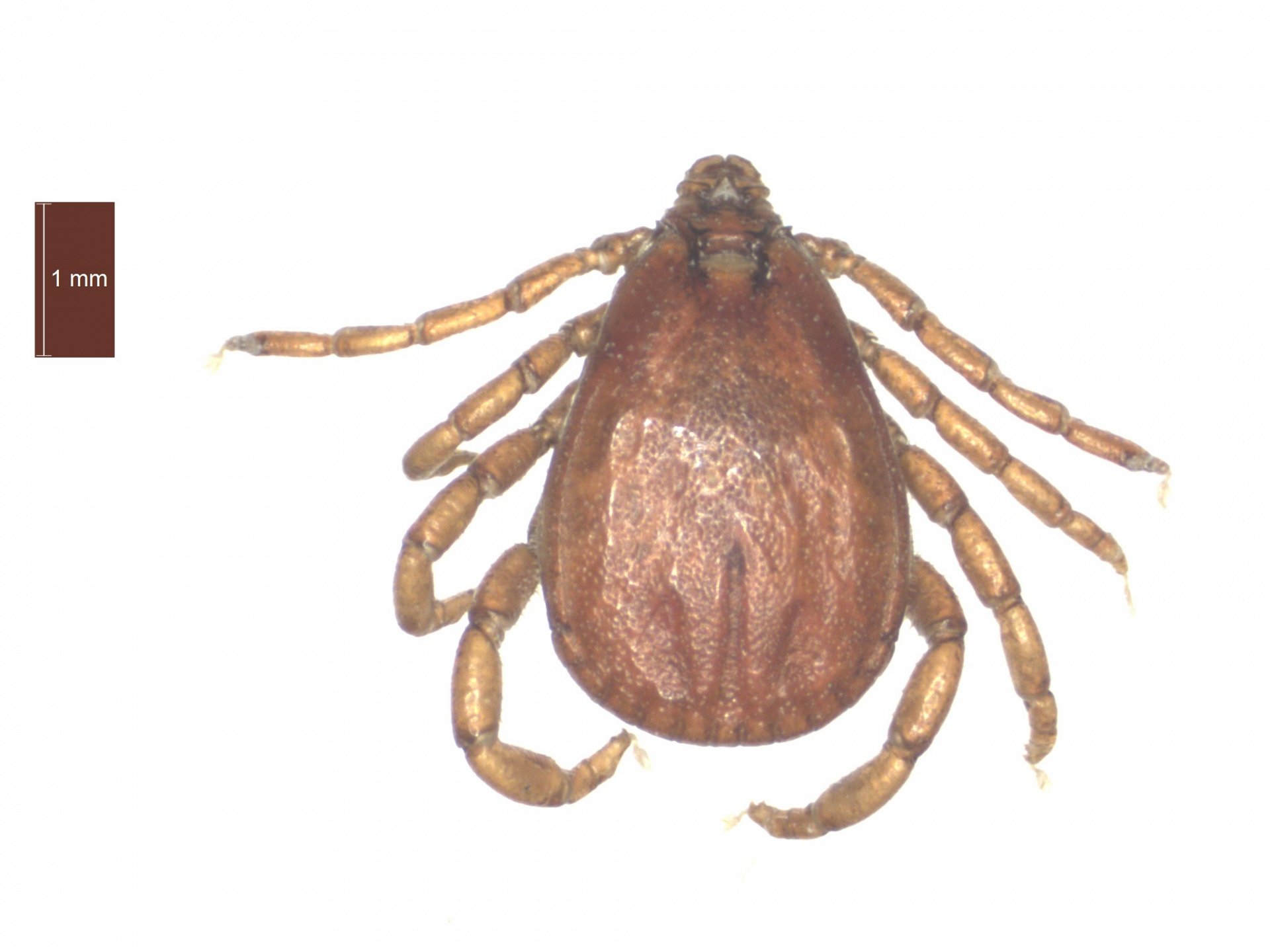
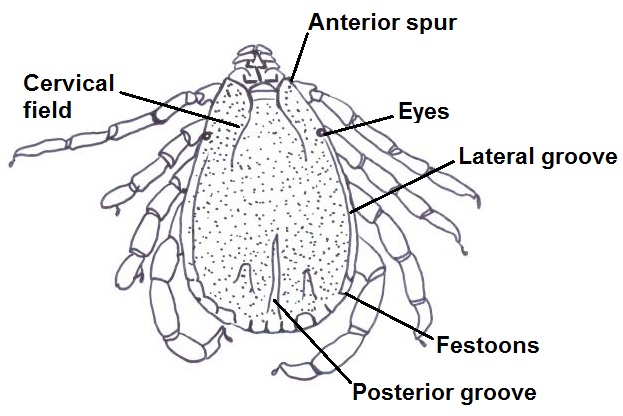
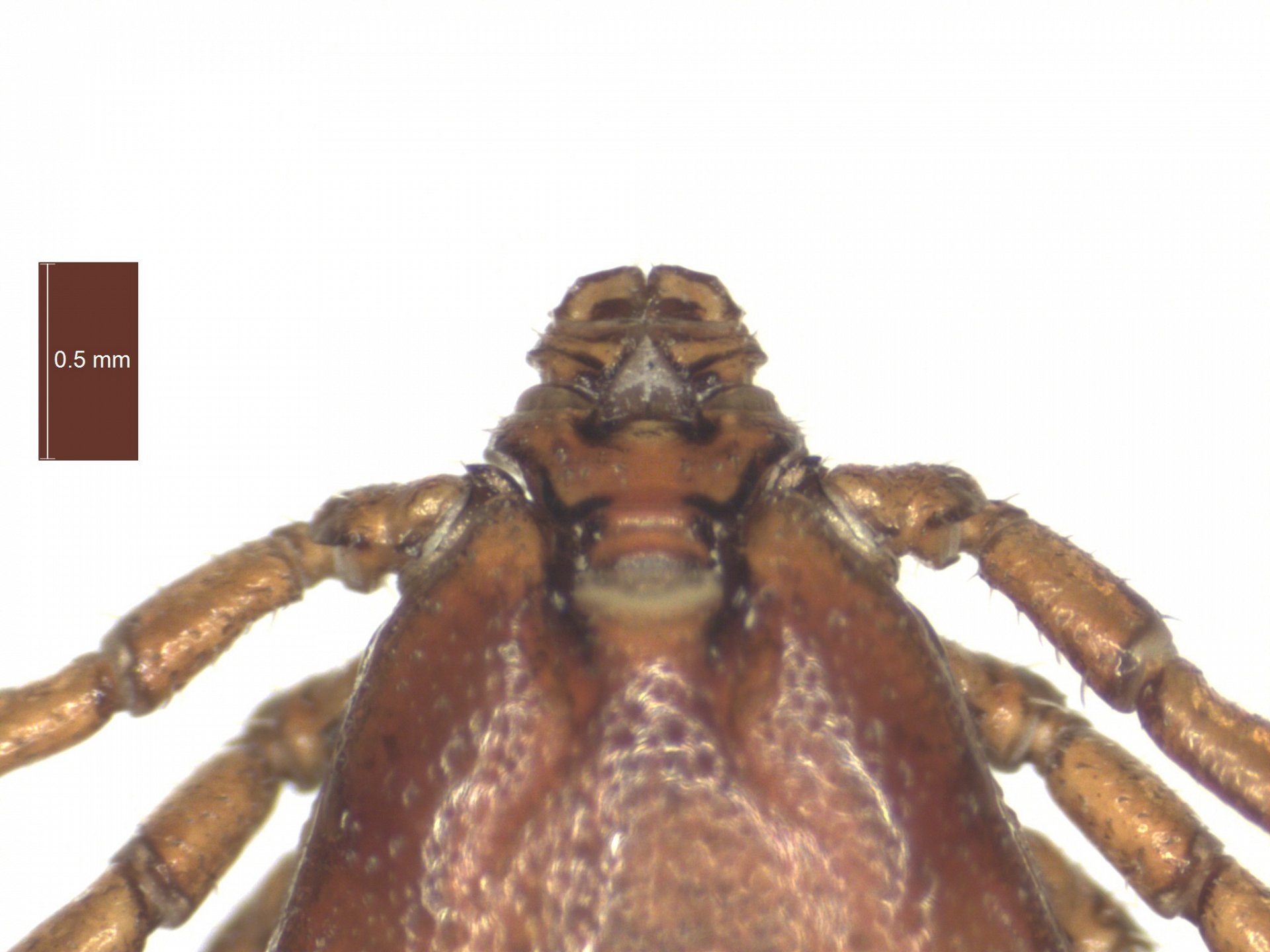
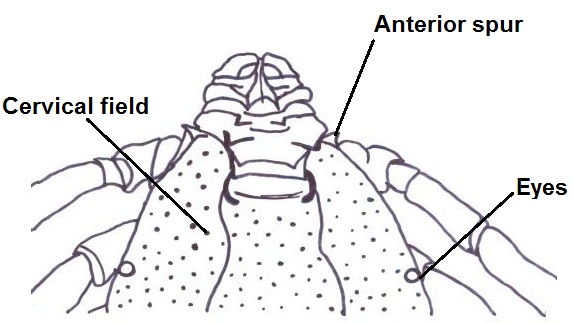
Adult male dorsal features
- Coxae I: anterior spurs are visible dorsally
- Cervical field depressions are not apparent
- Posterior grooves are indistinct
- Lateral grooves are distinct
- Males measure between 3.8mm-4.3mm in length
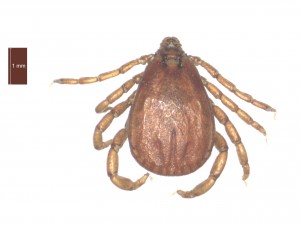
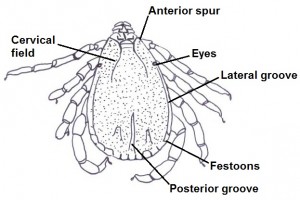
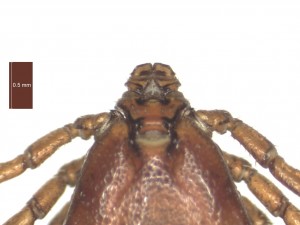
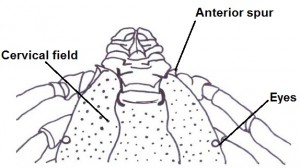
Adult male dorsal view and adult male close up of gnathosoma. (Click on pictures for a close up)
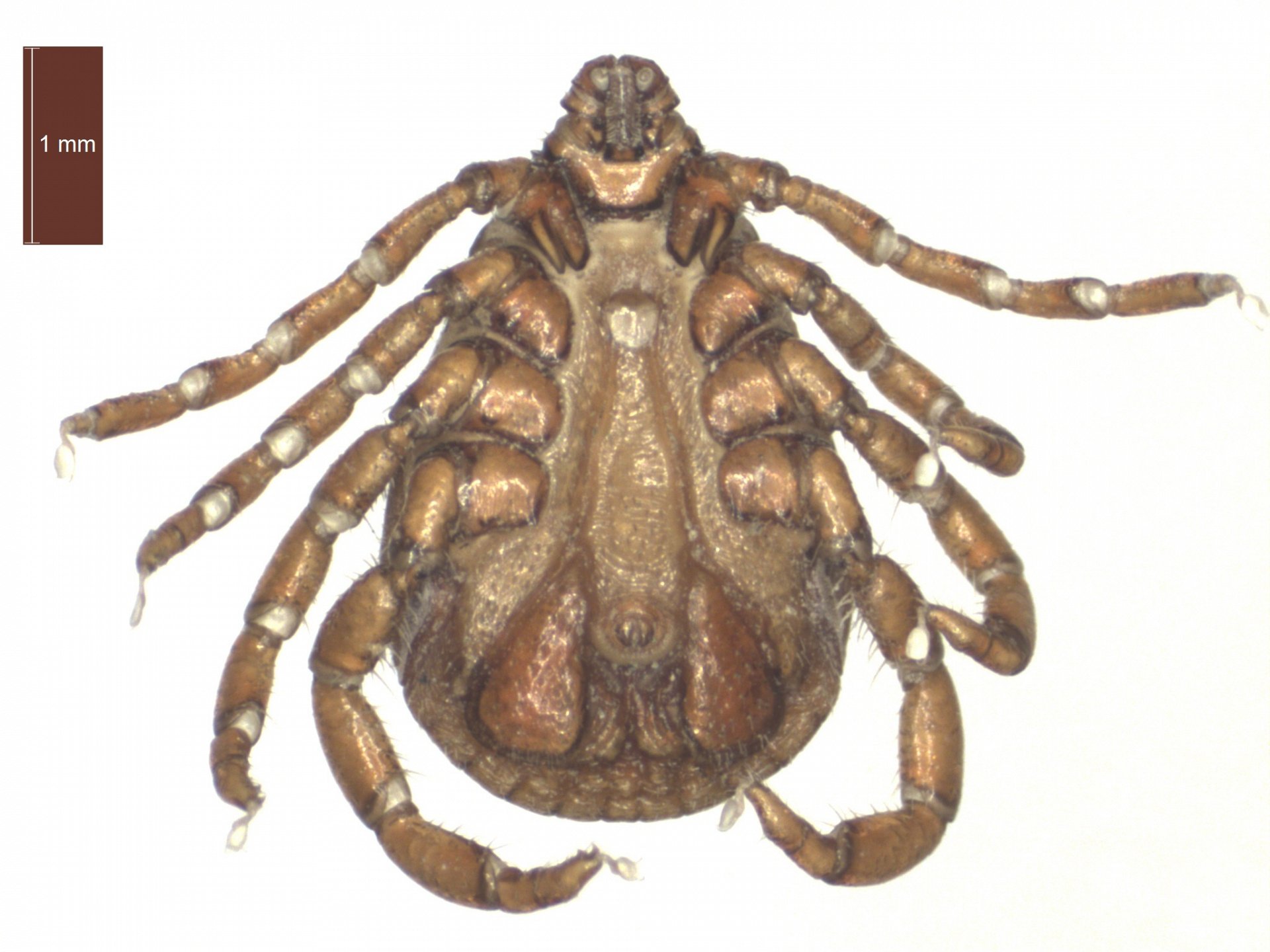
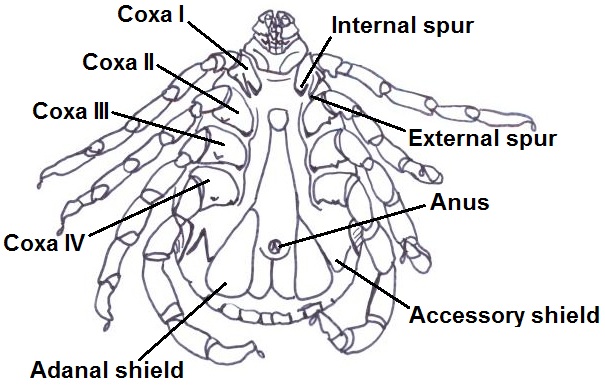
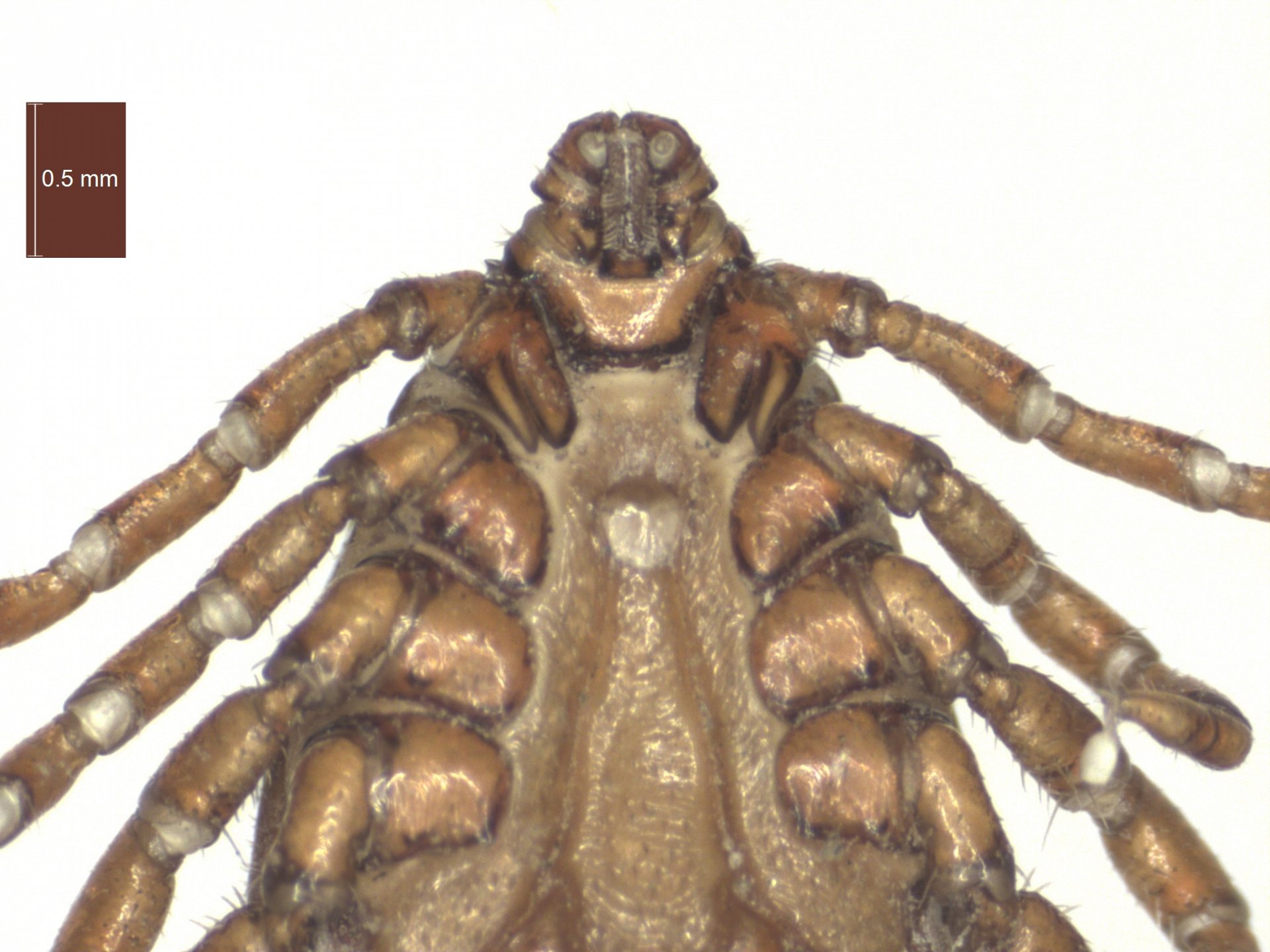
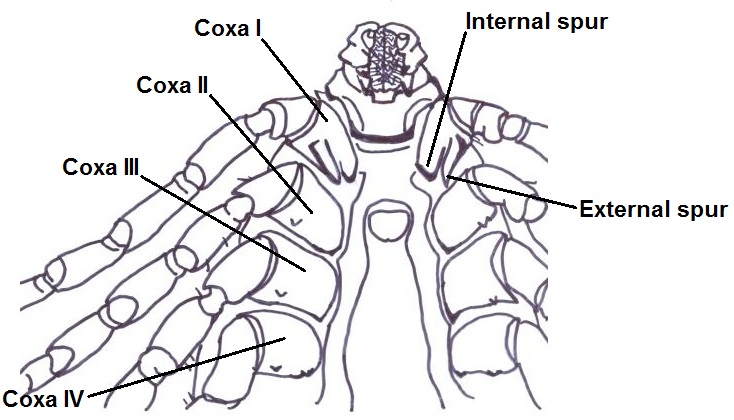
Adult male ventral features
- Coxae I: large, distinct, equally paired internal and external spurs
- Coxae II-IV: indistinct external spurs
- Accessory adanal shield present but small
- Adanal shields are broad and curved
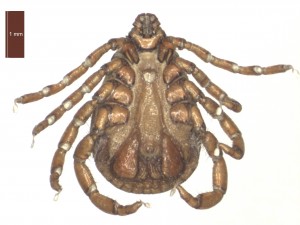
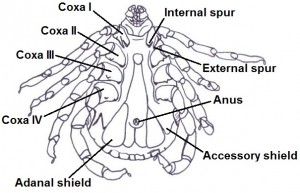
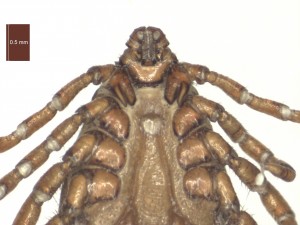
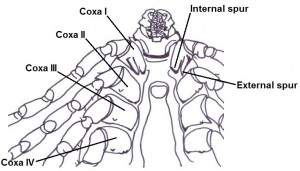
Adult male ventral view and adult male close up of coxae/ventral gnathosoma. (Click on pictures for a close up)