Also known as the Bont-legged tick
Hosts
Cattle, horses, dogs, human
Distribution
UK (Larvae and nymphs only from migratory birds), France, Denmark, Norway, Portugal
Pathogenesis
Cattle: Babesia ovis, Rickettsia aeschlimanii and Crimea-Congo haemorrhagic fever
Horse: Babesia caballi and Theileria equi
Hyalomma marginatum is also known to be a vector of;
Babesia equi
Nutallia equi
Brucella abortus
Crimean haemorrhagic fever in humans
Description
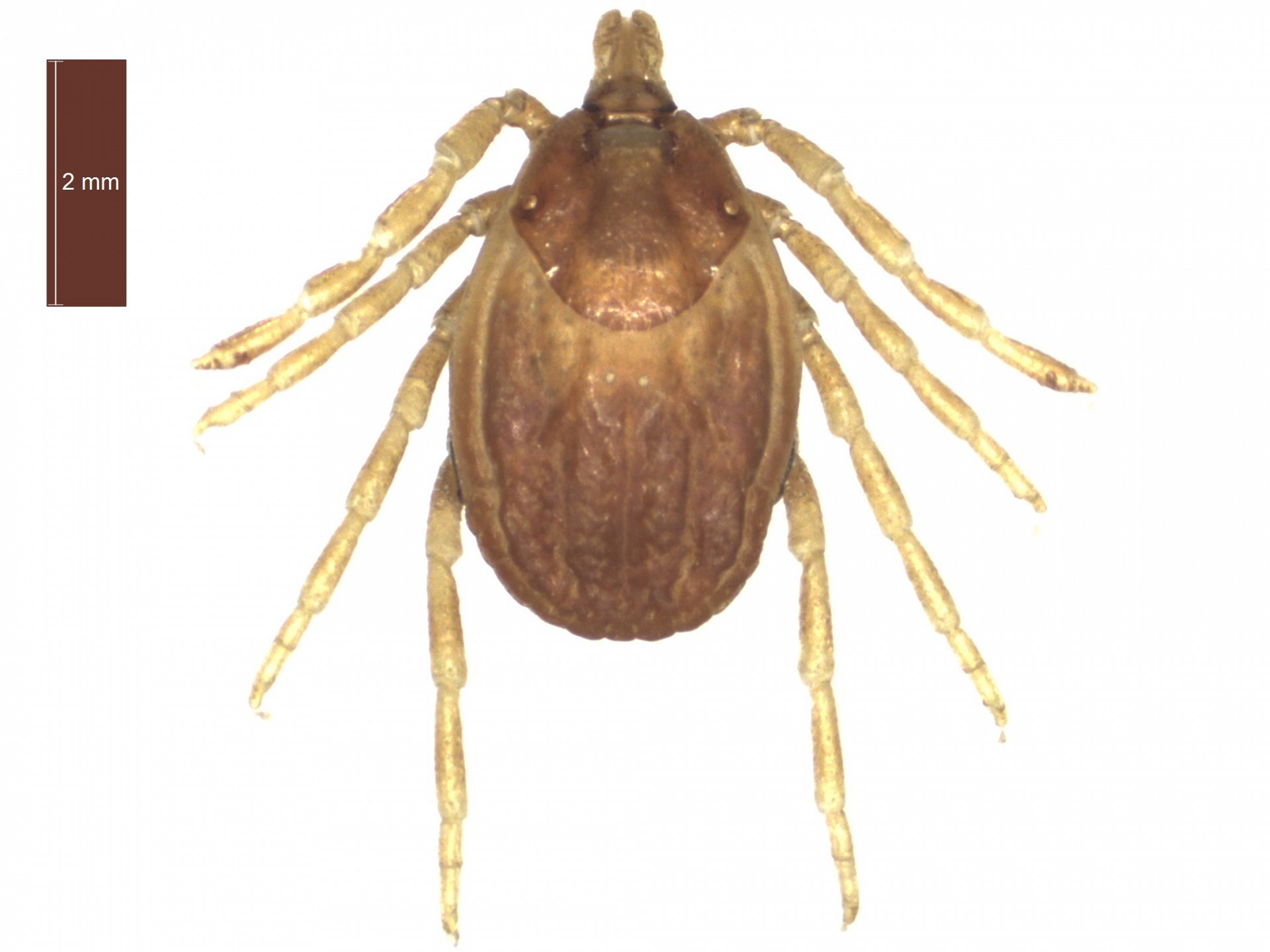
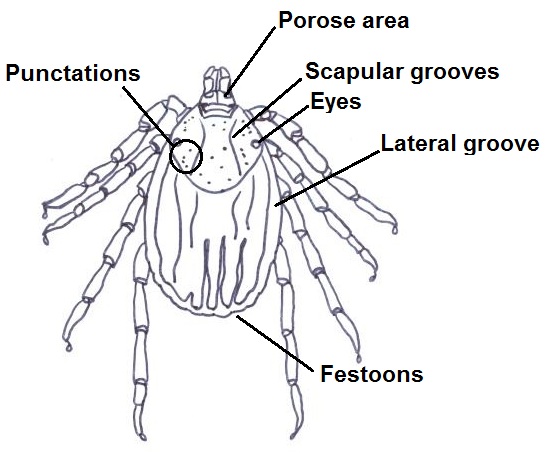
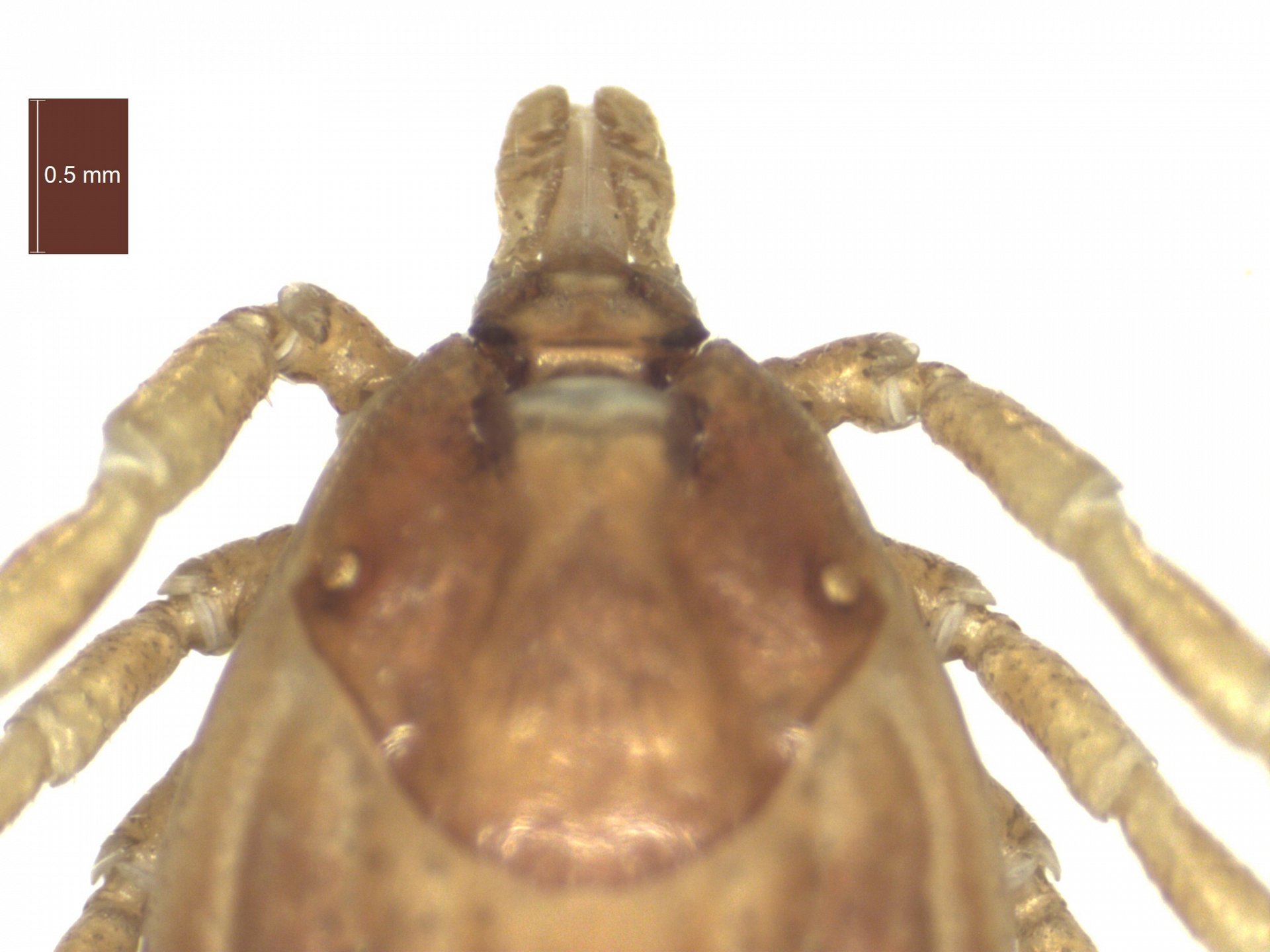
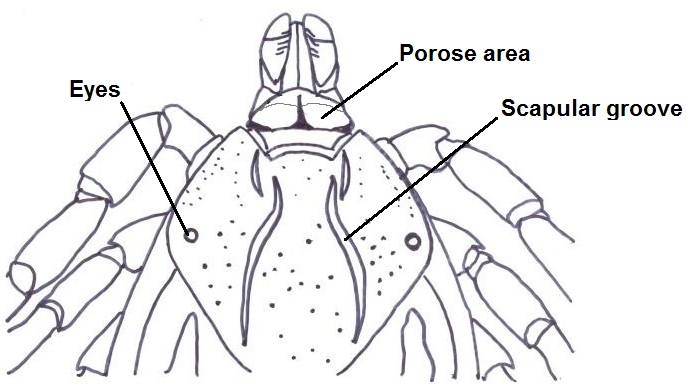
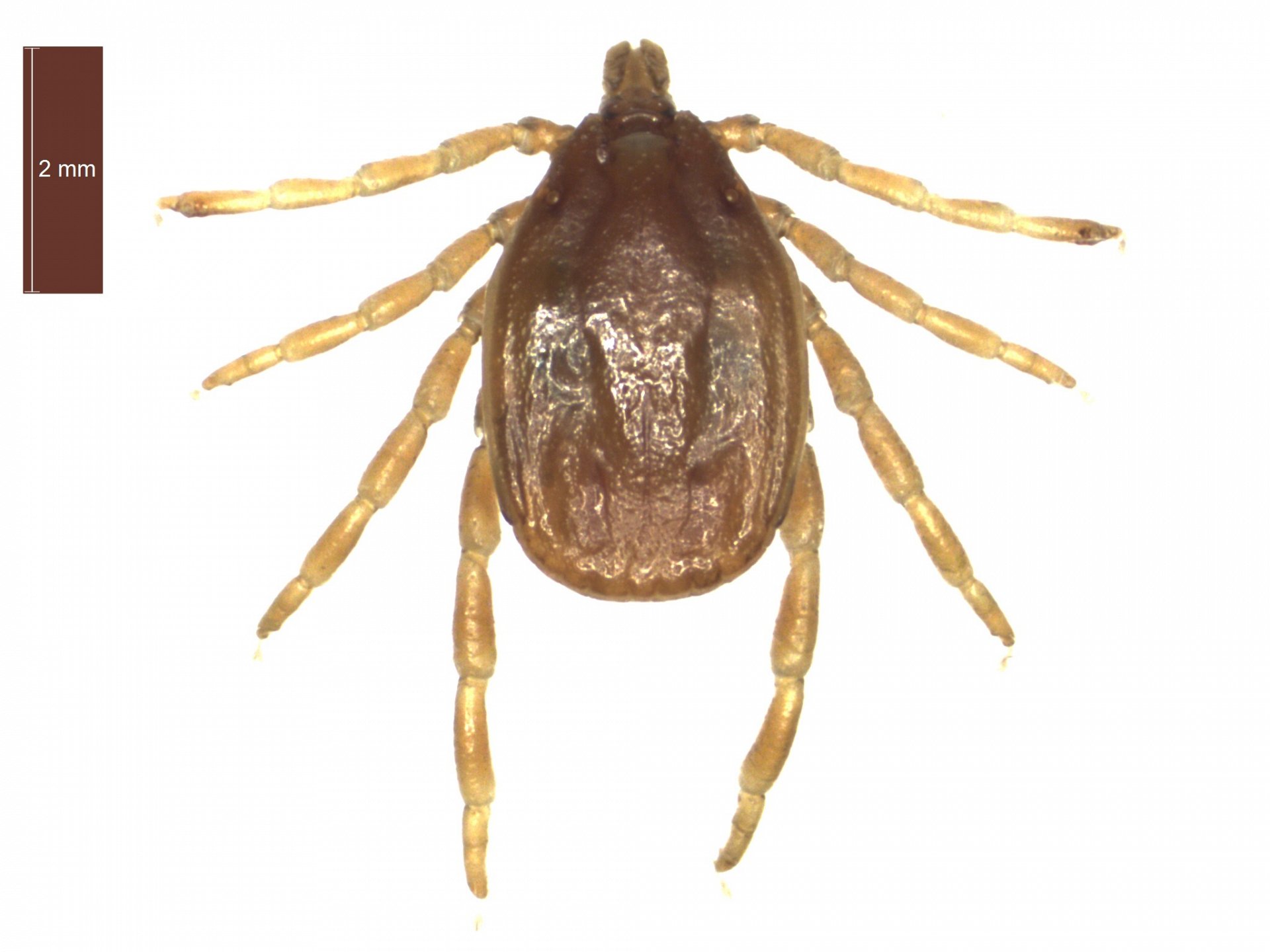
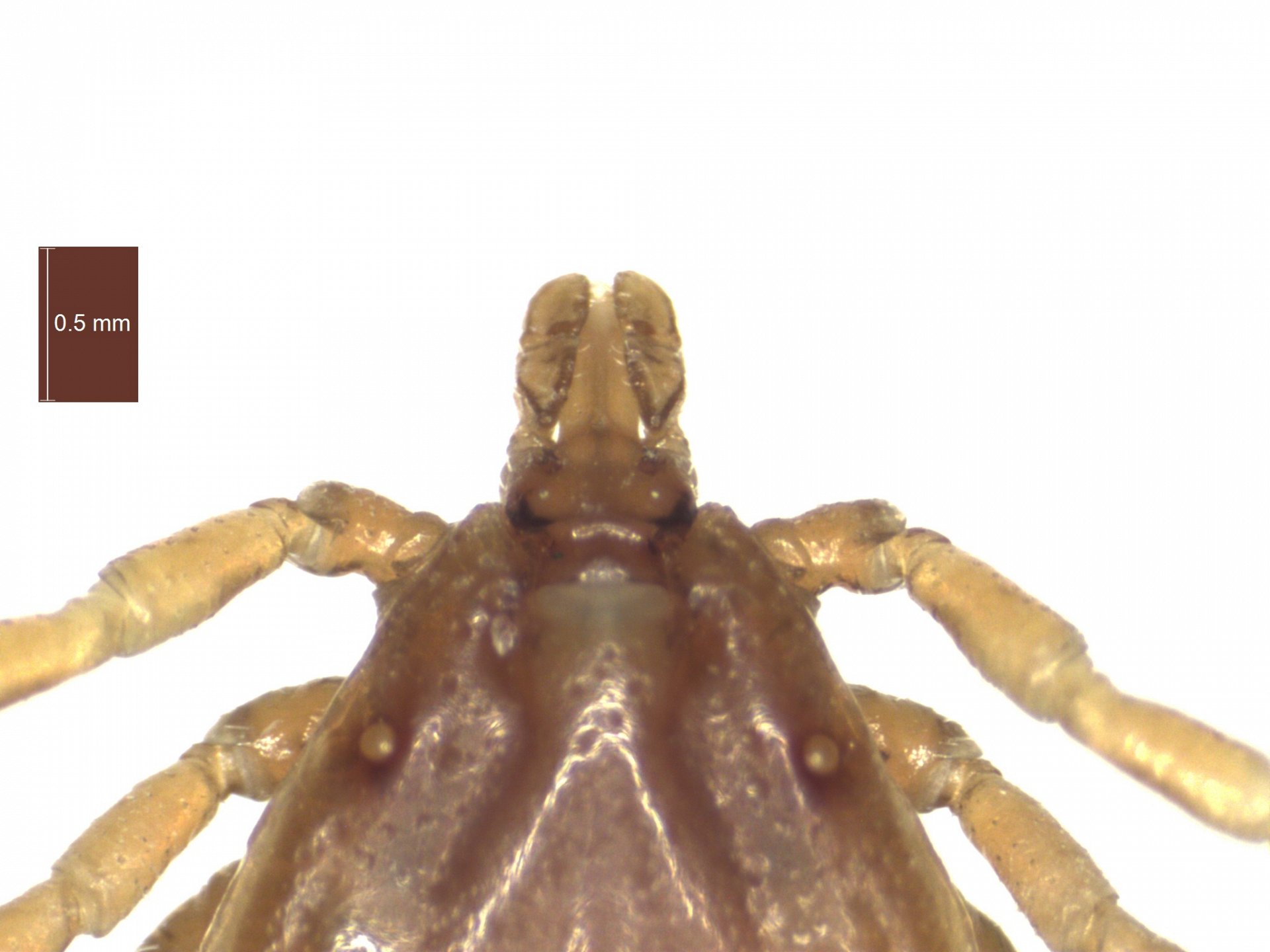
Adult female dorsal features
- Scapular grooves steep
- Legs with pale rings
- Punctations are small and sparse
- Porose areas large
- Unfed female can measure 5.0mm-6.5mm in length
- Engorged females can measure up to in length 20mm in length
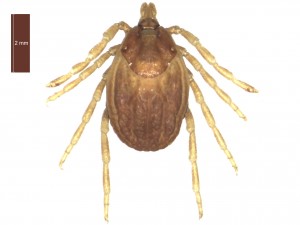
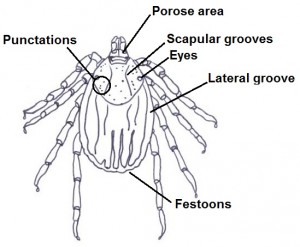
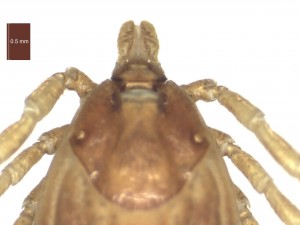
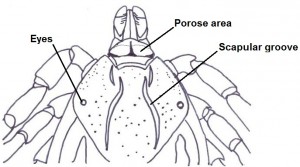
Adult female dorsal view and adult female close up of gnathosoma. (Click on pictures for a close up)
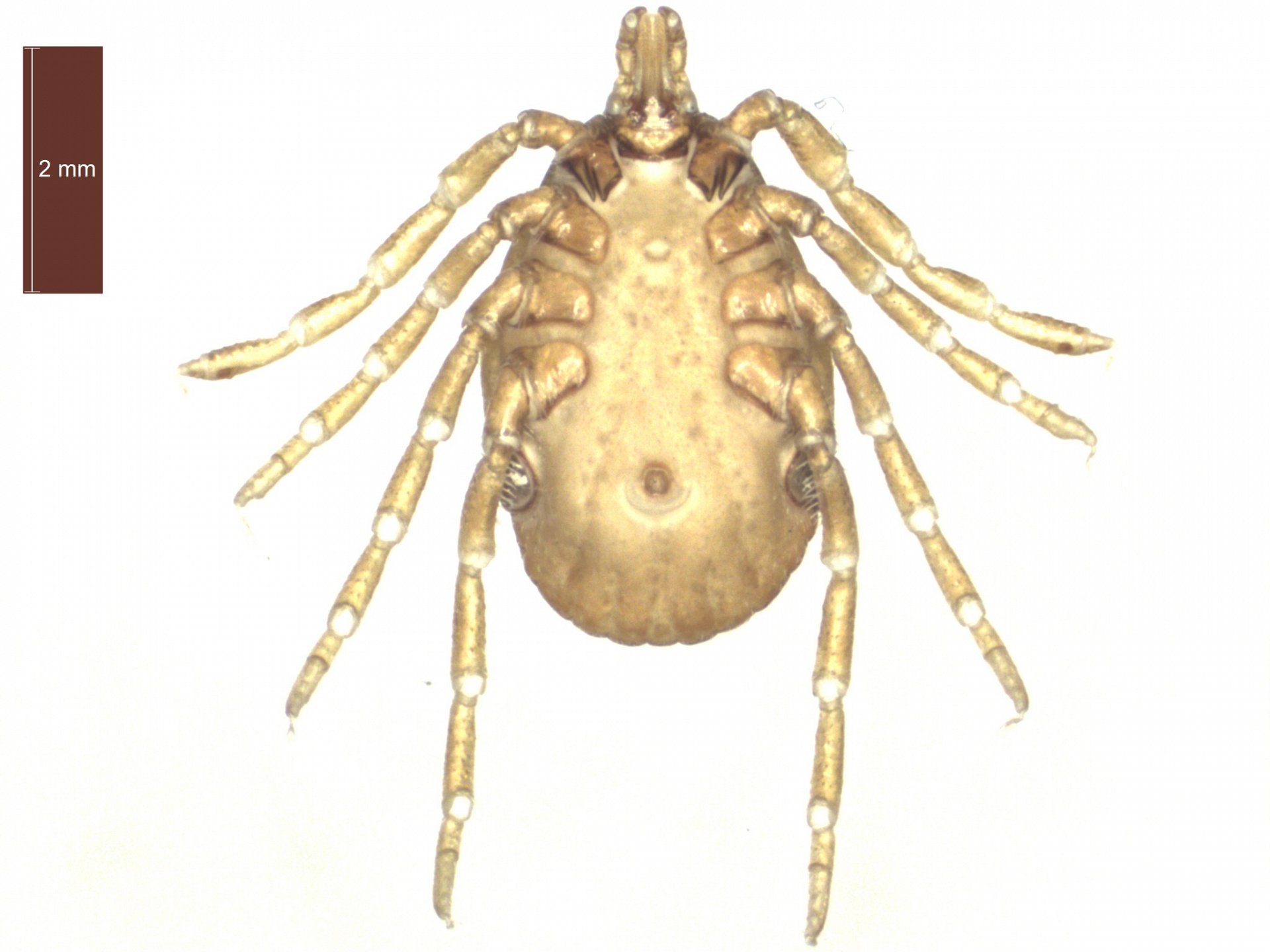
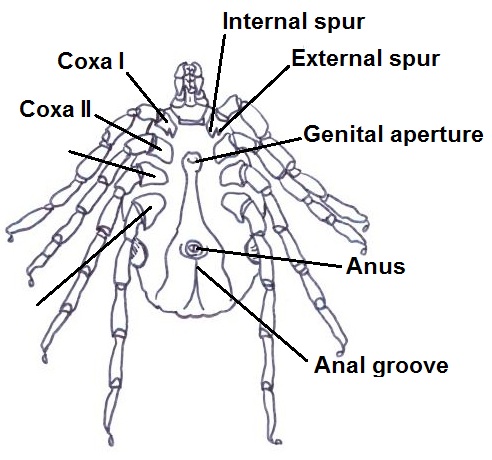
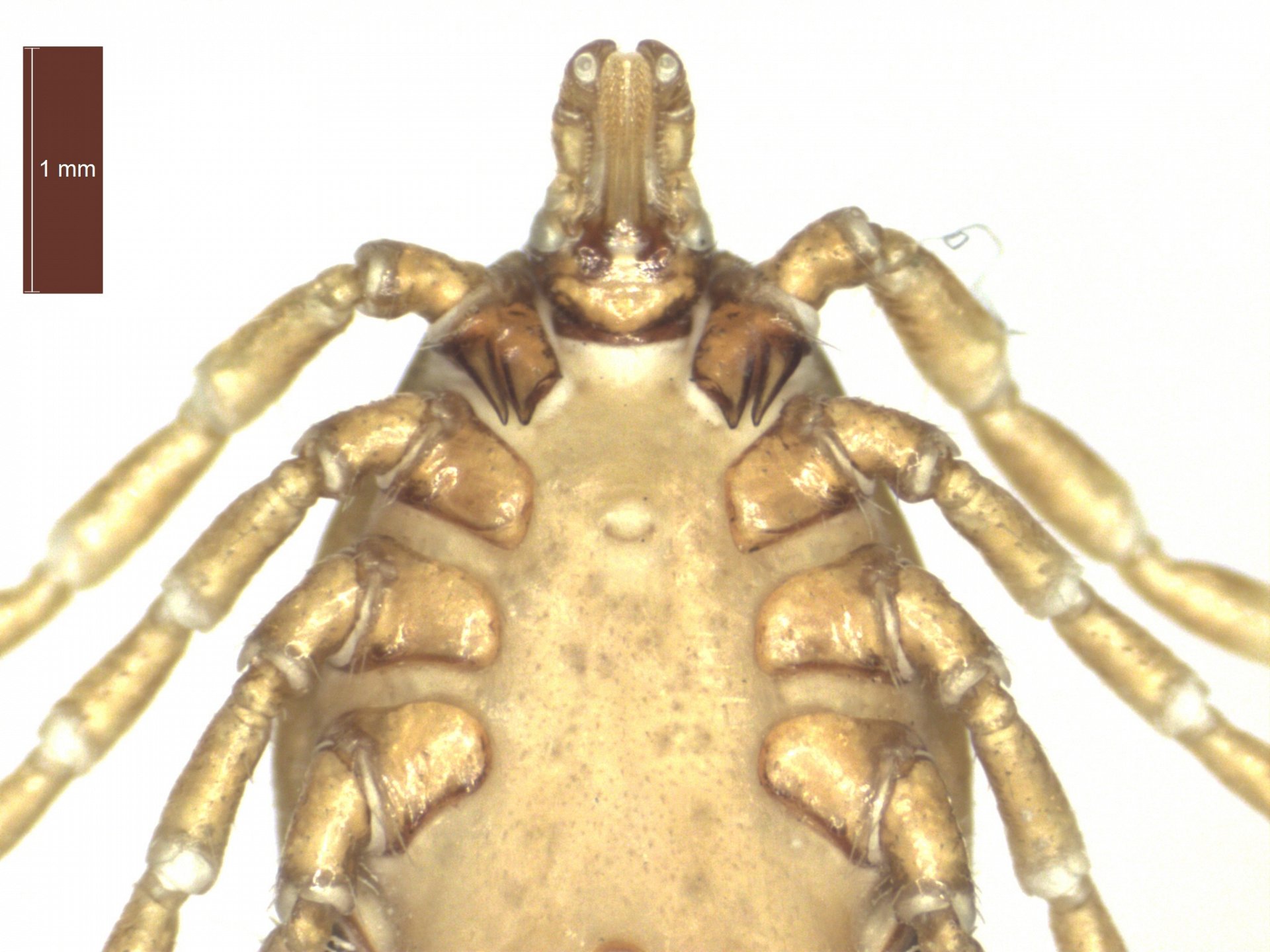
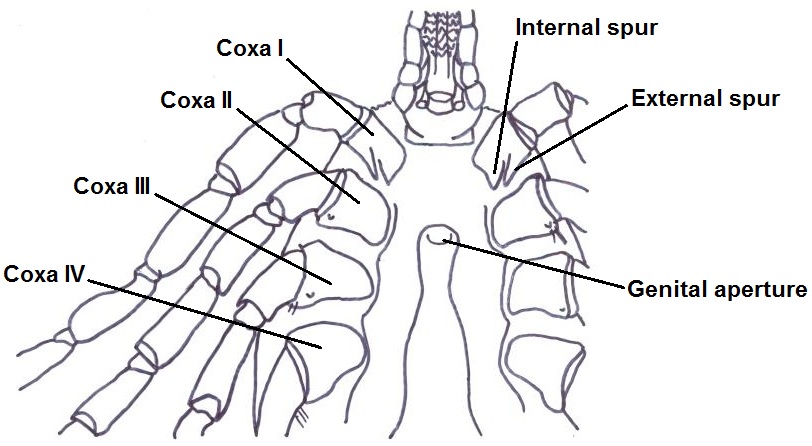
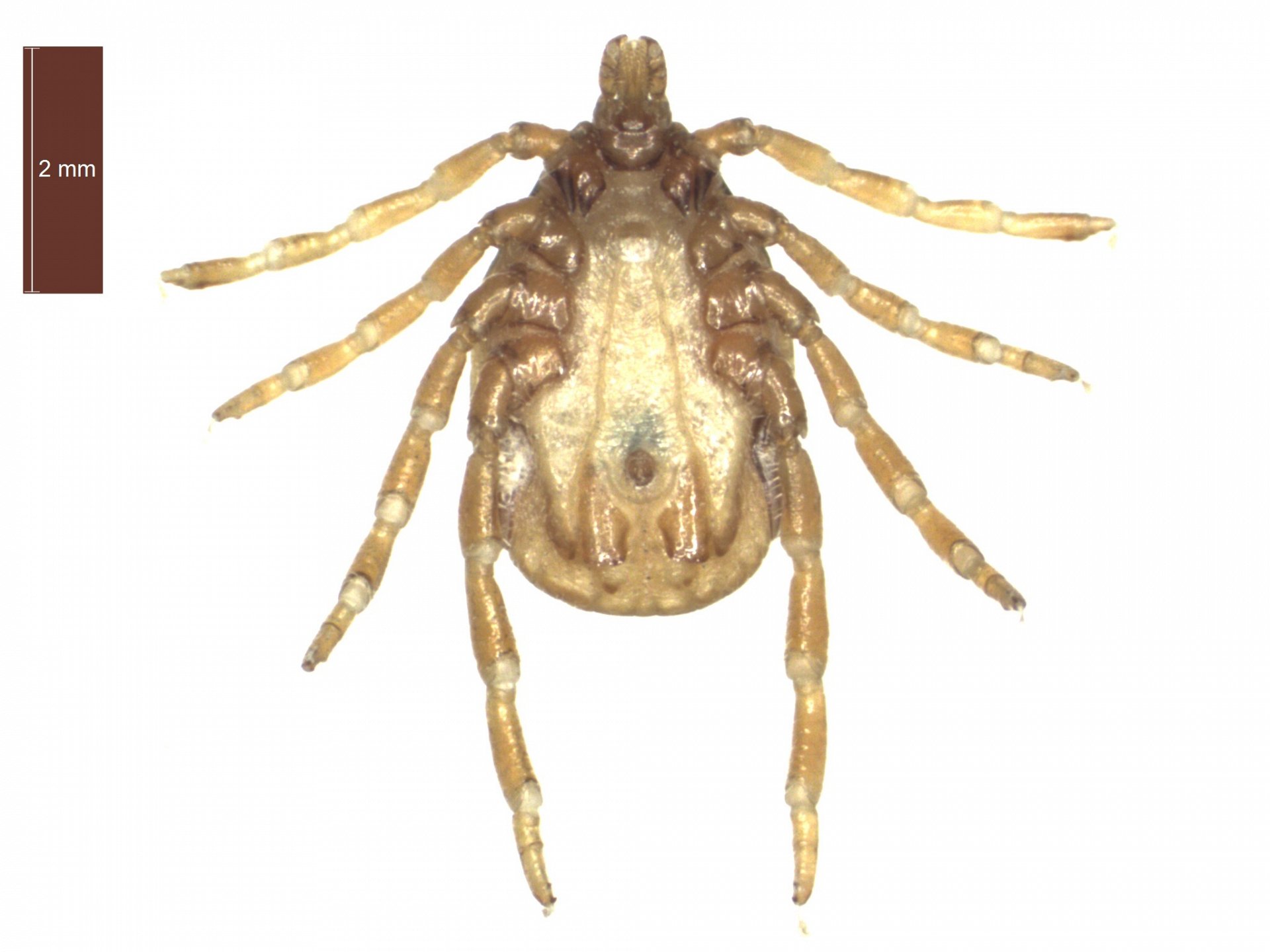
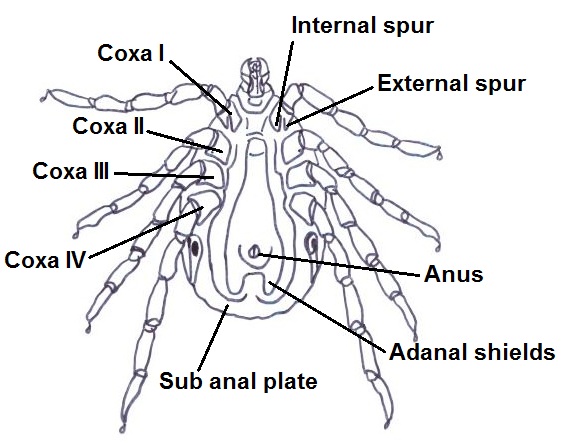
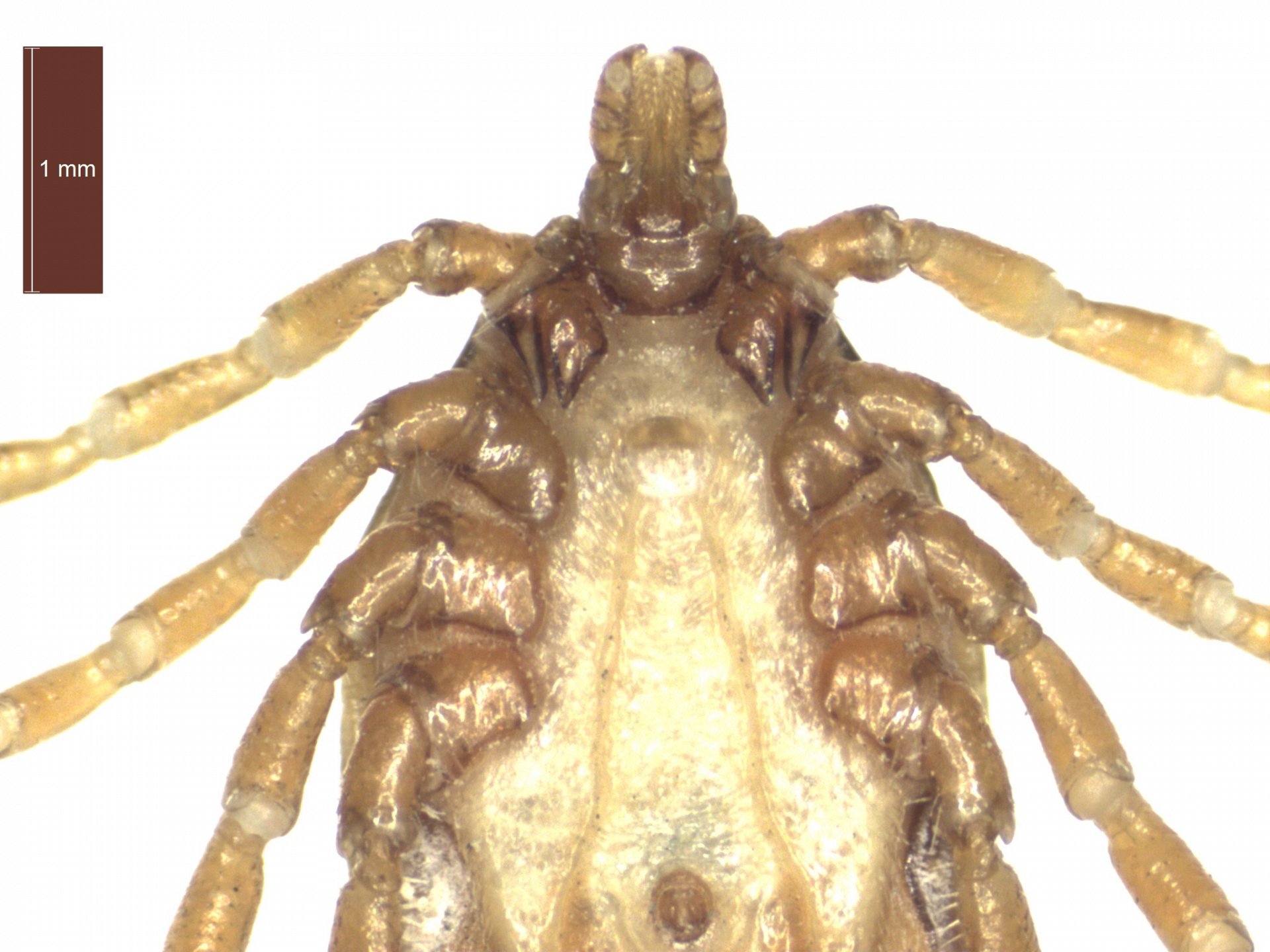
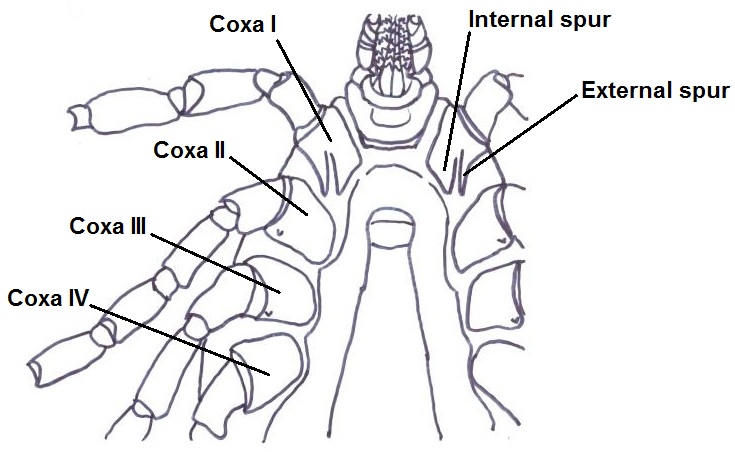
Adult female ventral features
- Coxae I: long and distinct internal and external spur, that are large and equal
- Coxae II-IV: indistinct external spurs that can be hard to see
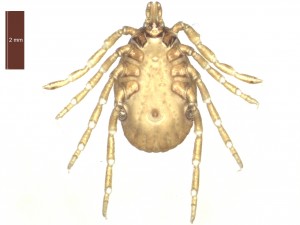
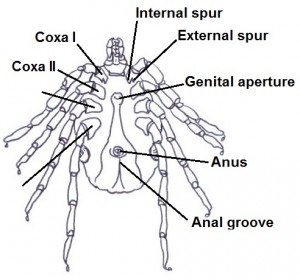
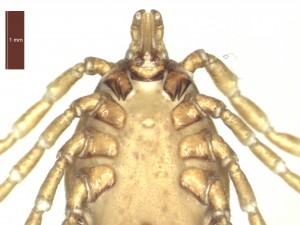
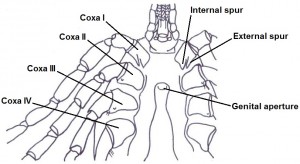
Adult female ventral view and adult female close up of coxae/ventral gnathosoma. (Click on pictures for a close up)
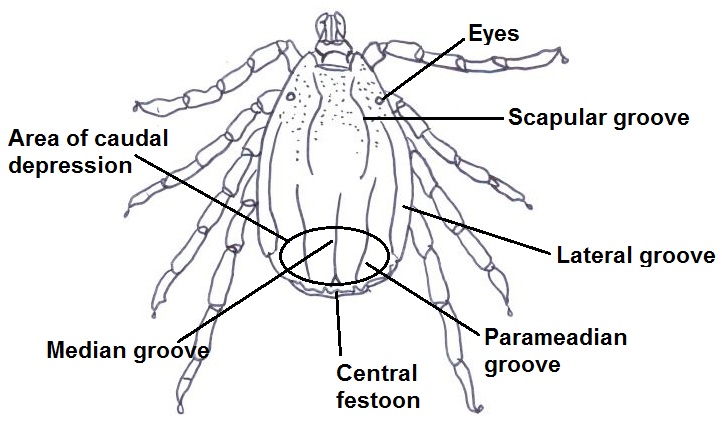
Adult male dorsal features
- Cervical field depression is apparent
- Lateral grooves are long
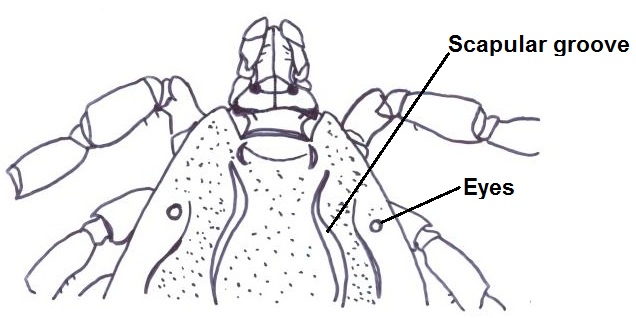
- Scapular grooves present
- Caudal depression is present
- Central festoon is dark in colour
- Paramedian grooves are small and indistinct
- Males can measure between 3.8mm-4.5mm
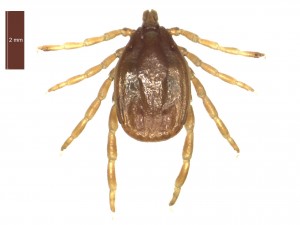
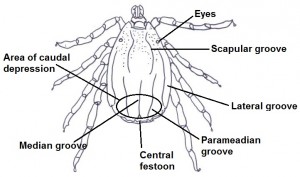
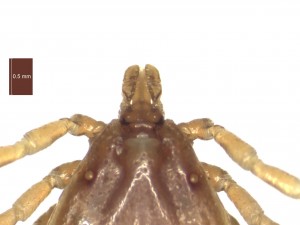
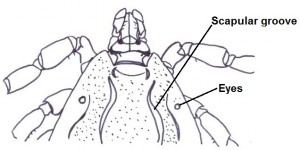
Adult male dorsal view and adult male close up of gnathosoma. (Click on pictures for a close up)
Adult male ventral features
- Coxae I: long and distinct internal and external spur, that are large and equal
- Coxae II-IV: indistinct external spurs that can be hard to see
- Adanal shields present; square ended
- Sub-anal plates present; distinct and aligned with adanal shield
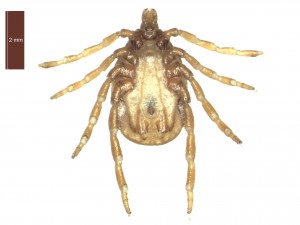
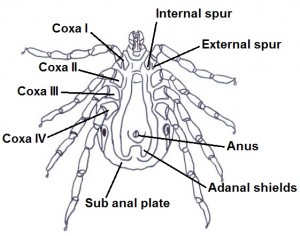
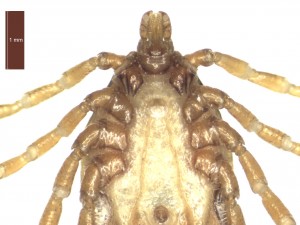
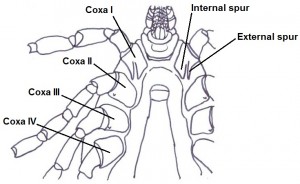
Adult male ventral view and adult male close up of coxae/ventral gnathosoma. (Click on pictures for a close up)