Also known as the Dog tick/British dog tick
Hosts
Dog, fox, Badger, sheep, horse, cats
Distribution
Widespread throughout Europe and as far East as Russia
Ixodes canisuga have a relatively thick cuticle, resulting in an ability to withstand dry conditions. For this reason it is often found in kennels
Pathogenesis
Dogs: large infestation may cause dermatitis pruritus, alopecia and anaemia
Other pathogens and diseases associated with Ixodes canisuga include:
Babesia missiroli (badgers)
Pasteurella pestis (in Russia)
Description
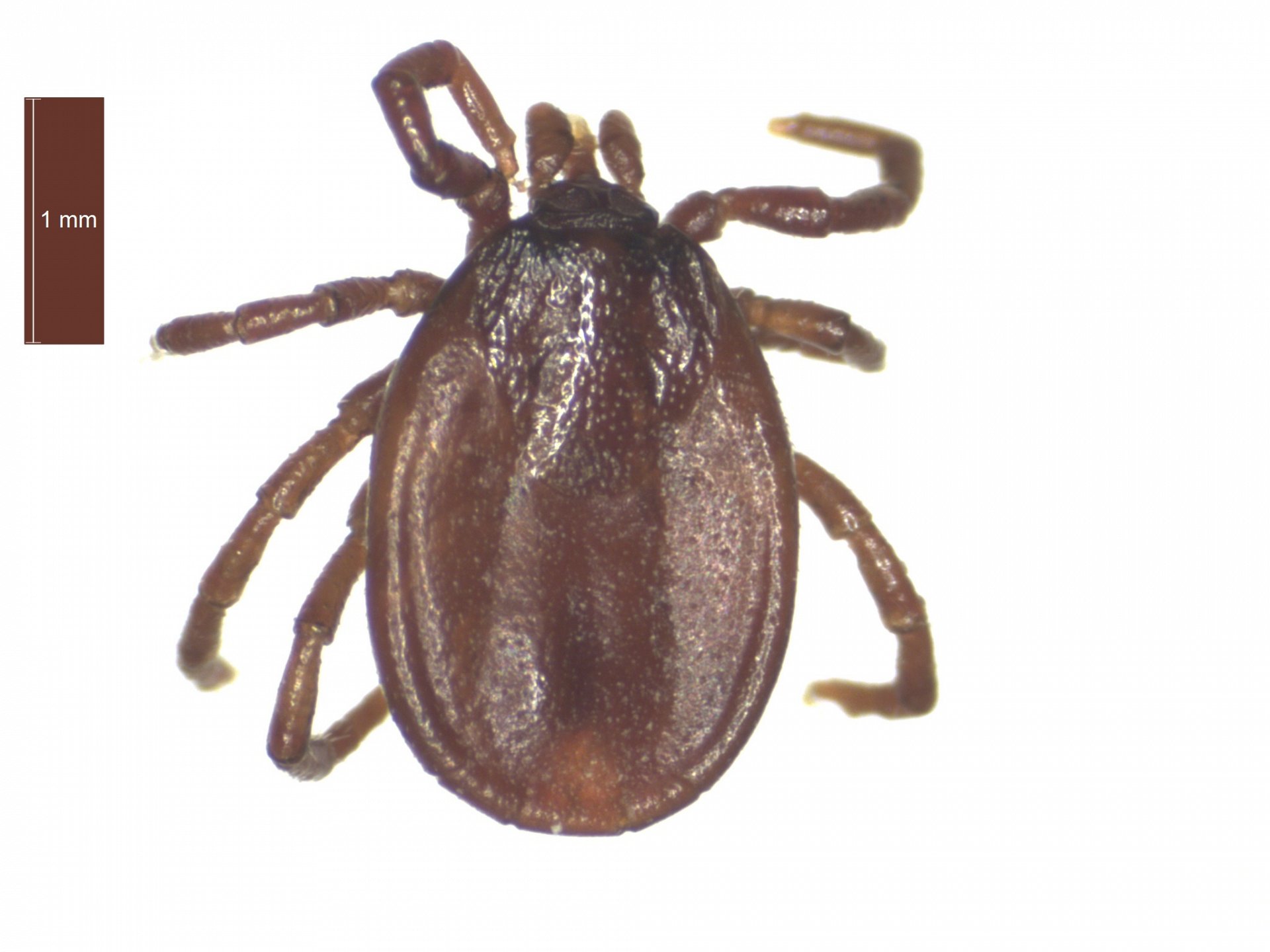
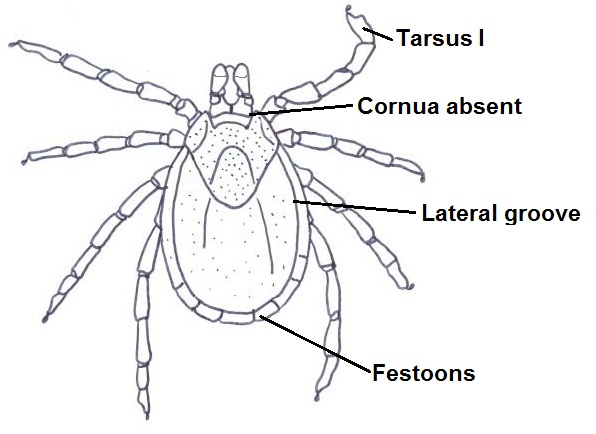
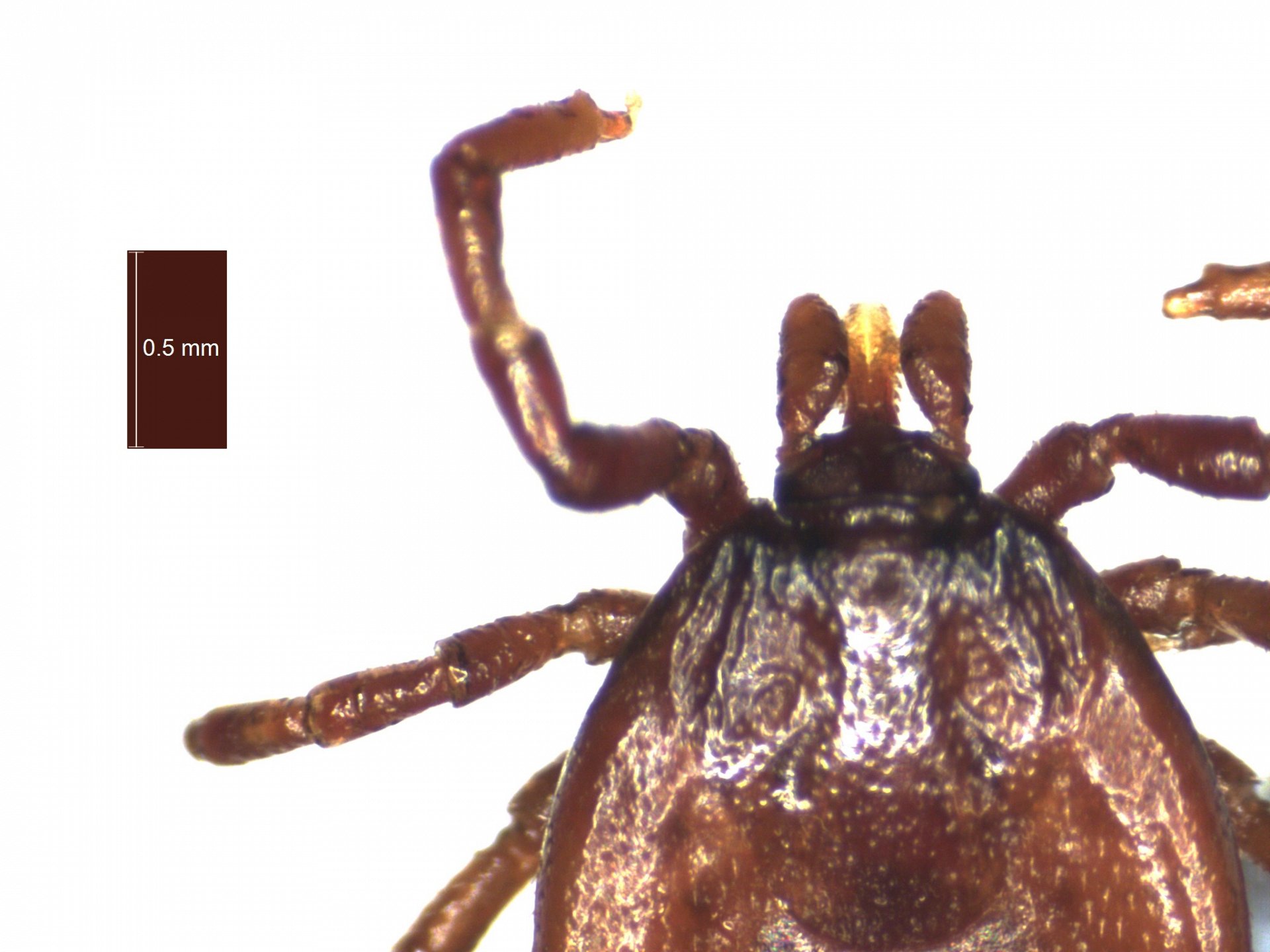
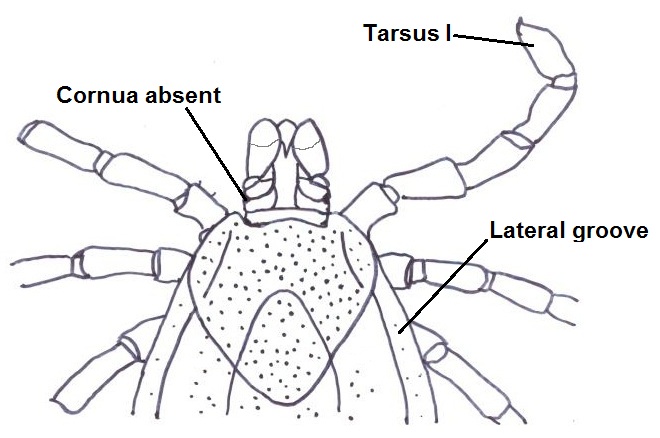
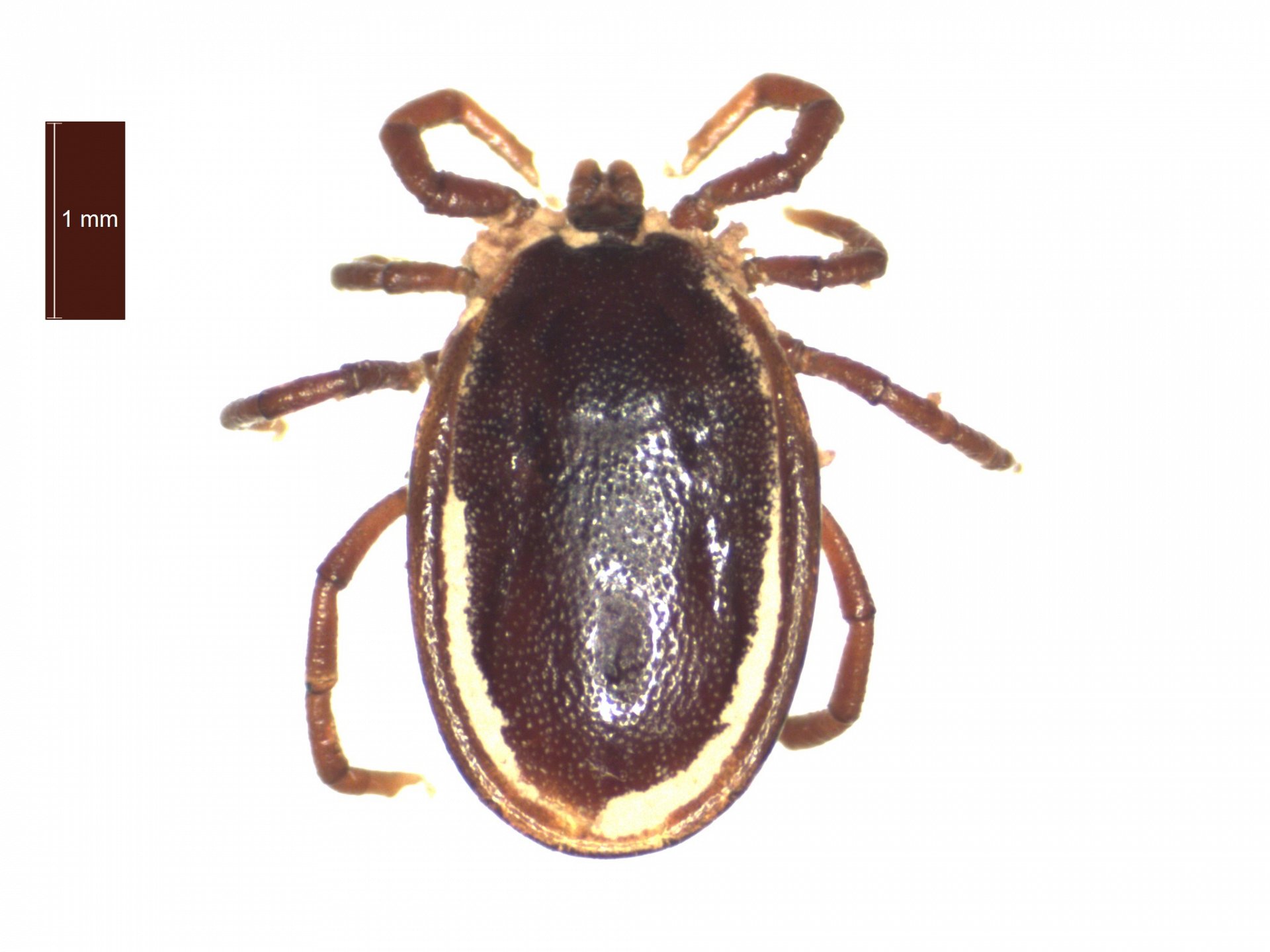
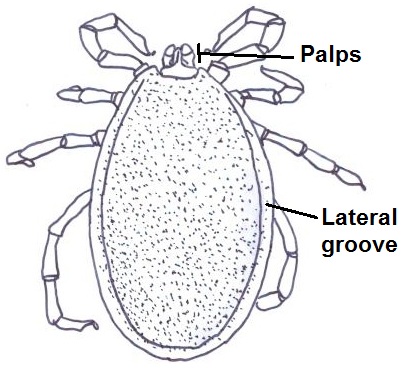
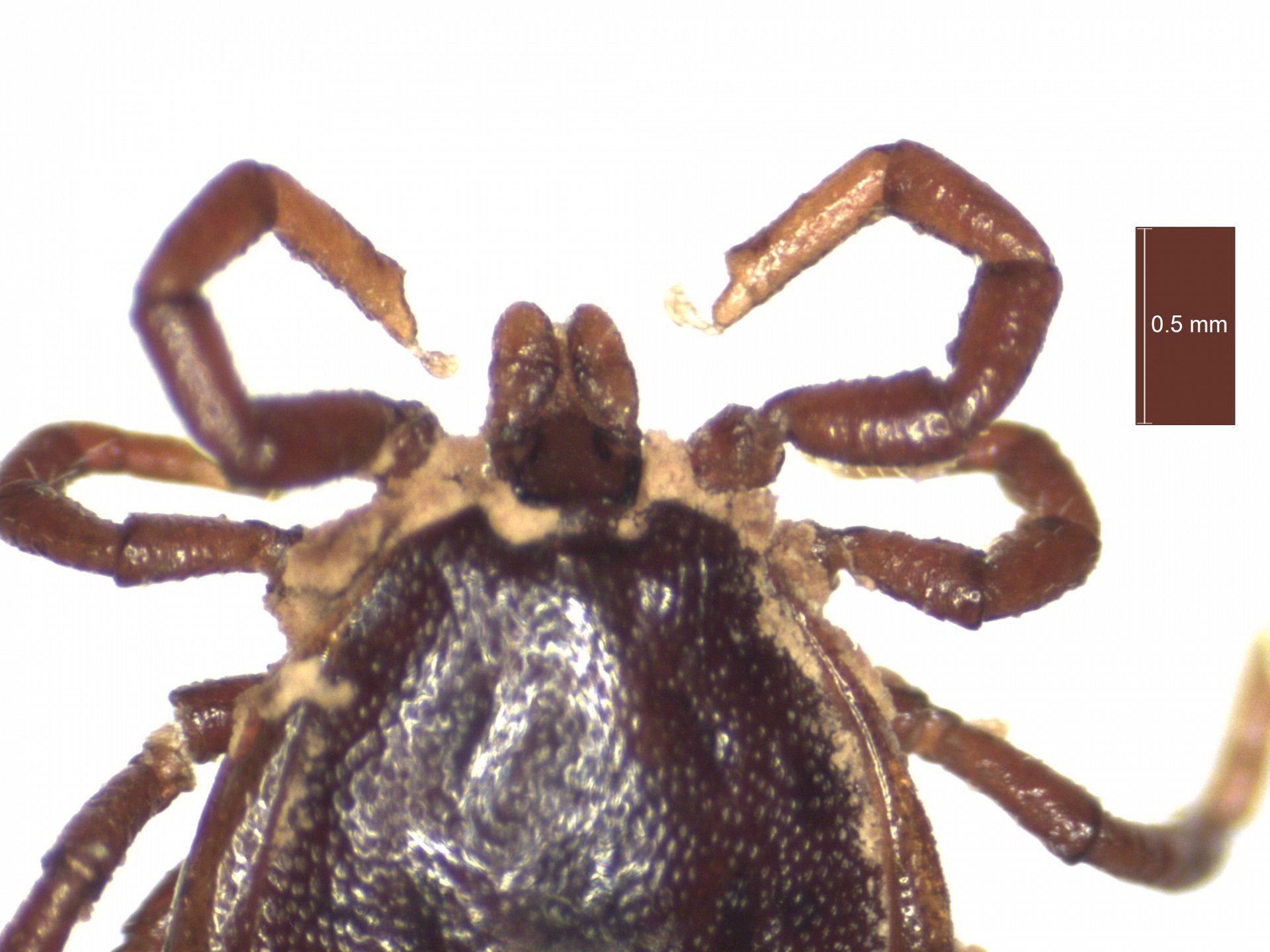
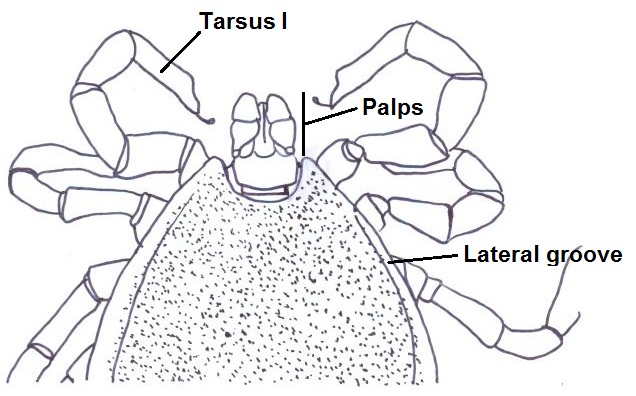
Adult female dorsal features
- Cornua absent
- Tarsus I is humped when viewed in profile
- Length of unfed female ranges between 2.8mm-3.2mm
- Length of engorged female can be up to 8.0mm
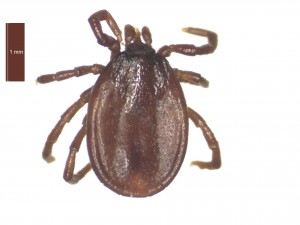
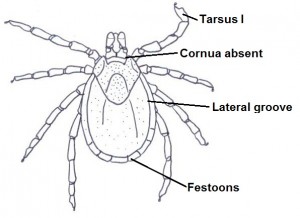
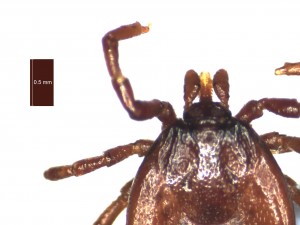
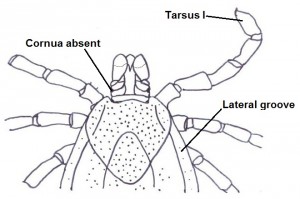
Adult female dorsal view and adult female close up of gnathosoma. (Click on pictures for a close up)
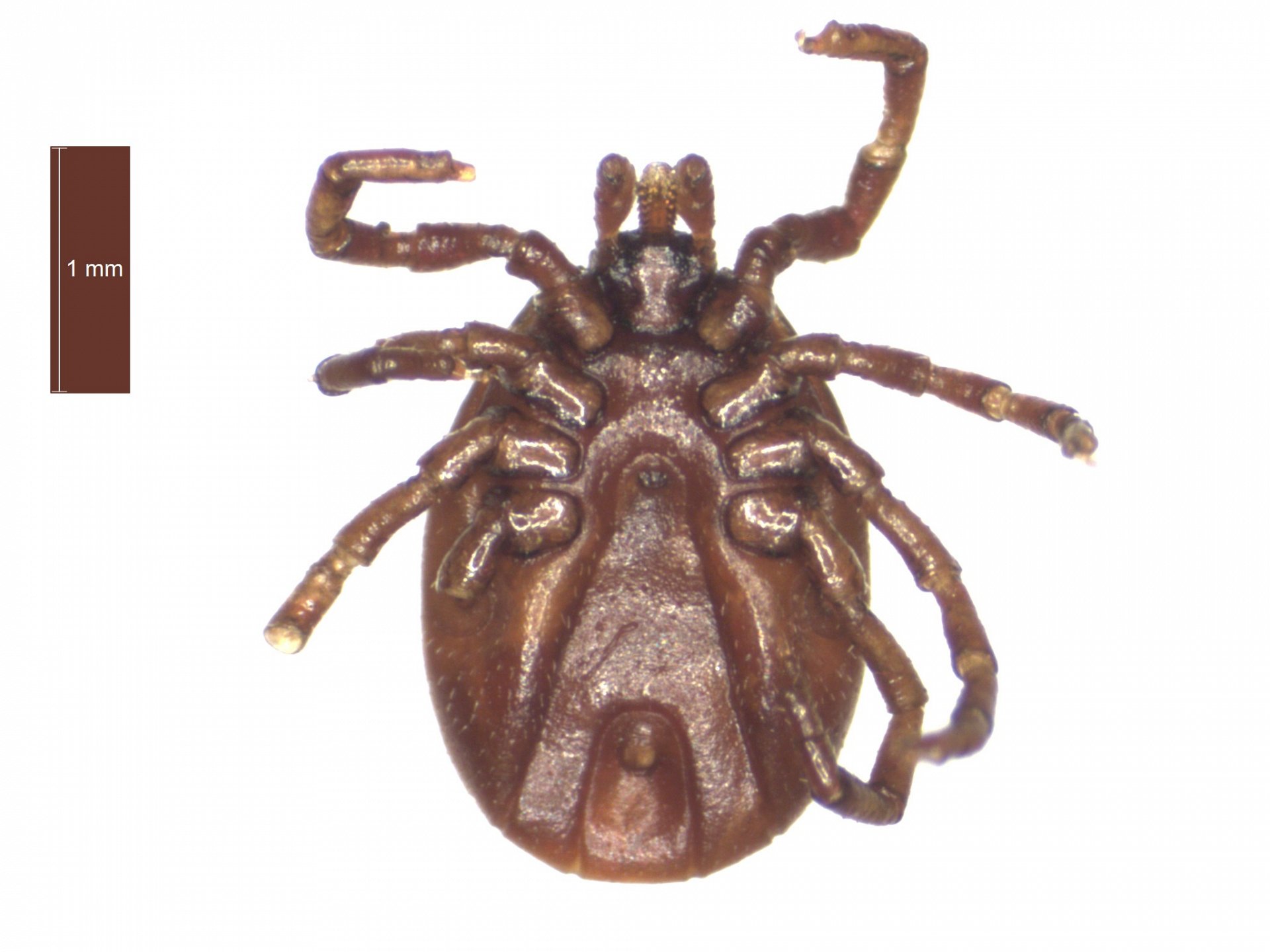
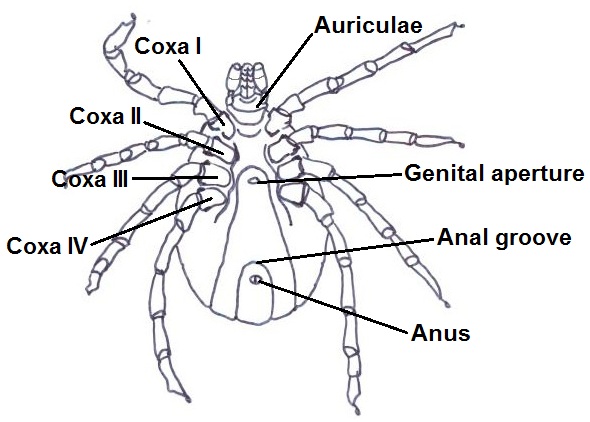
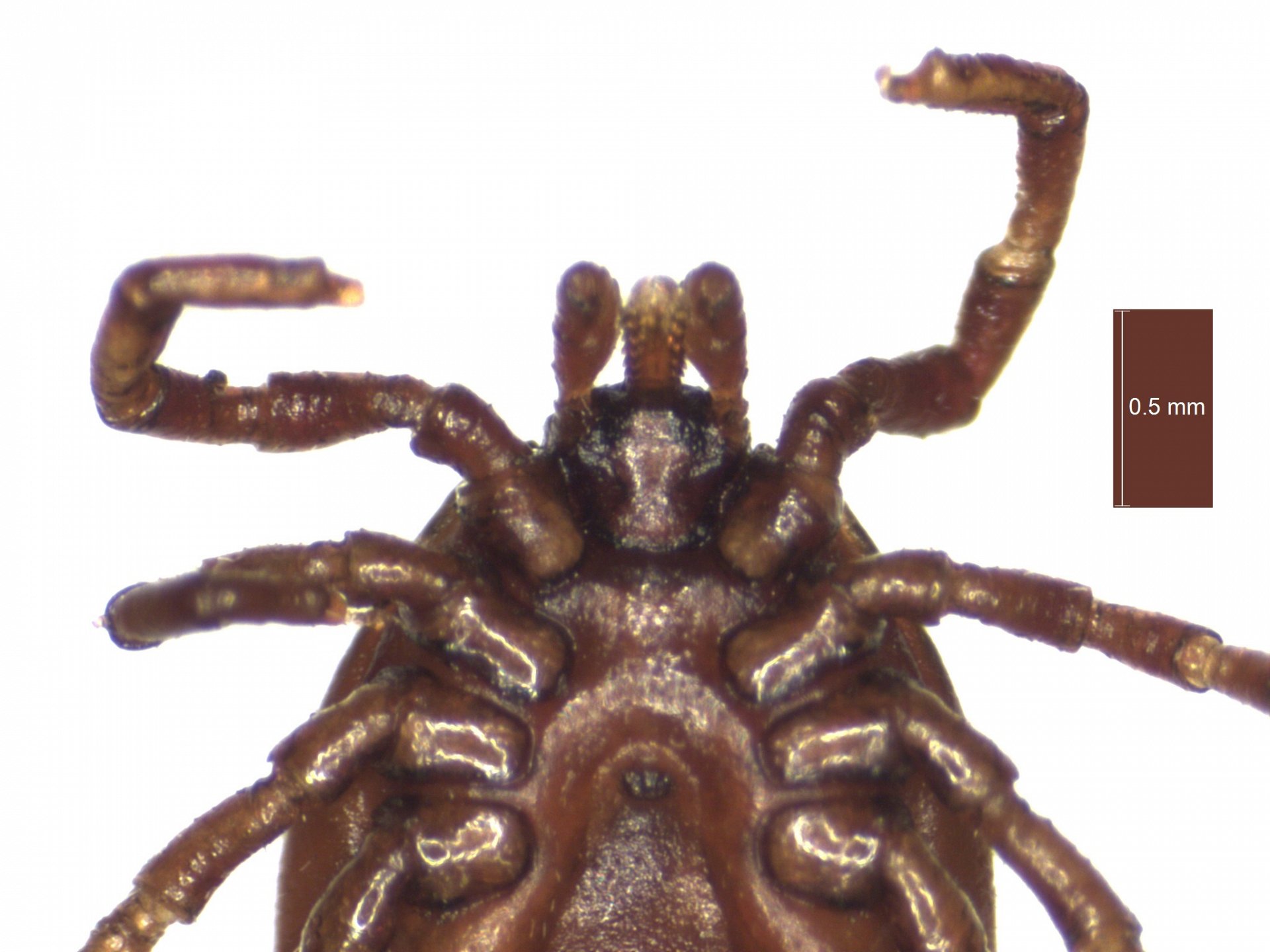
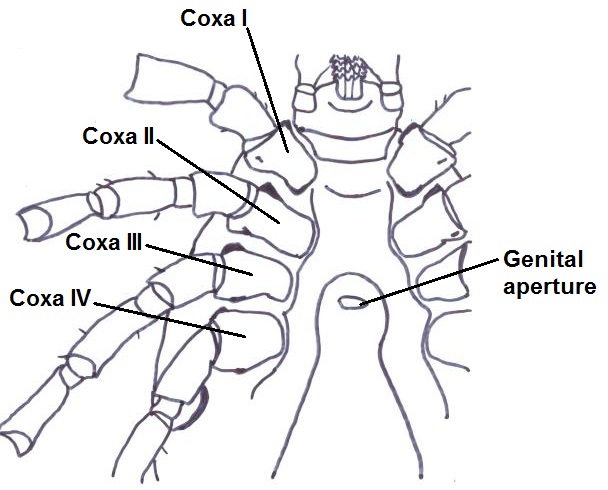
Adult female ventral features
- Coxae I-IV: lack internal and external spurs
- Auriculae present but indistinct
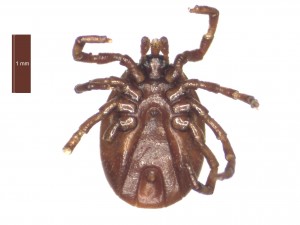
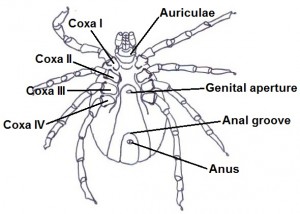
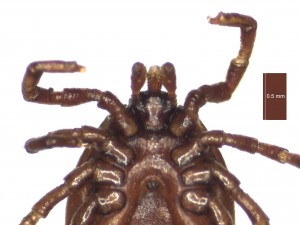
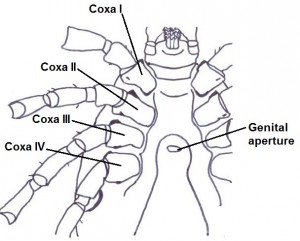
Adult female ventral view and adult female close up of coxae/ventral gnathosoma. (Click on pictures for a close up)
Adult male dorsal features
- Palps short and blunt
- Overall length unfed 2.0mm-2.2mm
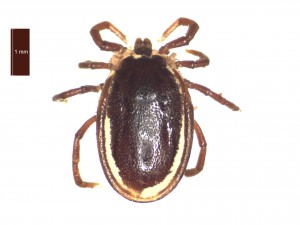
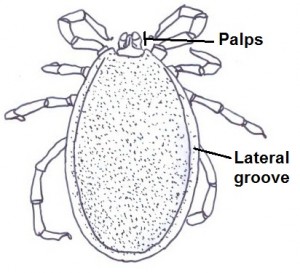
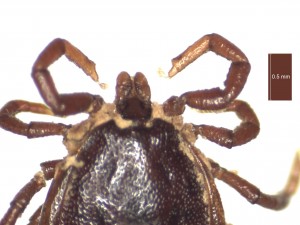
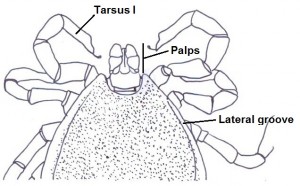
Adult male dorsal view and adult male close up of gnathosoma. (Click on pictures for a close up)
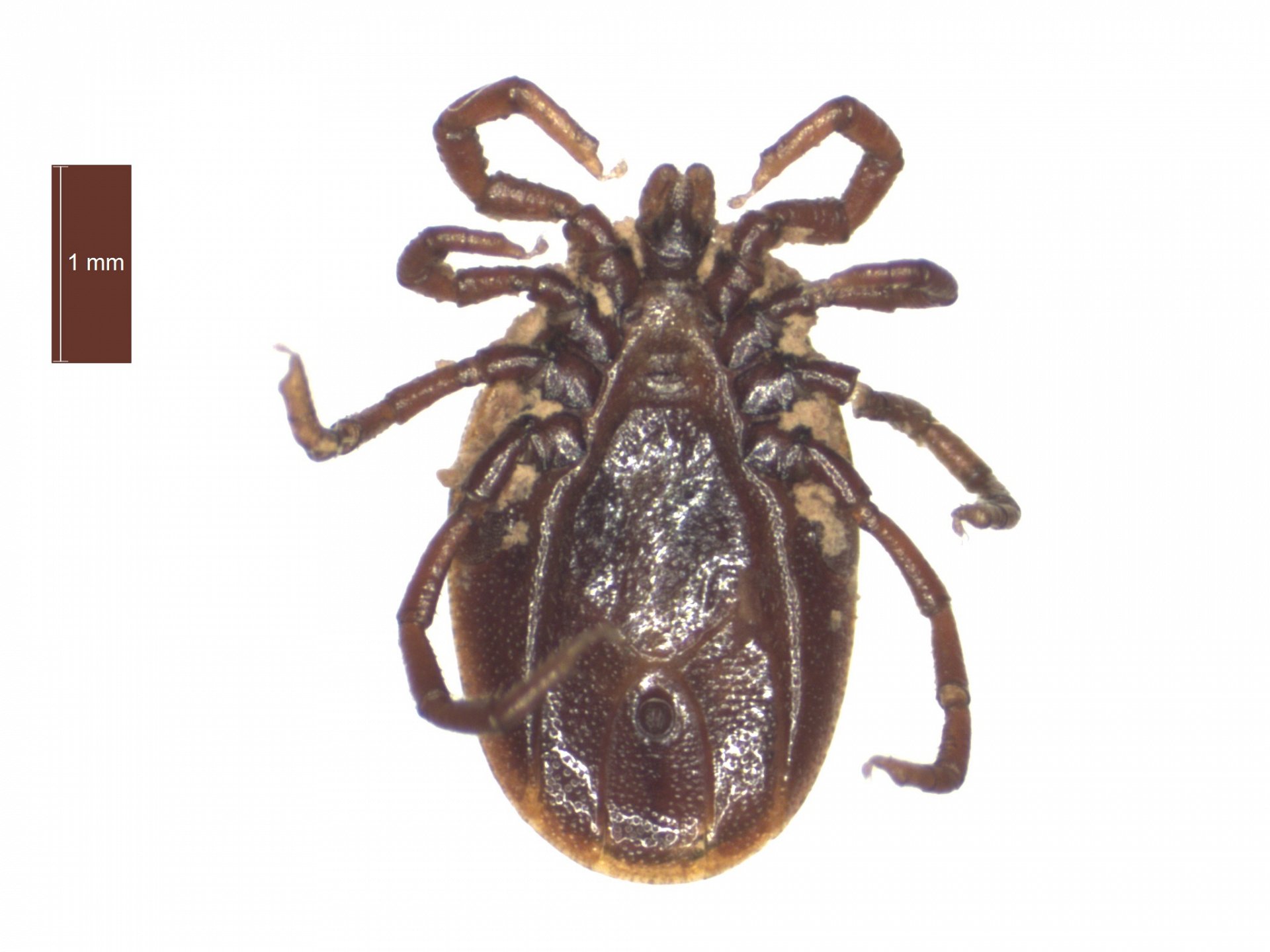
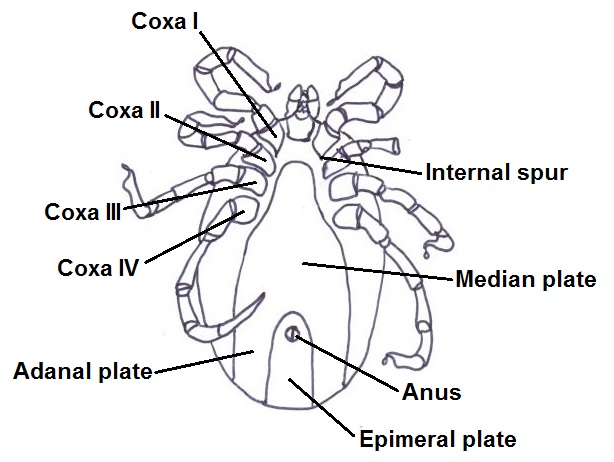
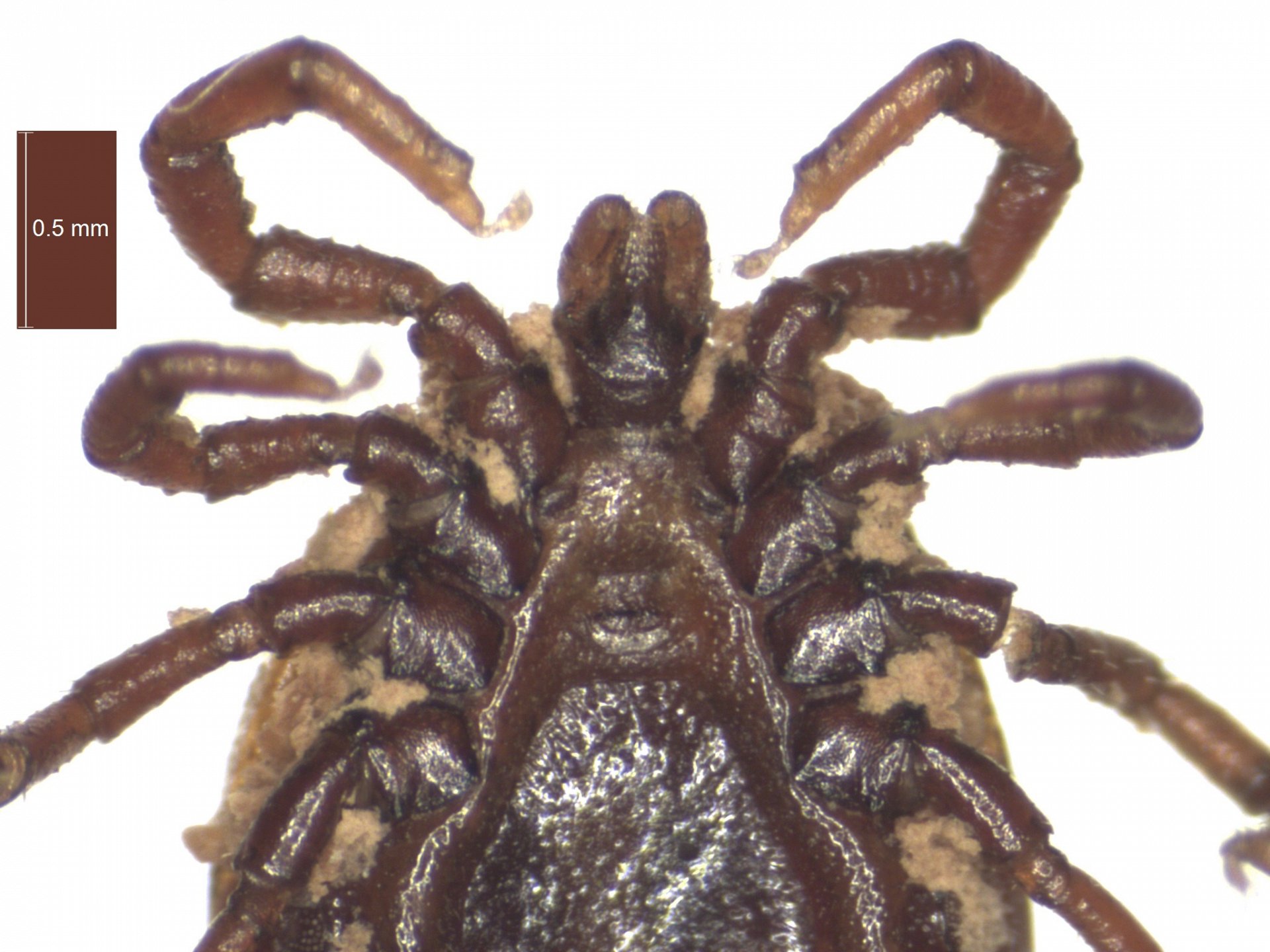
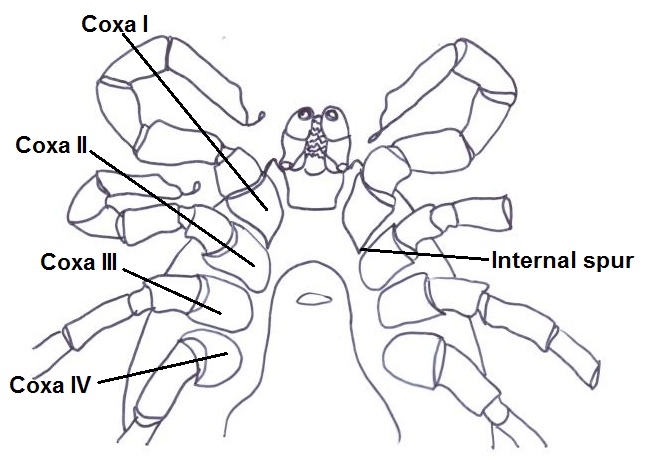
Adult male ventral features
- Coxae I: short internal spur
- Coxae II-IV: internal and external spurs absent
- Median plate has a narrow anterior boarder and broad posterior
- Both adanal and epimeral plates present and almost as large as median plate
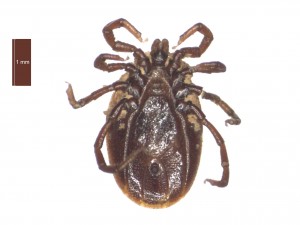
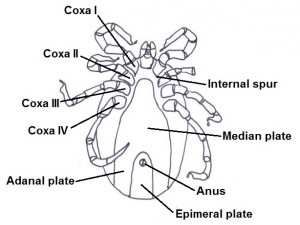
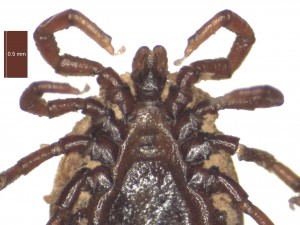
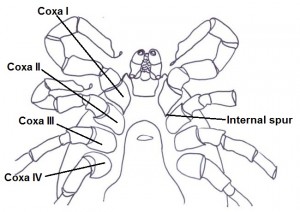
Adult male ventral view and adult male close up of coxae/ventral gnathosoma. (Click on pictures for a close up)