Also known as the Seabird tick
Hosts
Seabirds: puffin, penguin, guillemot, razorbill, kittiwake, gannet, fulmar, gull, cormorant, shag, black guillemot, curlew, crossbill, starling, wheatear
Distribution
French territories (Crozet Islands, Kerguelen Islands), North West England, Ireland, Norway, Iceland
Ixodes uriae are generally found in nests of birds that breed as perennial colonies and can be found in vacated nests under stones or in cracks
Pathogenesis
Seabirds: Borrelia burgdorferi and approximately 53 types of arboviruses have been detected from I. uriae
Description
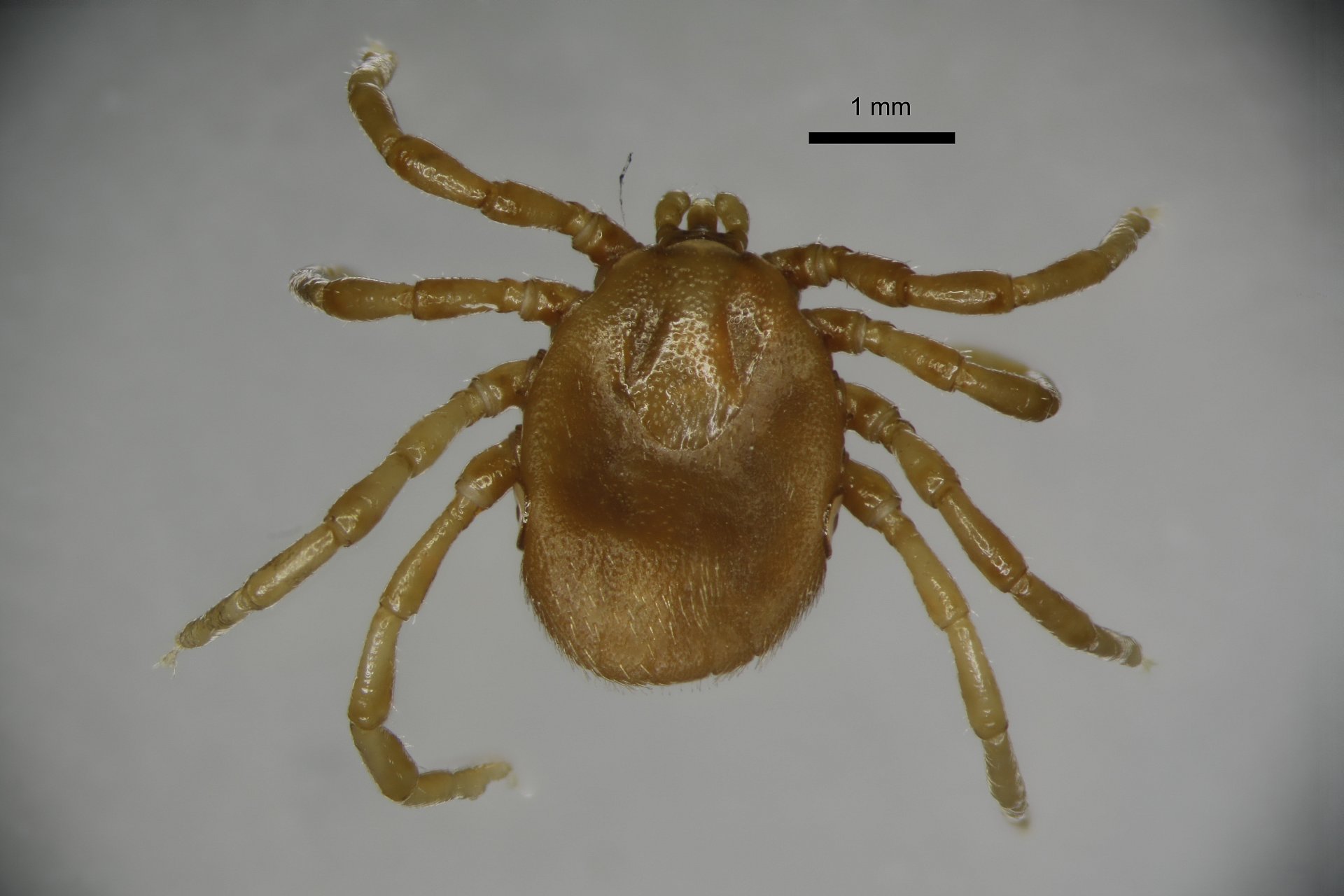
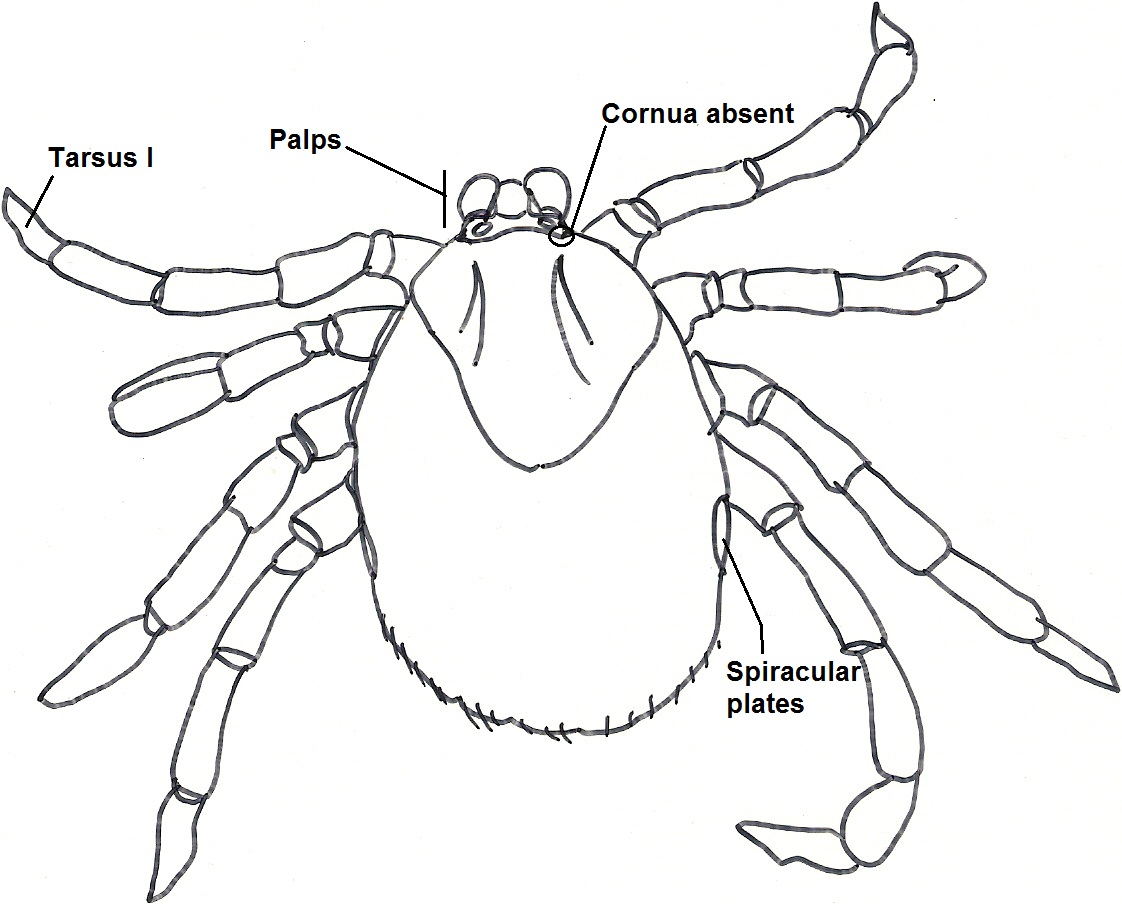
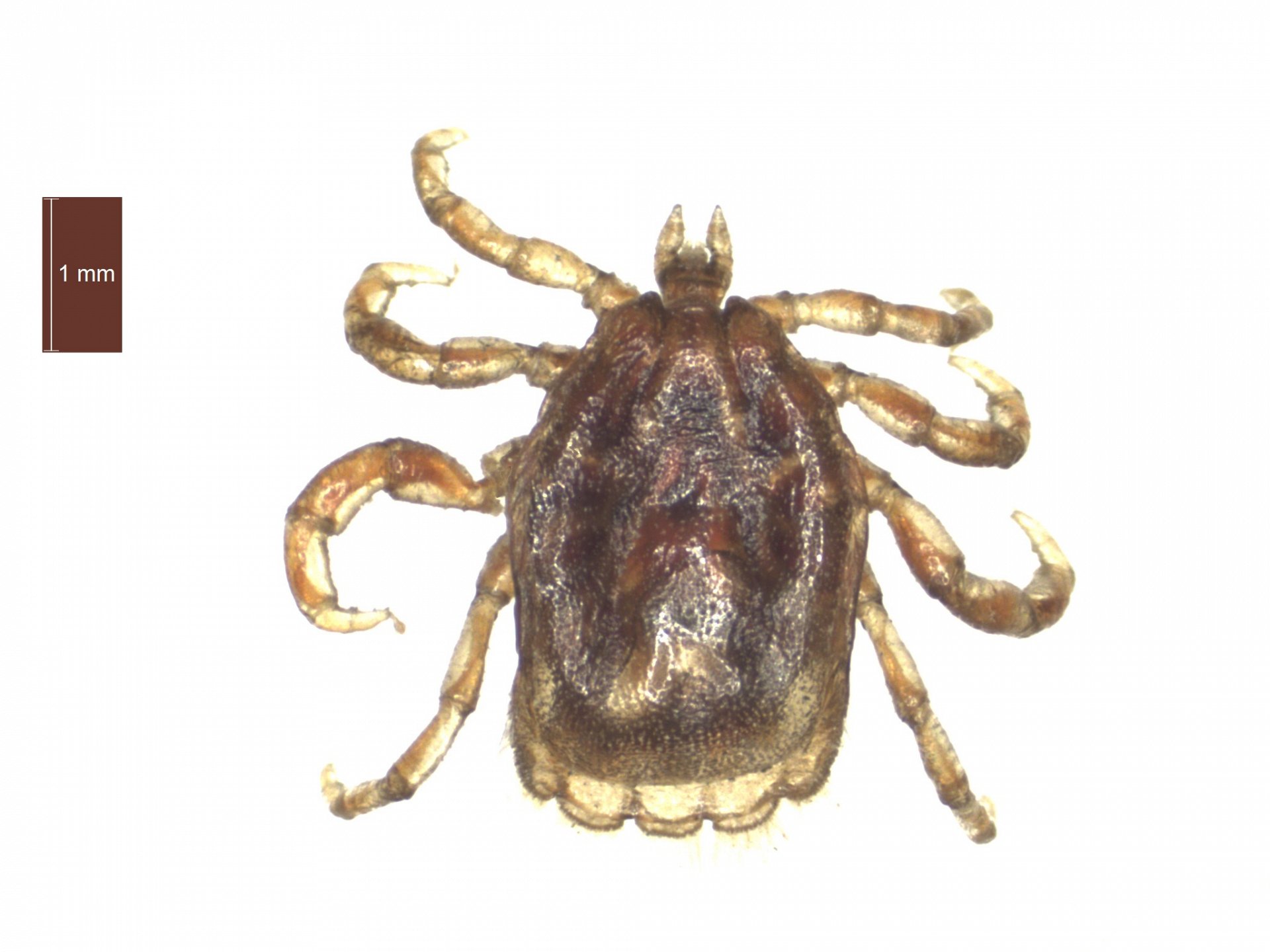
Adult female dorsal features
- Palps short and wide
- Cornua absent
- Tarsus I short and thick
- Spiracular plate visible in unfed females
- Unfed females can measure between 3.3mm-4.0mm in length
- Engorged females can measure up to 12mm in length
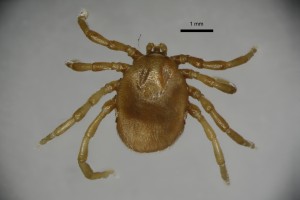
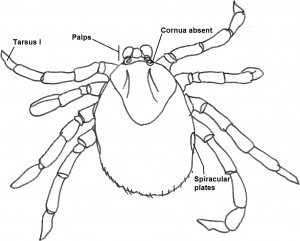
(Specimen courtesy of the Natural History Museum, London)
Adult female dorsal view (click on pictures for a close up)
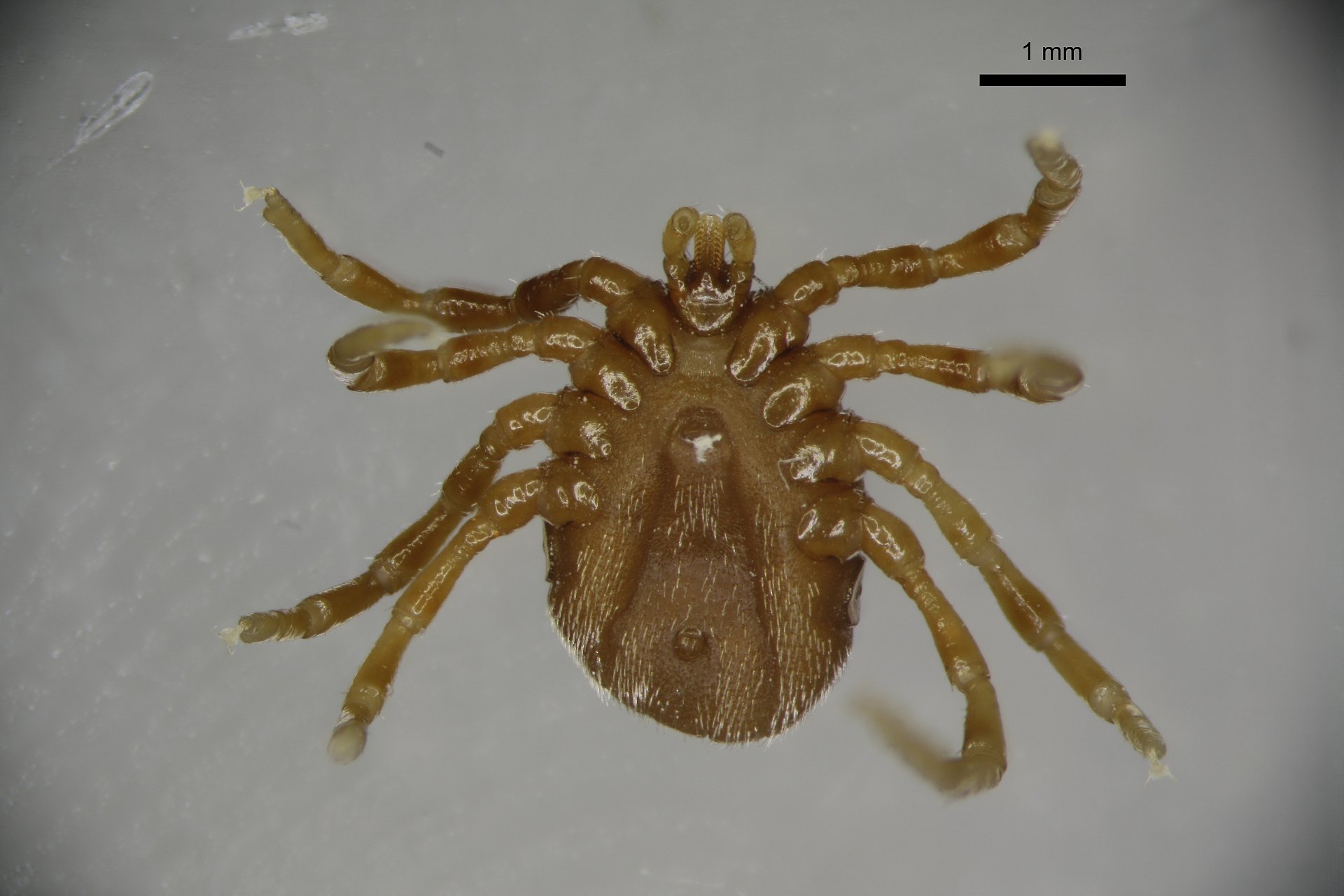
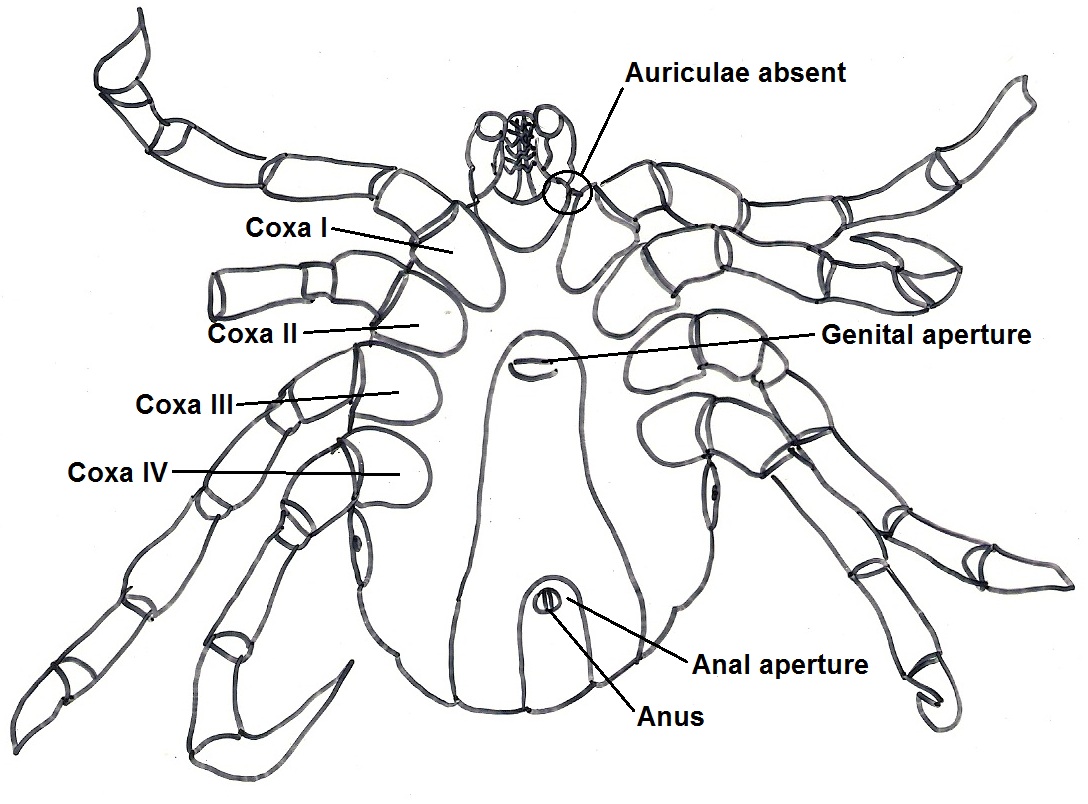
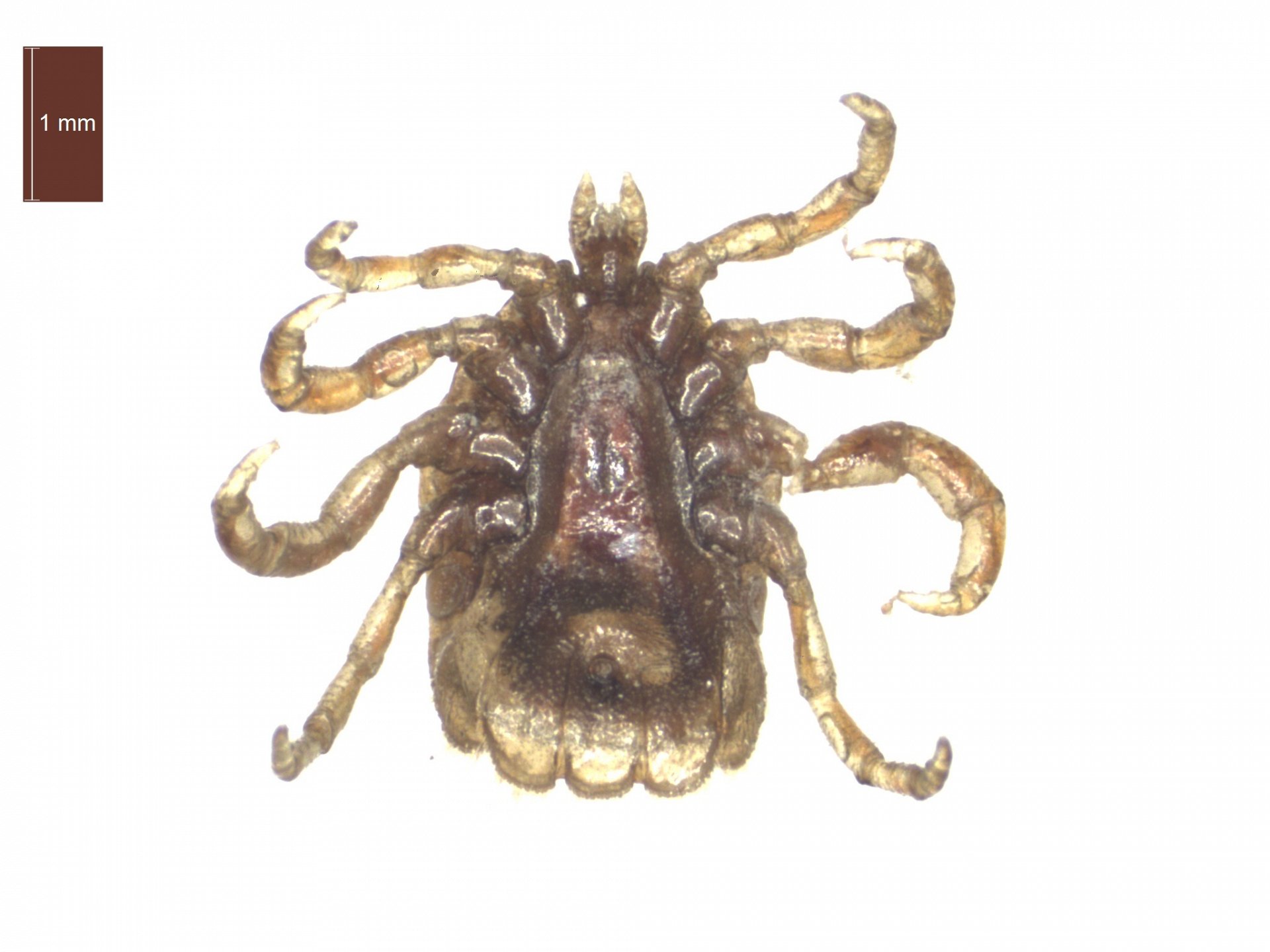
Adult female ventral features
- Auriculae absent
- Anal aperture heavily sclerotised
- Genital aperture located in between the second intercoxal space
- Coxae I: lack spurs
- Coxae II-IV: spurs absent
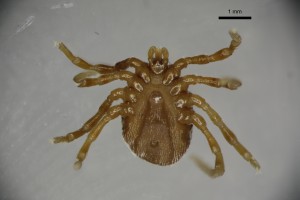
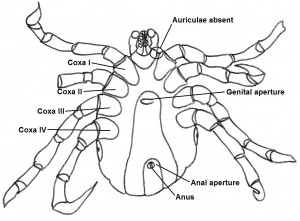
(Specimen courtesy of the Natural History Museum, London)
Adult female ventral view (click on pictures for a close up)
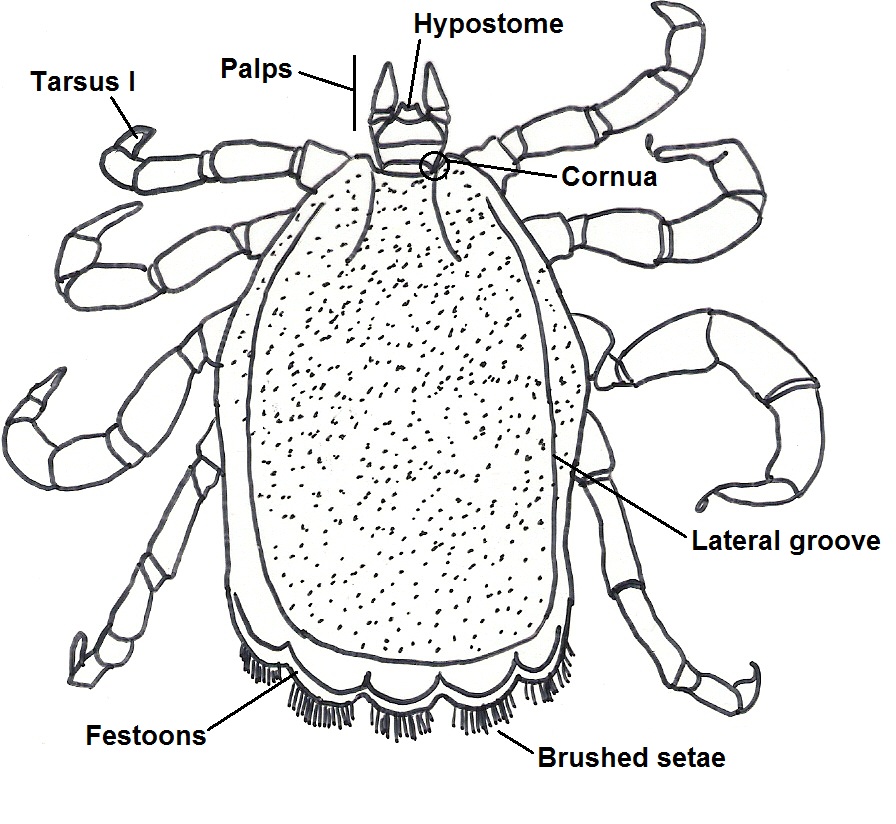
Adult male dorsal features
- Festoons present
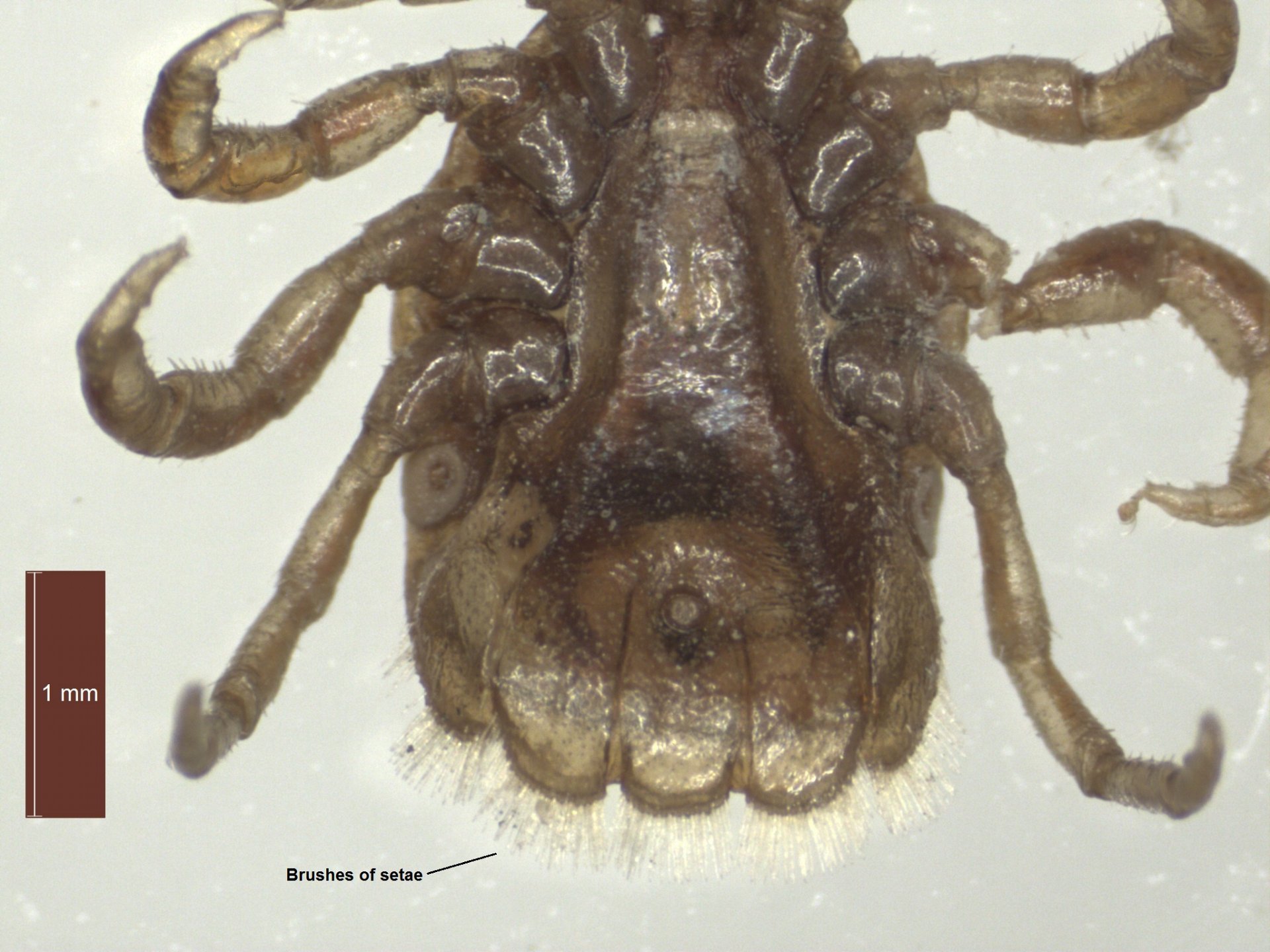
- Brushes of setae associated with festoons
- Palps slim; hypostome reduced
- Cornua lacking
- Tarsus I short and thick
- Males measure between 3.3mm-4.2mm in length
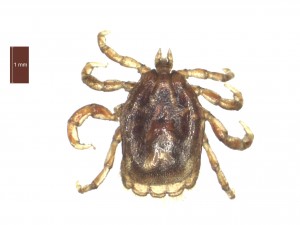
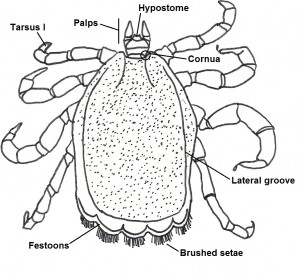
Adult male dorsal view- note the third limb is broken and facing backwards (click on pictures for a close up)
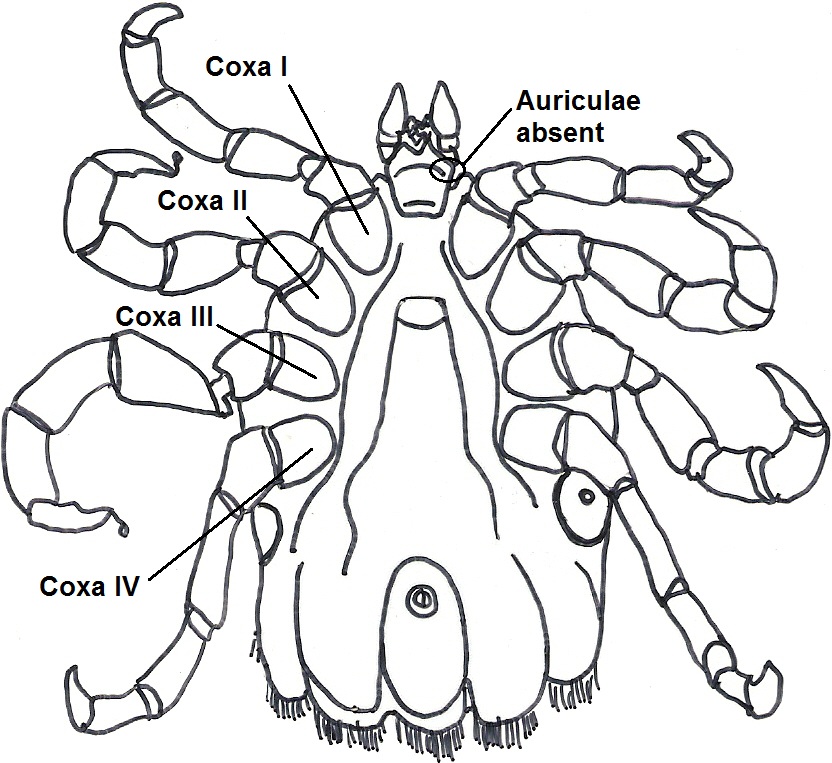
Adult male ventral features
- Auriculae absent
- Coxae I: lack spurs
- Coxae II-IV: spurs absent
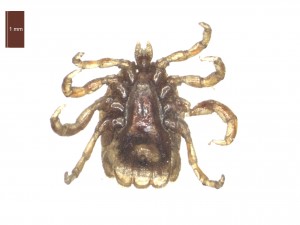
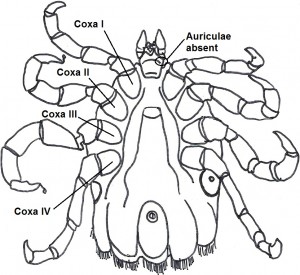
Adult male ventral view (click on pictures for a close up)
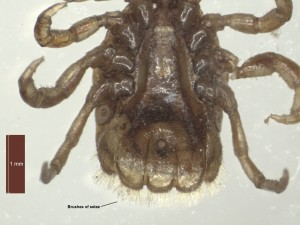
Posterior brush setae localised around the festoons (click on picture for a close up)