Also known as the Hedgehog tick
Hosts
Hedgehog, dog, cat, fox, sheep, horse
Distribution
UK, Ireland, France, Belgium, Holland, Denmark, Iceland, Norway, Germany, Poland, Switzerland, Italy, Spain
Ixodes hexagonus can be found in many different types of environments, ranging from forests, caves, above 1800m and in more urban settings, such as parks. This species is the most common tick found on cats and the second most common tick found on dogs.
Pathogenesis
Borrelia
Lyme borreliosis
Other pathogens and diseases associated with I. hexagonus include:
Babesia microti (human babesiosis)
Rickettsia conori (boutonneuse fever)
Description
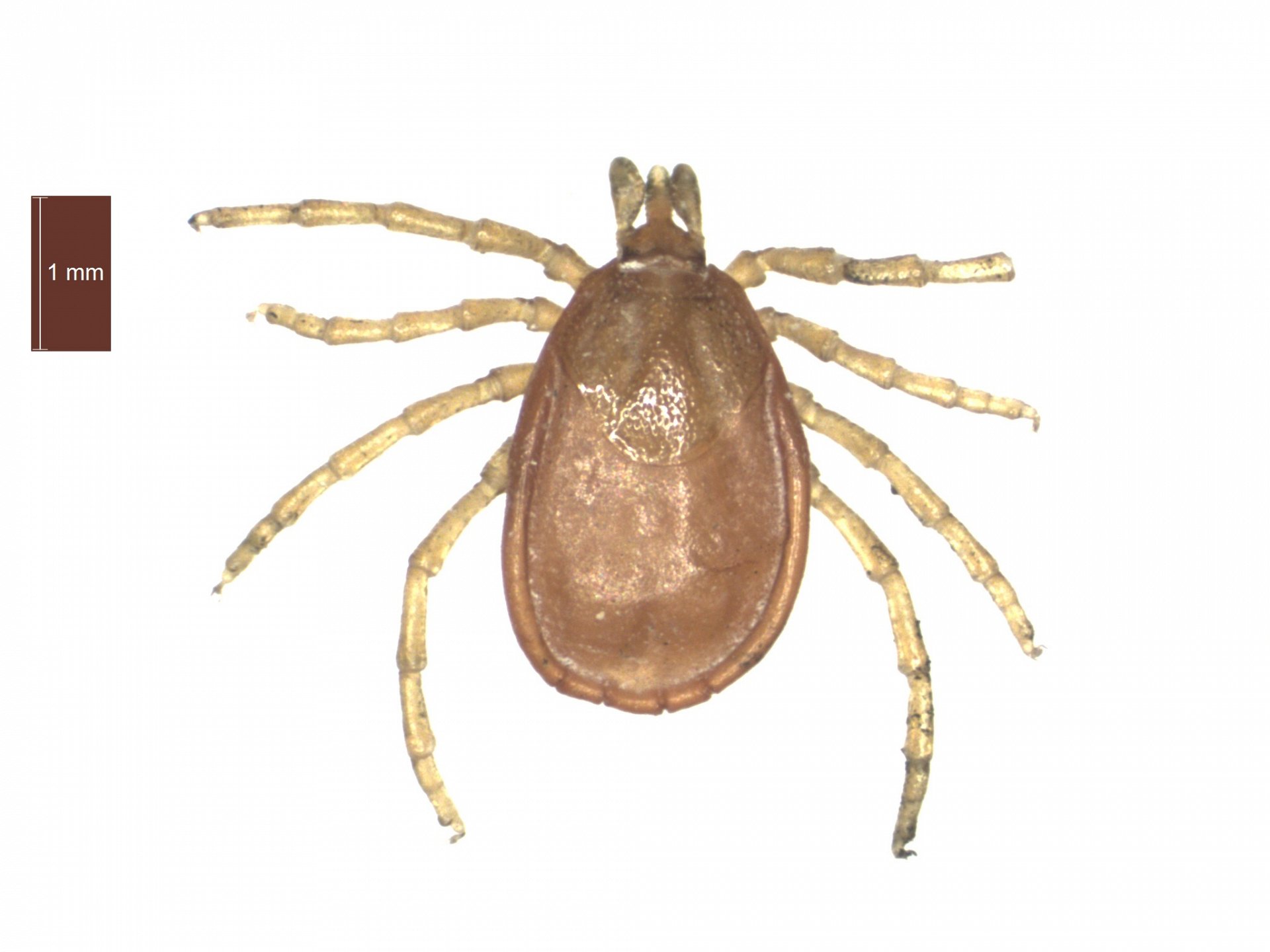
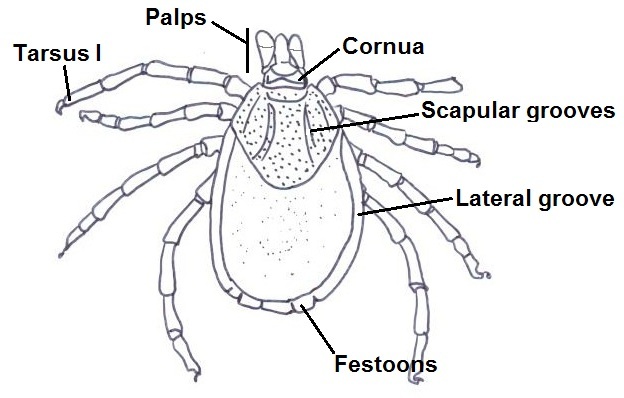
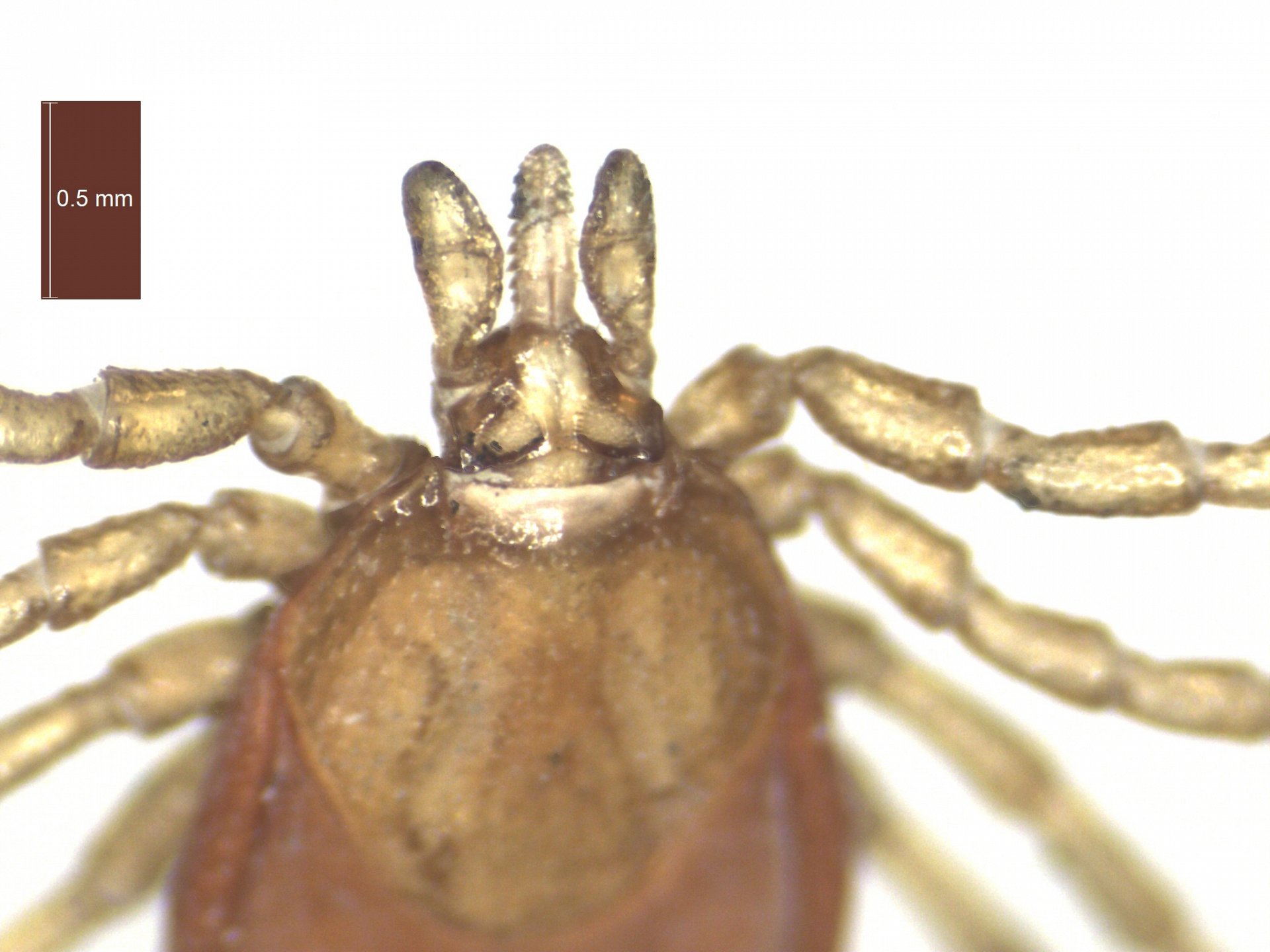
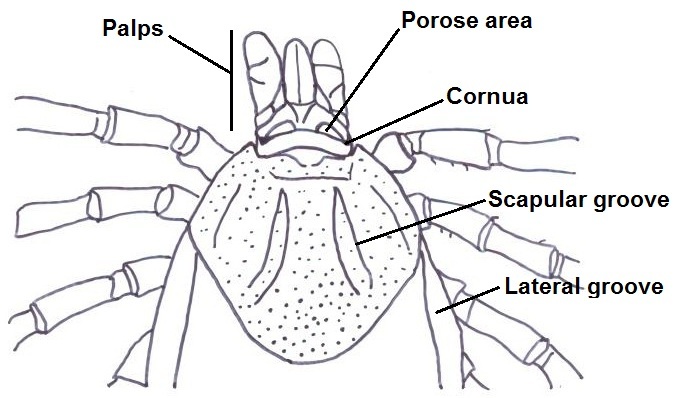
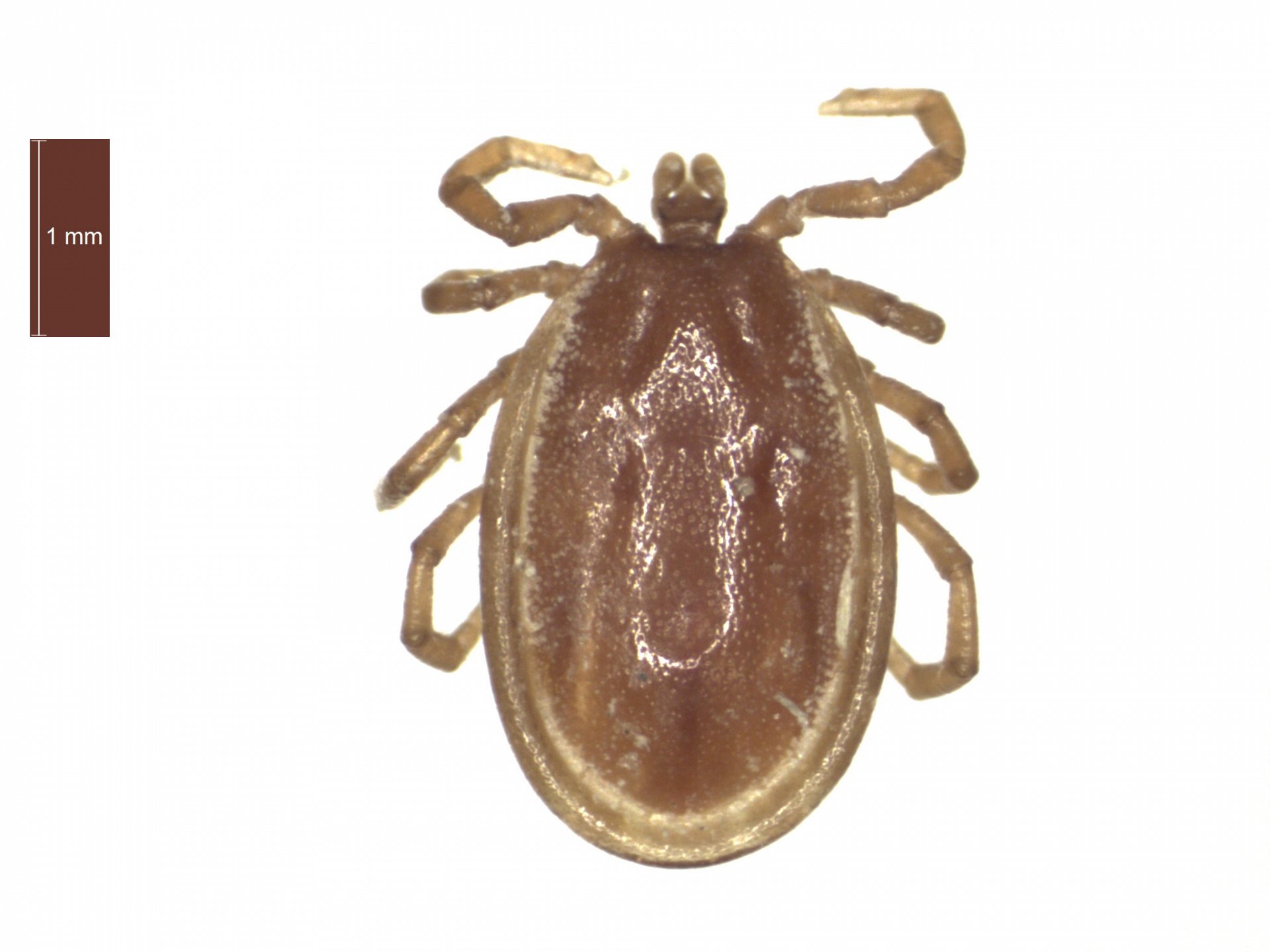
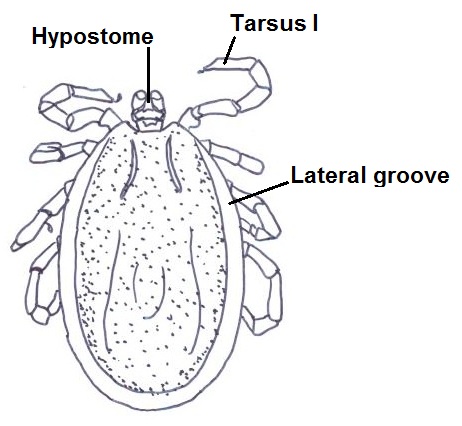
Adult female dorsal features
- Palps slope inwards
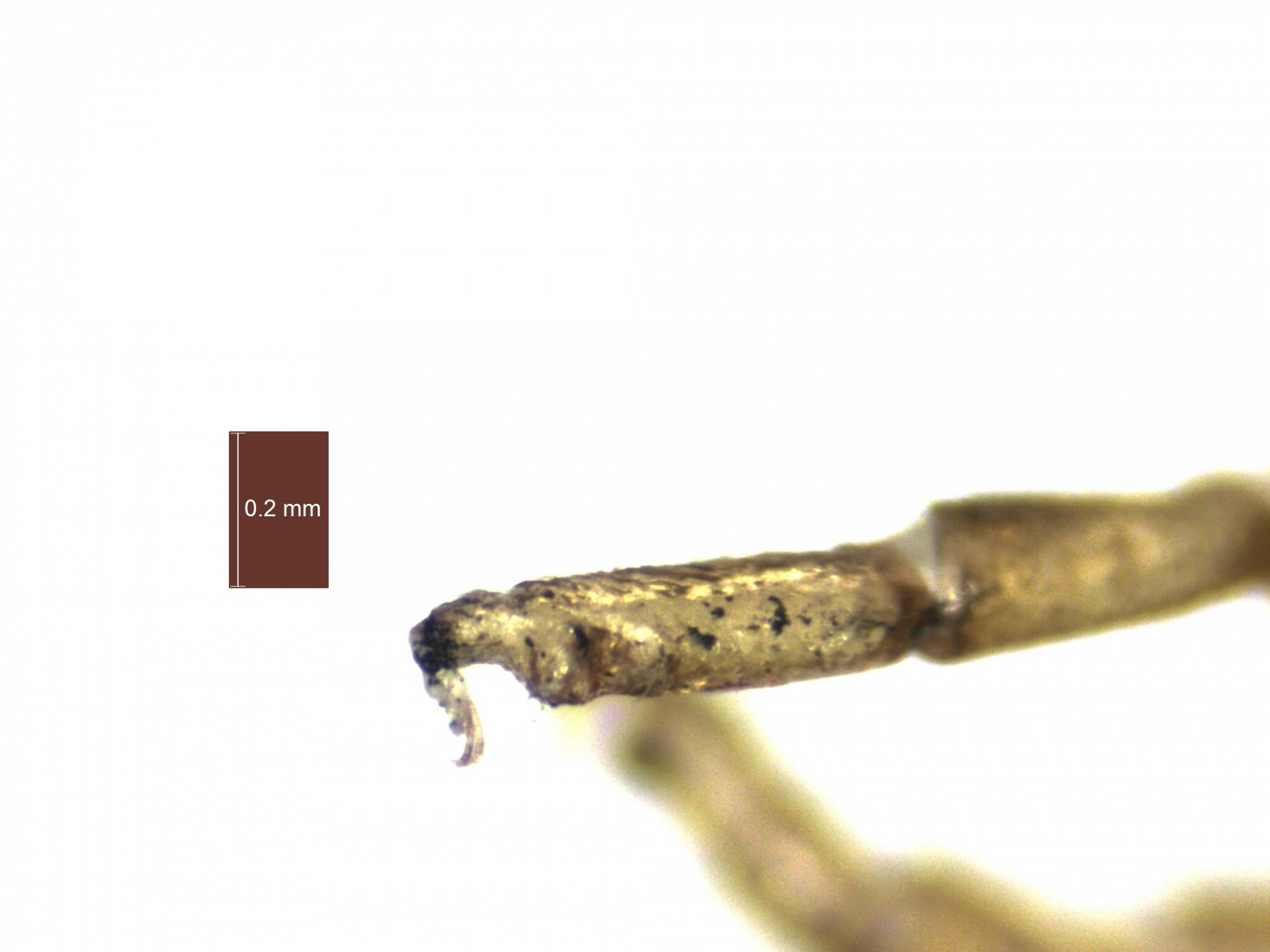
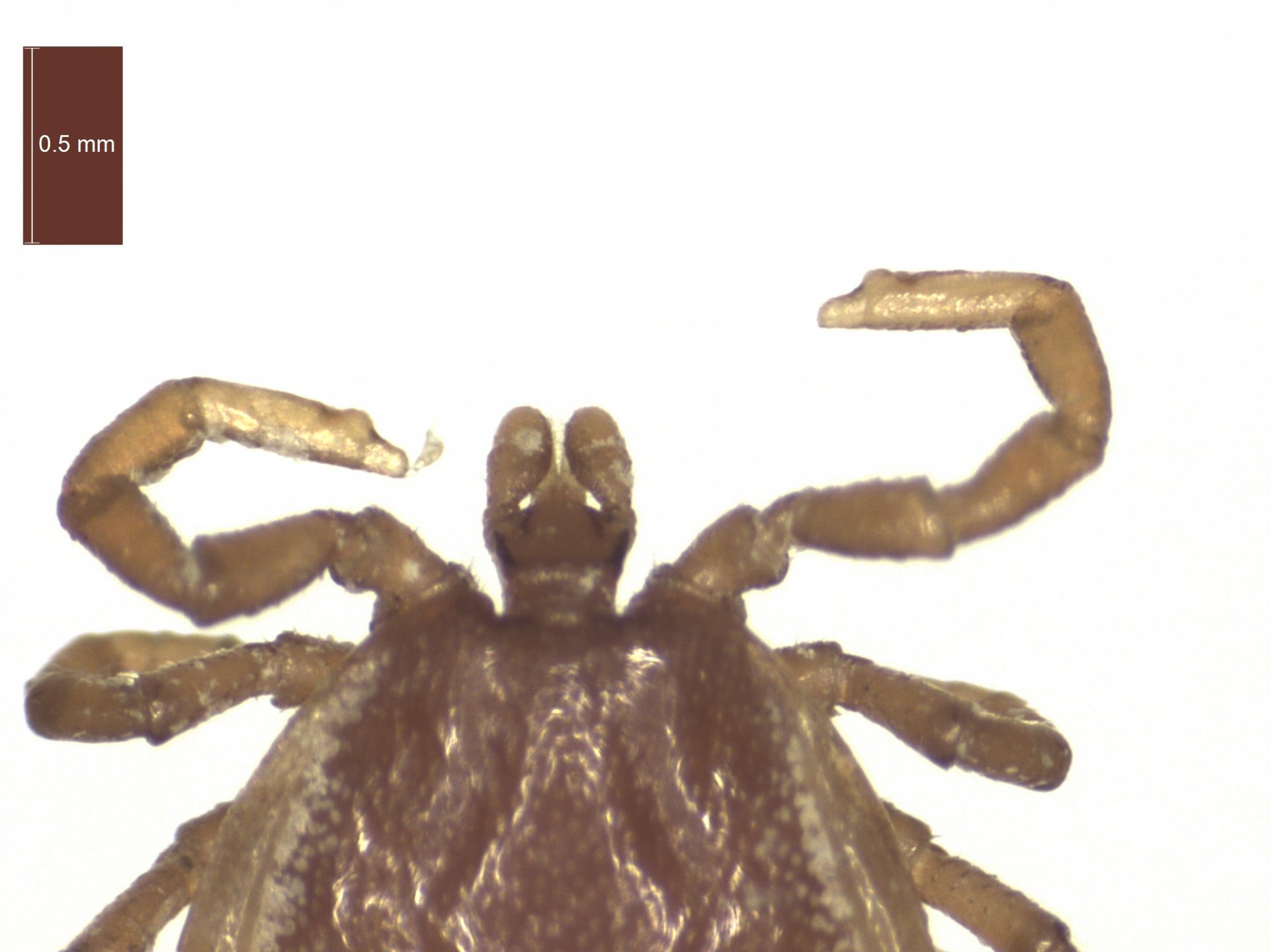
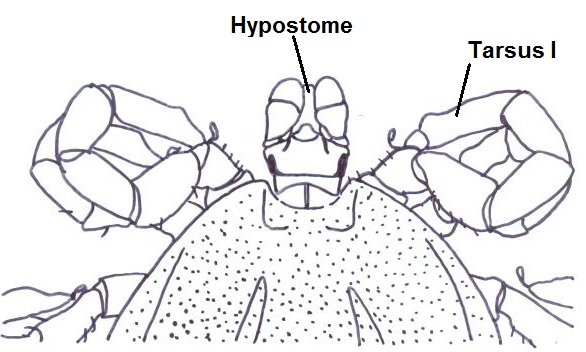
- Tarsi I are stepped
- Cornua triangular (not prominent)
- Length of unfed female ranges between 3.5mm-4.0mm
- Fully engorged females can measure up to 13mm in length
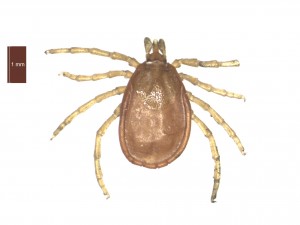
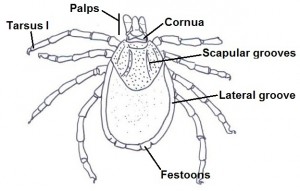
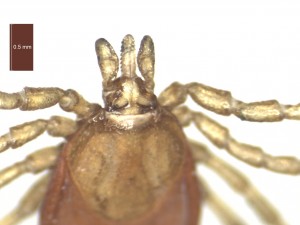
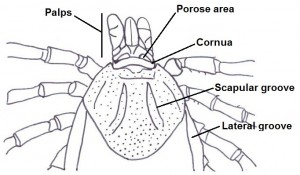
Adult female dorsal view and adult female close up of gnathosoma. (Click on pictures for a close up)
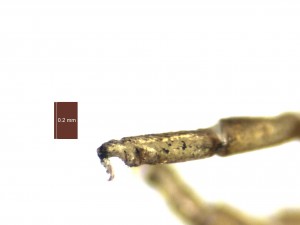
Close up of first Tarsus of the first leg. (Click on picture for a close up)
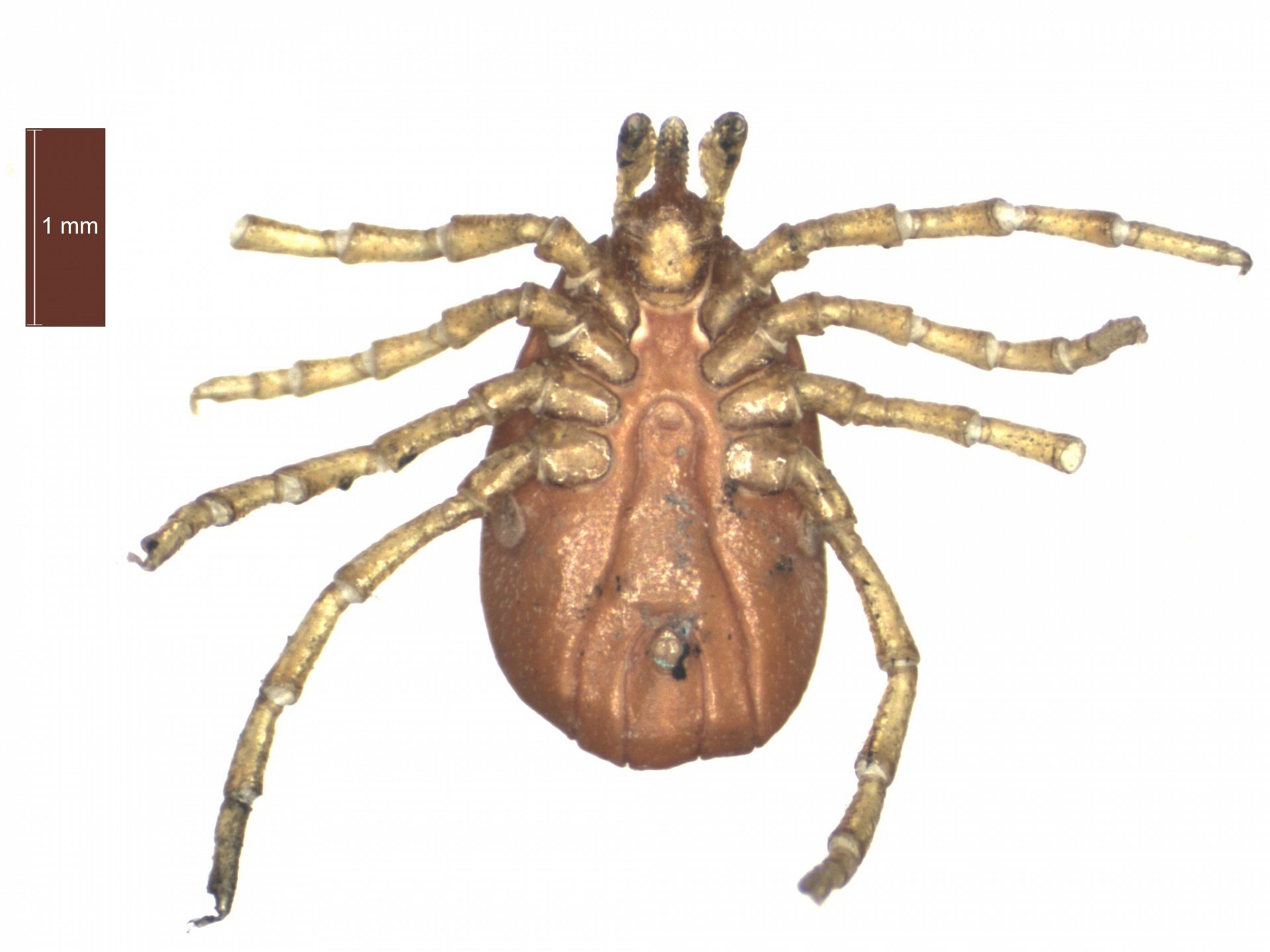
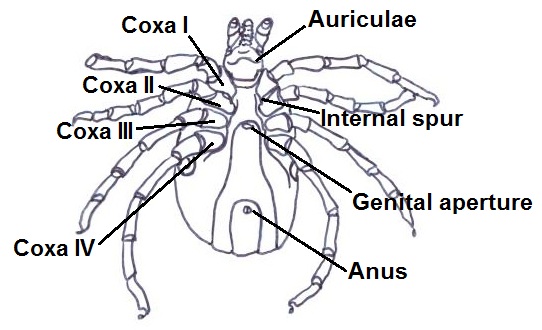
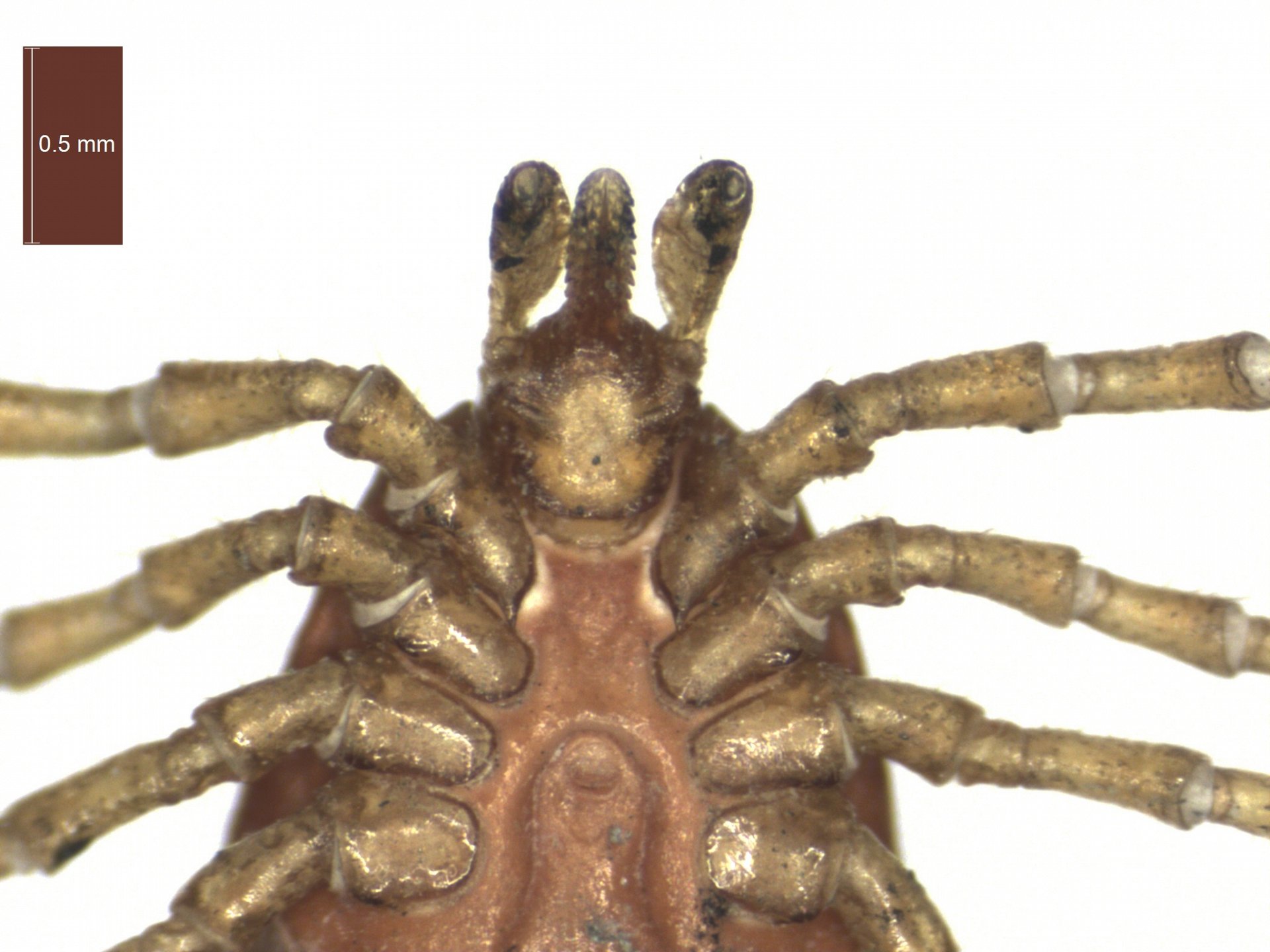
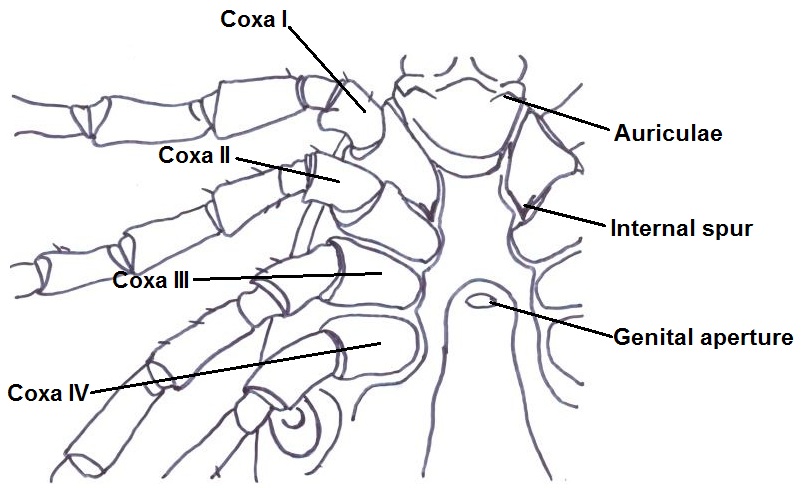
Adult female ventral features
- Auriculae are indistinct
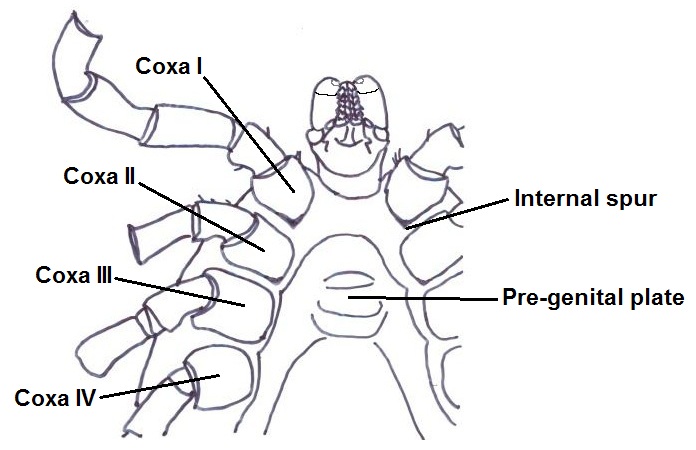
- Coxae I: short, distinct internal spur
- Coxae II-IV: indistinct external spurs
- Genital aperture position between coxae III
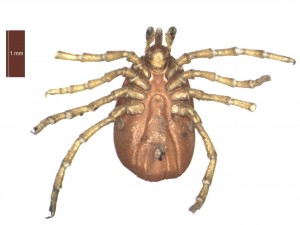
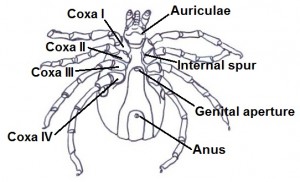
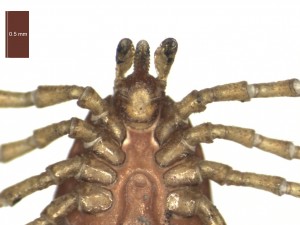
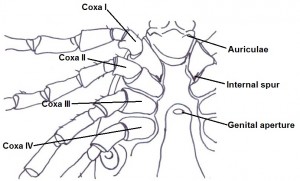
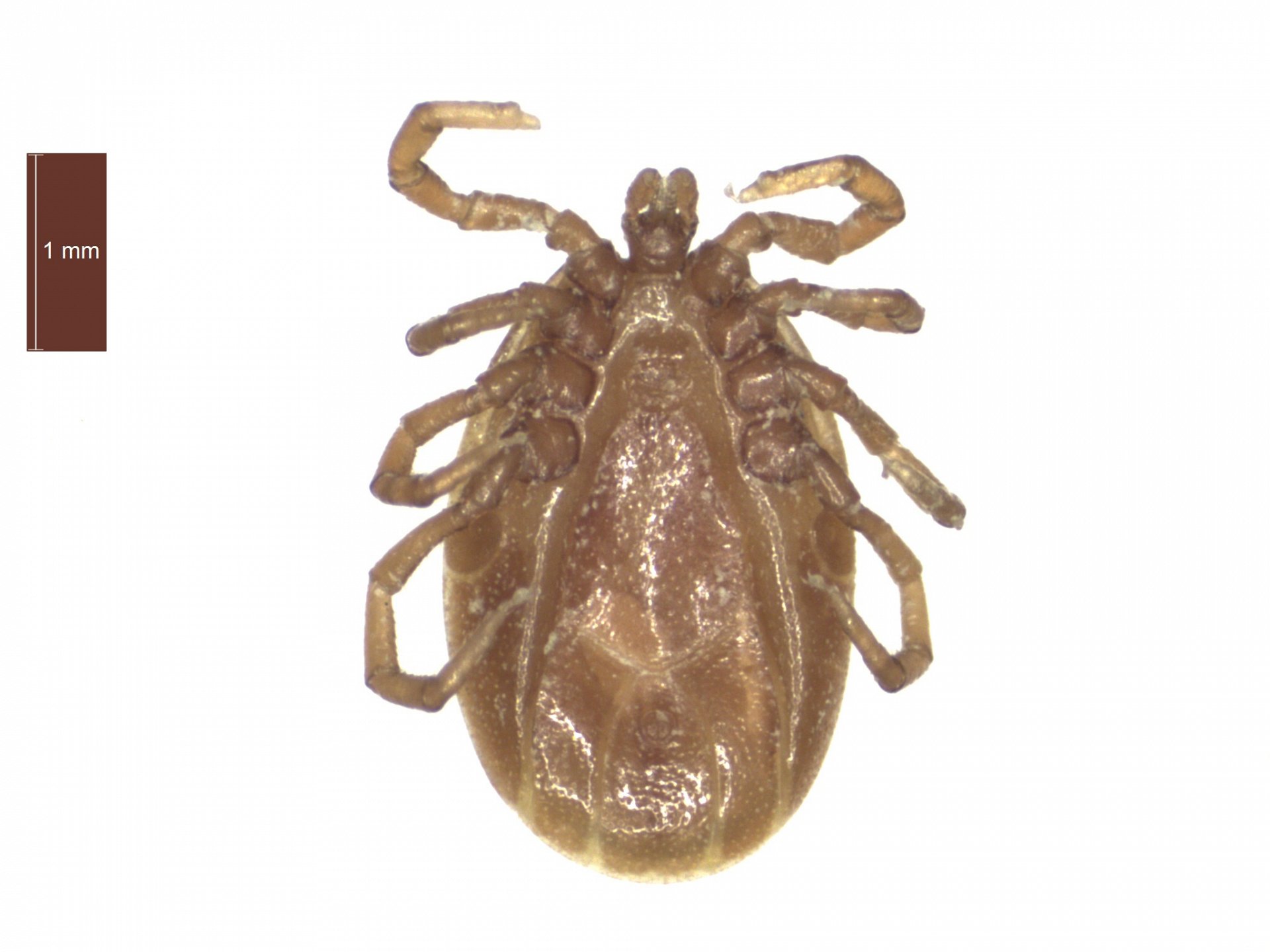
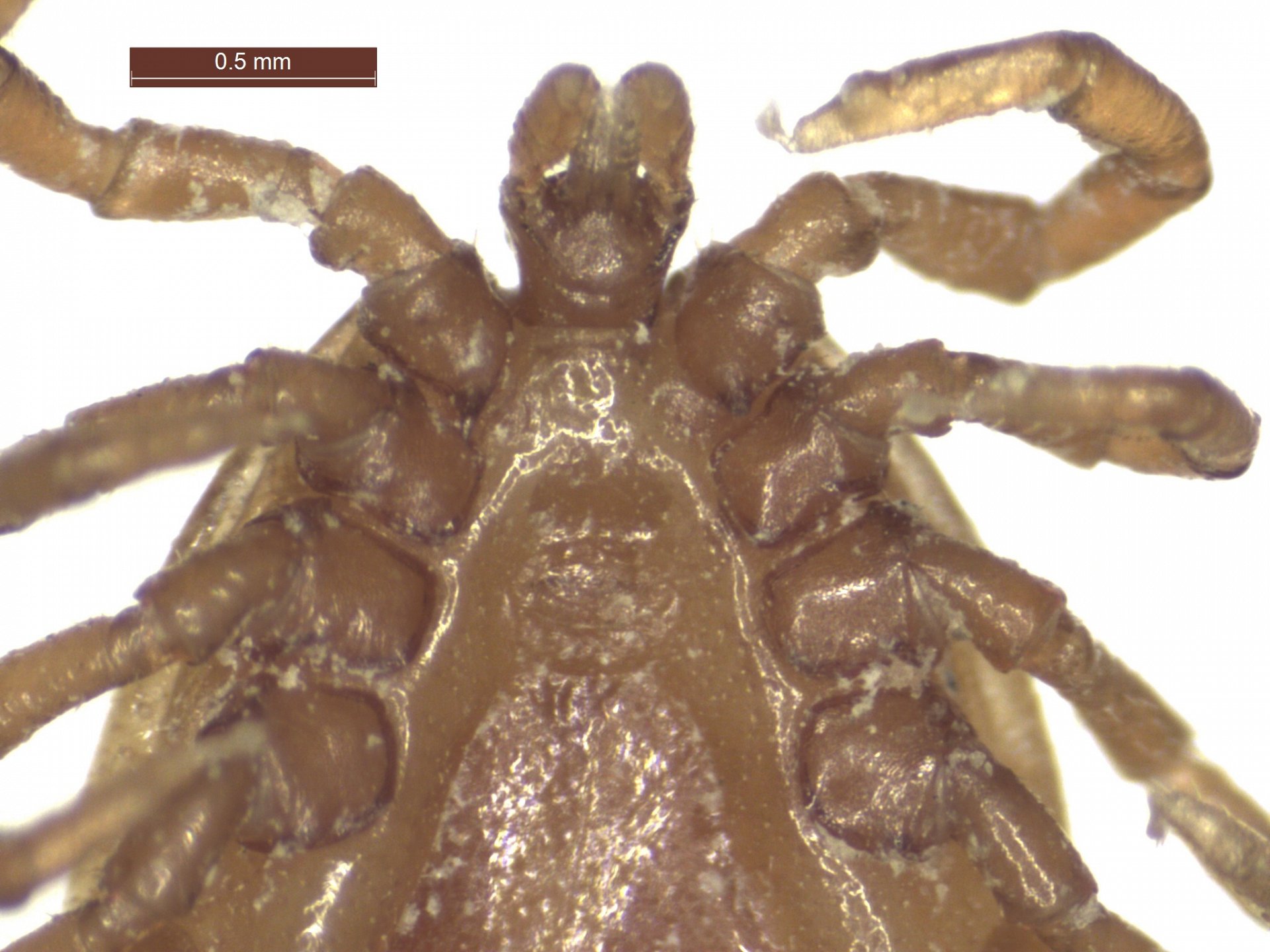
Adult female ventral view and adult female close up of coxae/ventral gnathosoma. (Click on pictures for a close up)
Adult male dorsal features
- Hypostome nearly toothless
- Body broad oval
- Tarsus I humped as in female
- Overall length ranges between 3.5mm-3.8mm
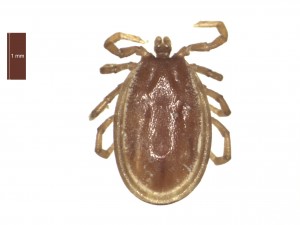
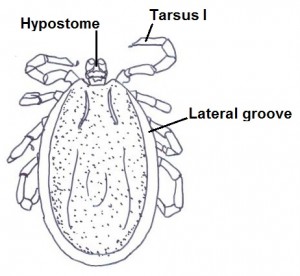
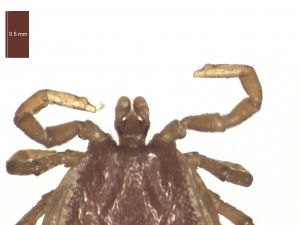
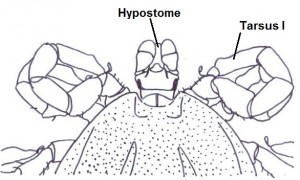
Adult male dorsal view and adult male close up of gnathosoma. (Click on pictures for a close up)
Adult male ventral features
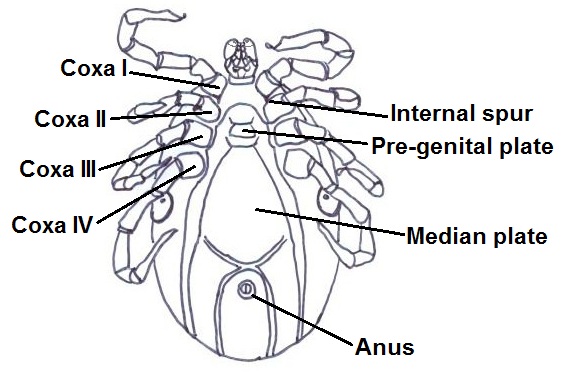
- Coxae I: prominent internal spur
- Coxae II-IV: indistinct external spurs
- Median plate almost as wide as it is long
- Pre-genital plate is hexagonal in shape
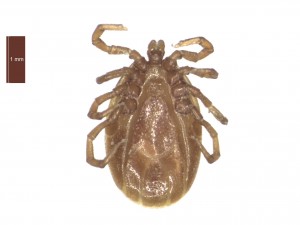
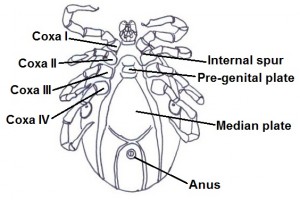
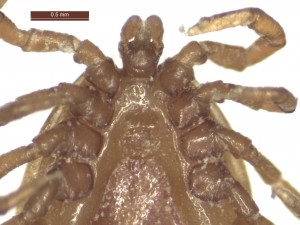
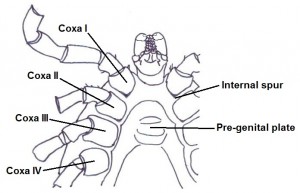
Adult male ventral view and adult male close up of coxae/ventral gnathosoma. (Click on pictures for a close up)