Also known as the Taiga tick
Hosts
Sheep, cattle, horse, dog, human
Distribution
Eastern Europe
Pathogenesis
Human: Russian Spring-Summer encephalitis and Lyme disease
Description
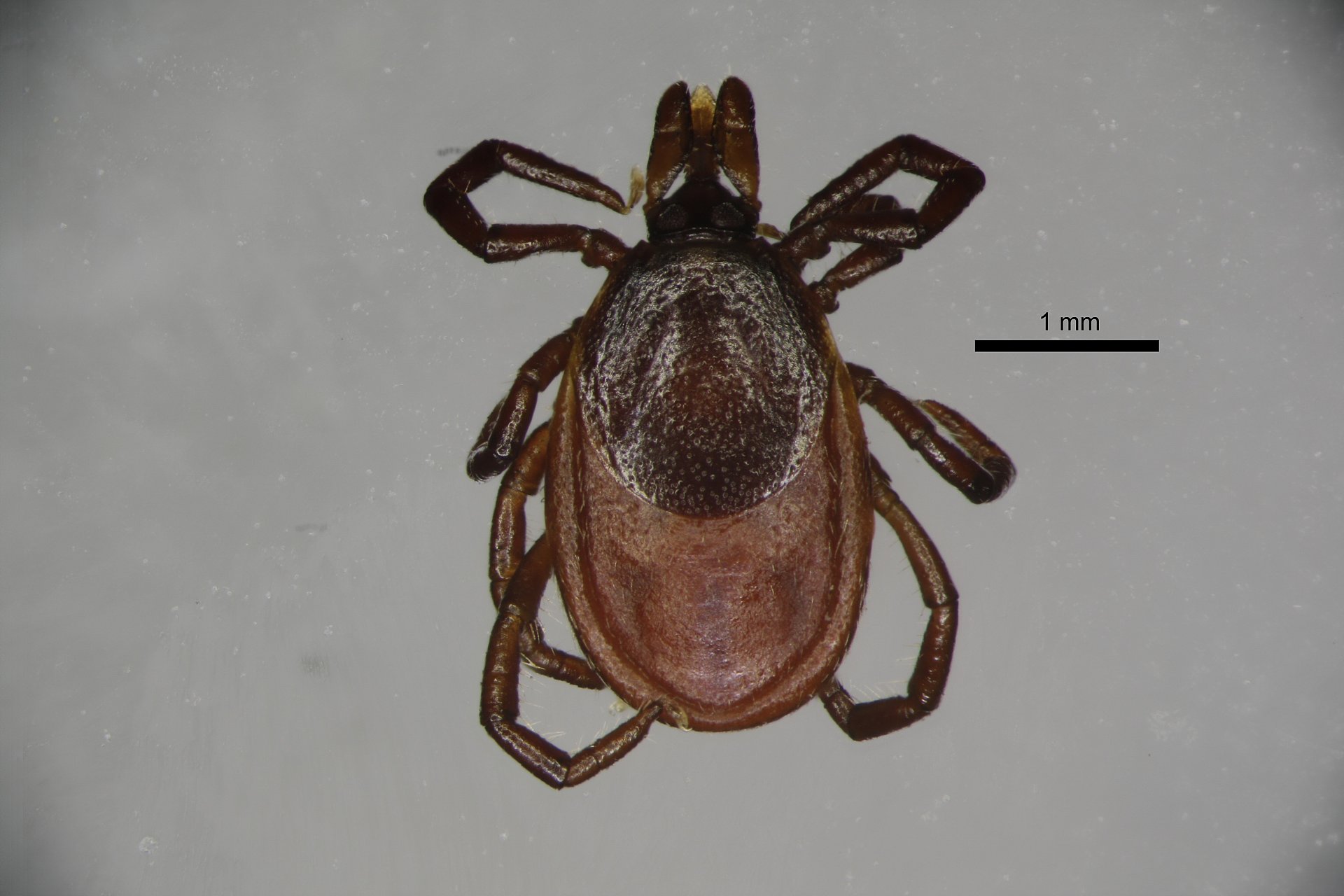
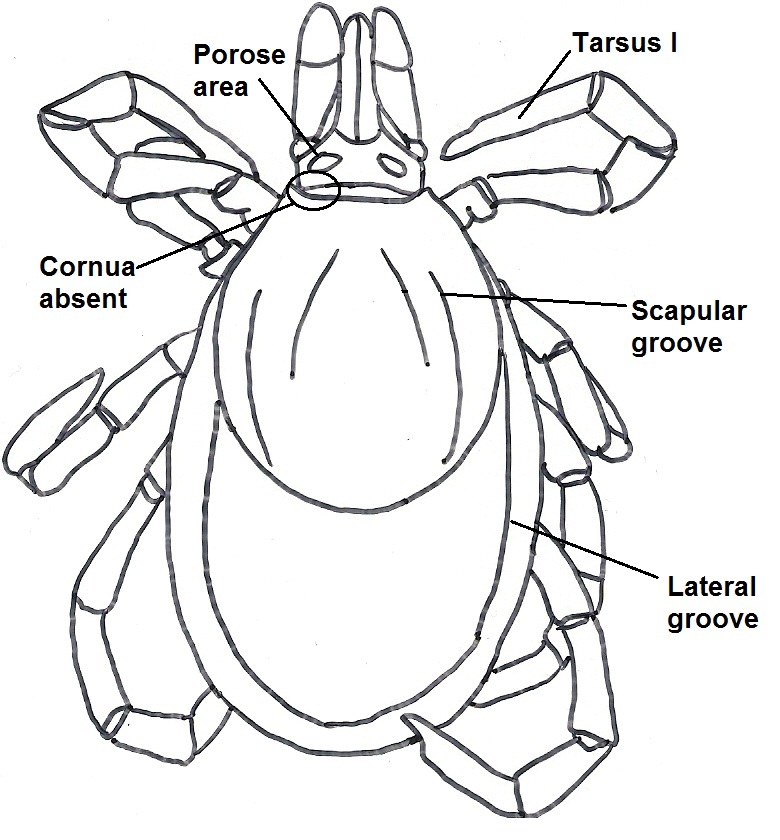
Adult female dorsal features
- Scapular grooves are present
- Cornua absent
- Tarsi I is tapered
- Punctations are distinct
- Unfed female can measure between 3.0mm and 3.6mm in length
- Engorged females can measure up to 11mm in length
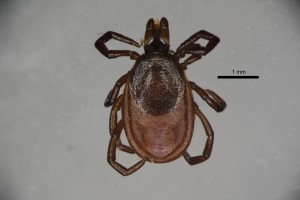
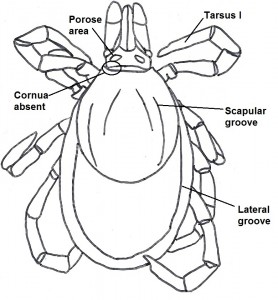
(Specimen courtesy of the Natural History Museum, London)
Adult female dorsal view. (Click on picture for a close up)
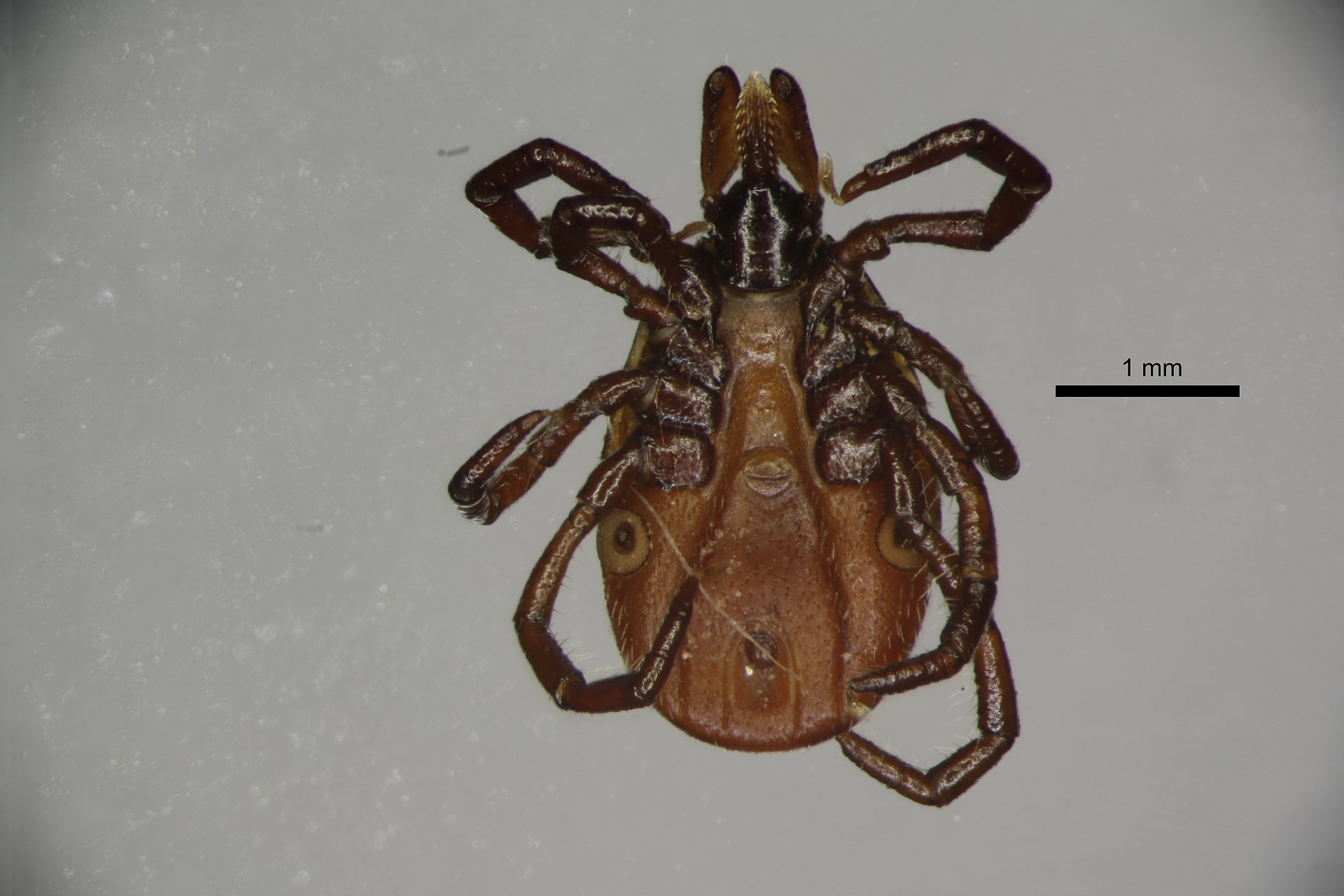
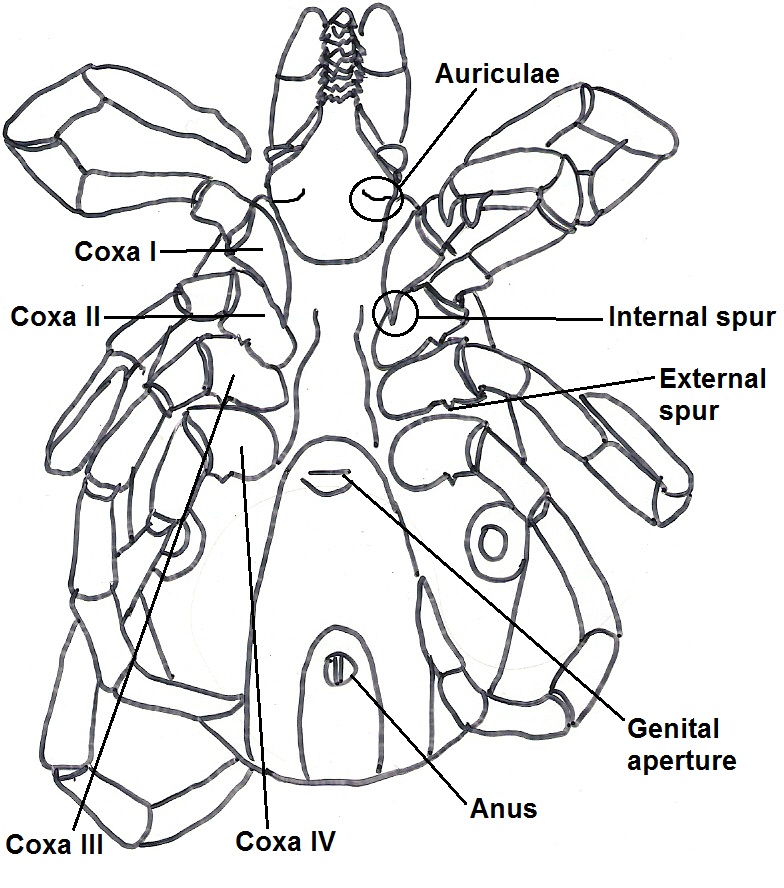
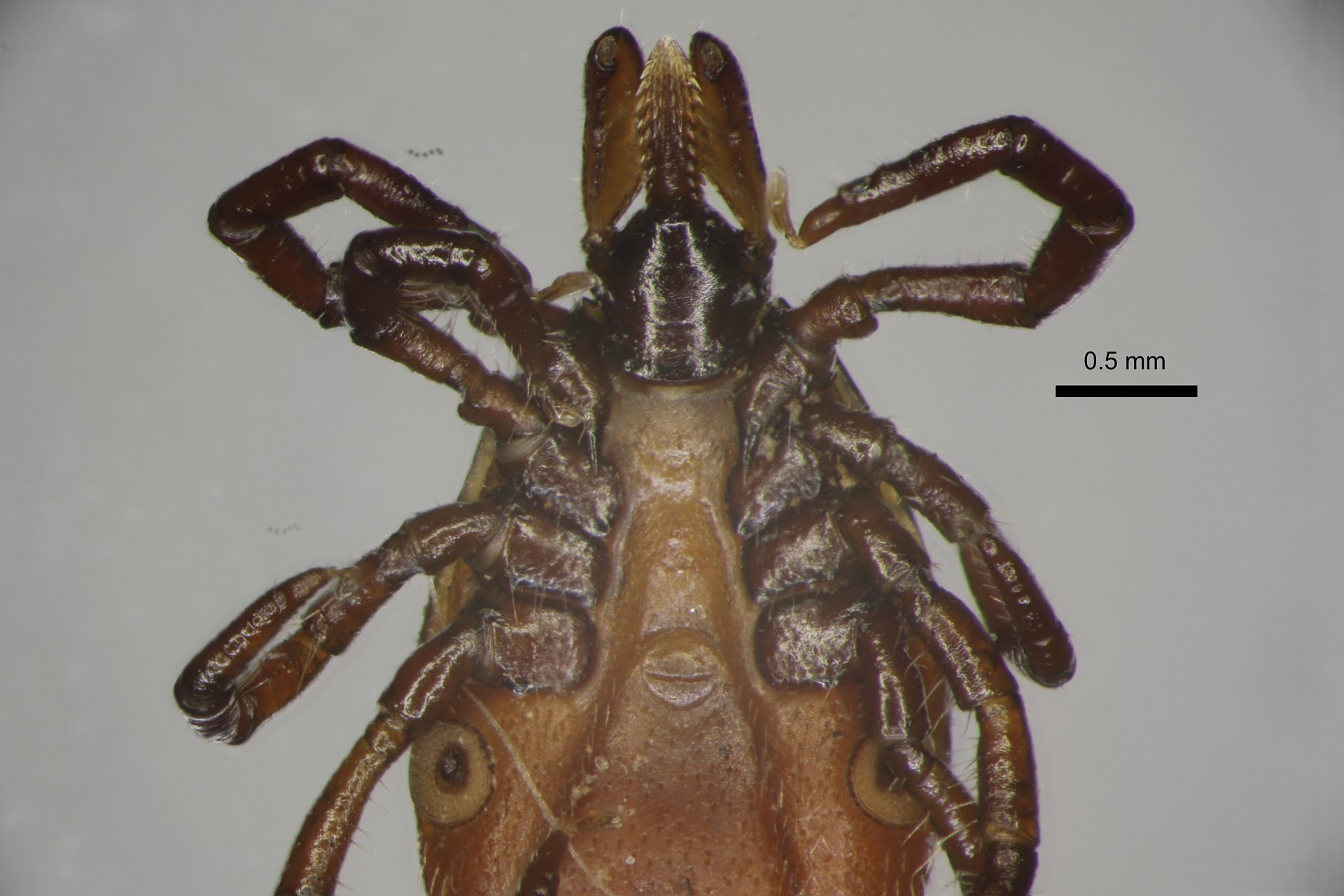
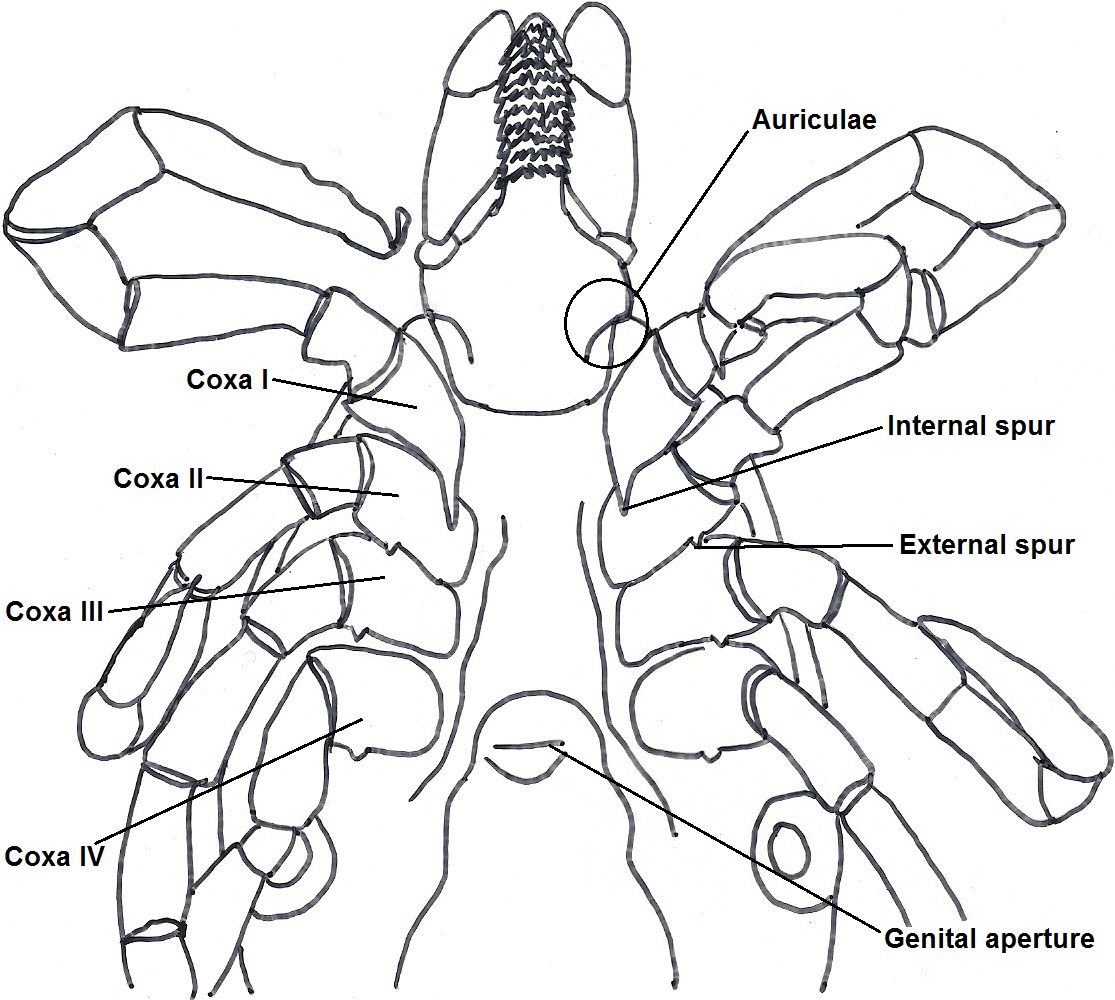
Adult female ventral features
- Auriculae are distinct
- Coxae I: long and distinct internal spurs
- Coxae II-IV: indistinct external spurs
- Genital aperture positioned between coxae IV
- Same as Ixodes ricinus except genital opening is straight or wavy
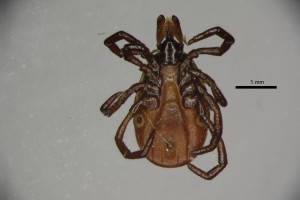
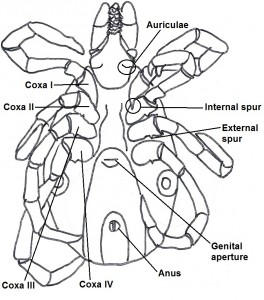
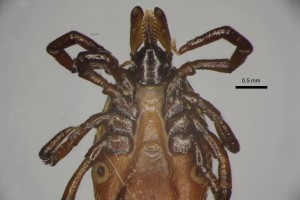
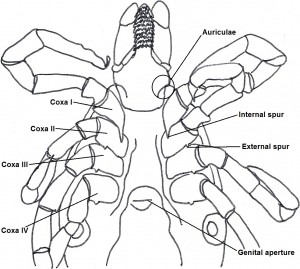
(Specimen courtesy of the Natural History Museum, London)
Adult female ventral view. (Click on picture for a close up)
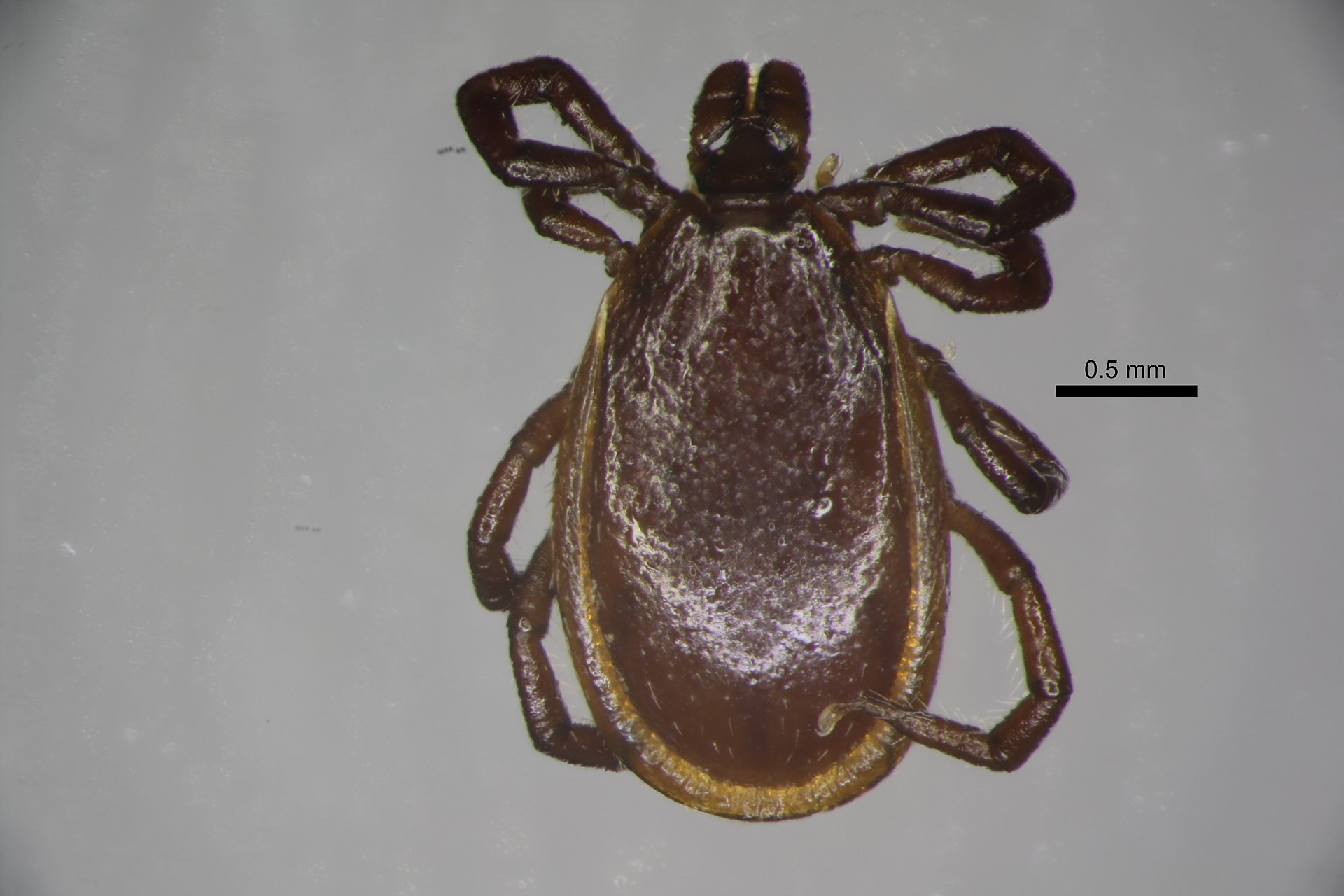
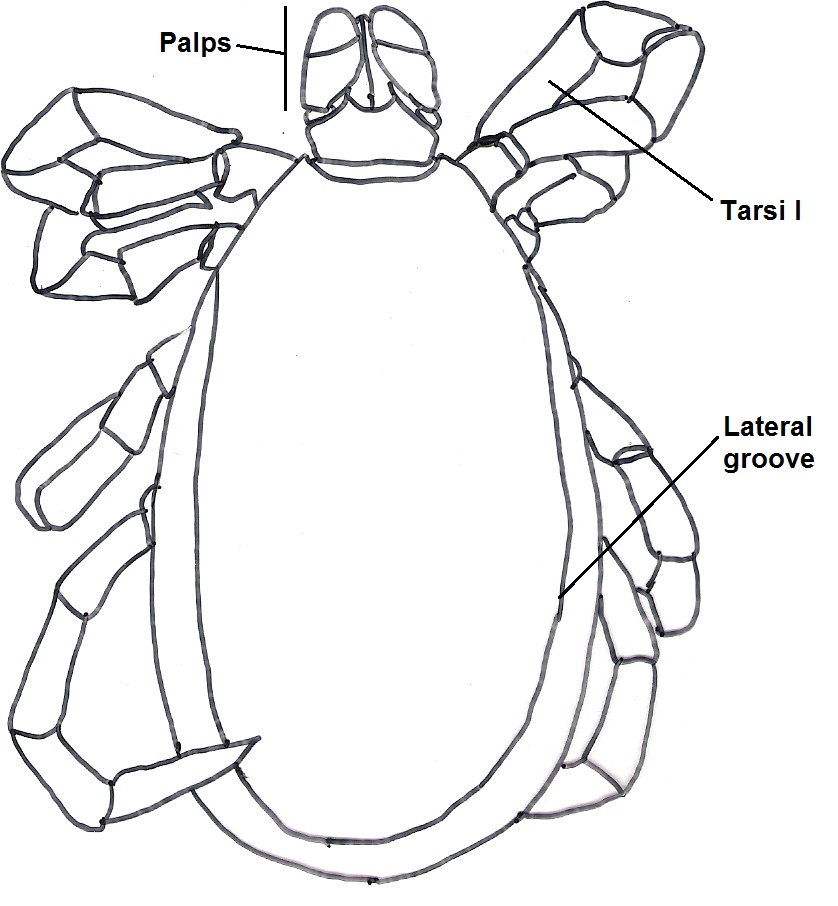
Adult male dorsal features
- Palps are small
- Tarsi I tapered
- Punctations are distinct
- Length of Male can range between 2.4mm-2.8mm
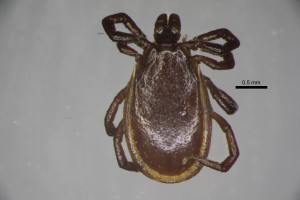
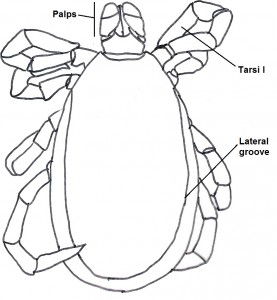
(Specimen courtesy of the Natural History Museum, London)
Adult male dorsal view. (Click on picture for a close up)
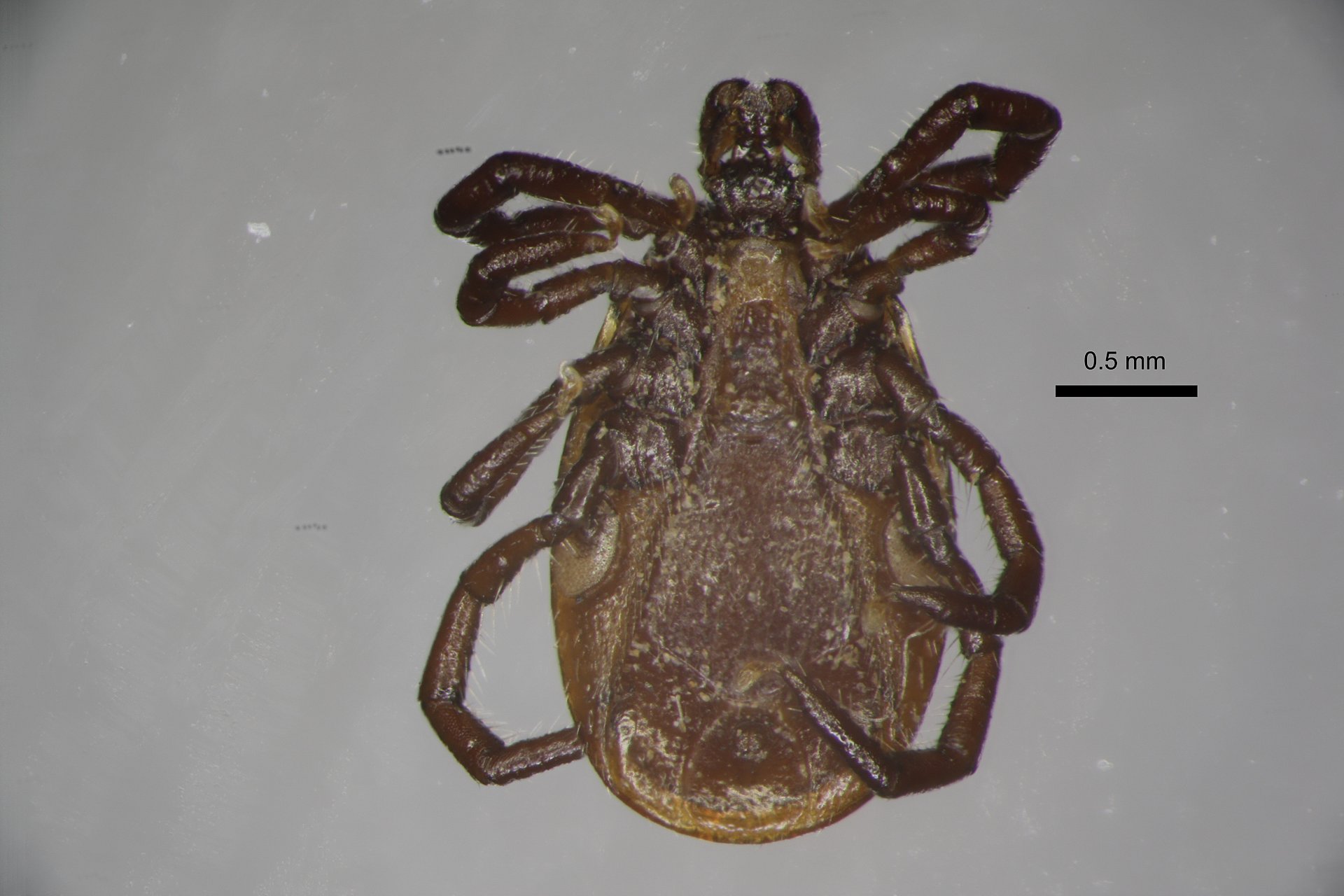
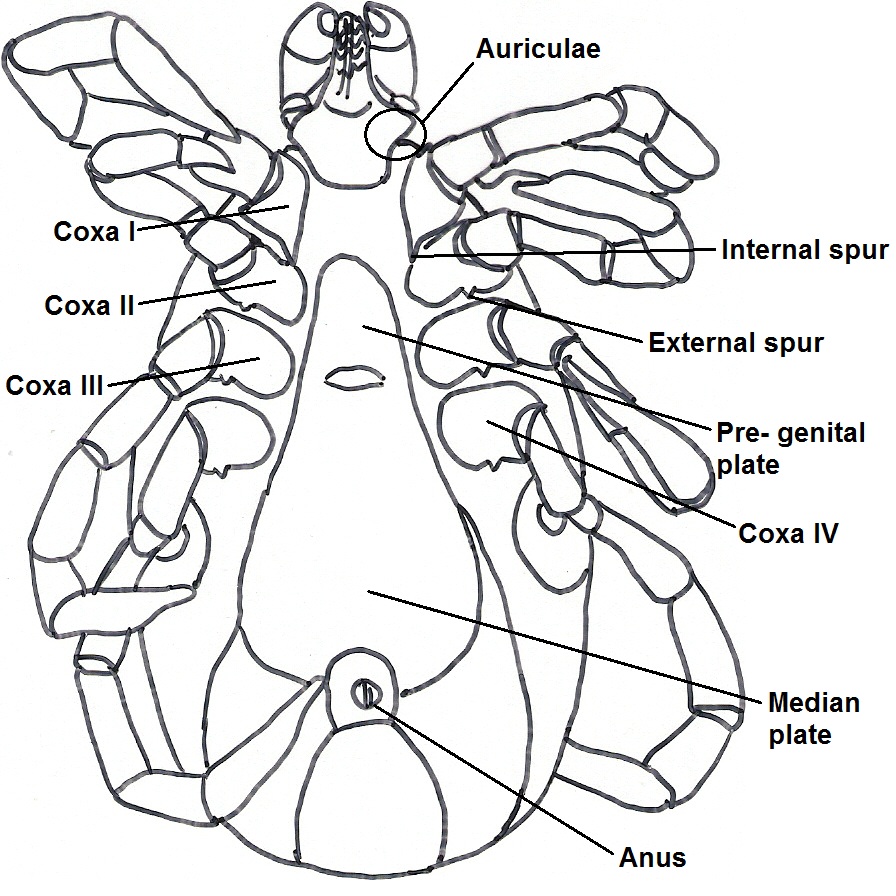
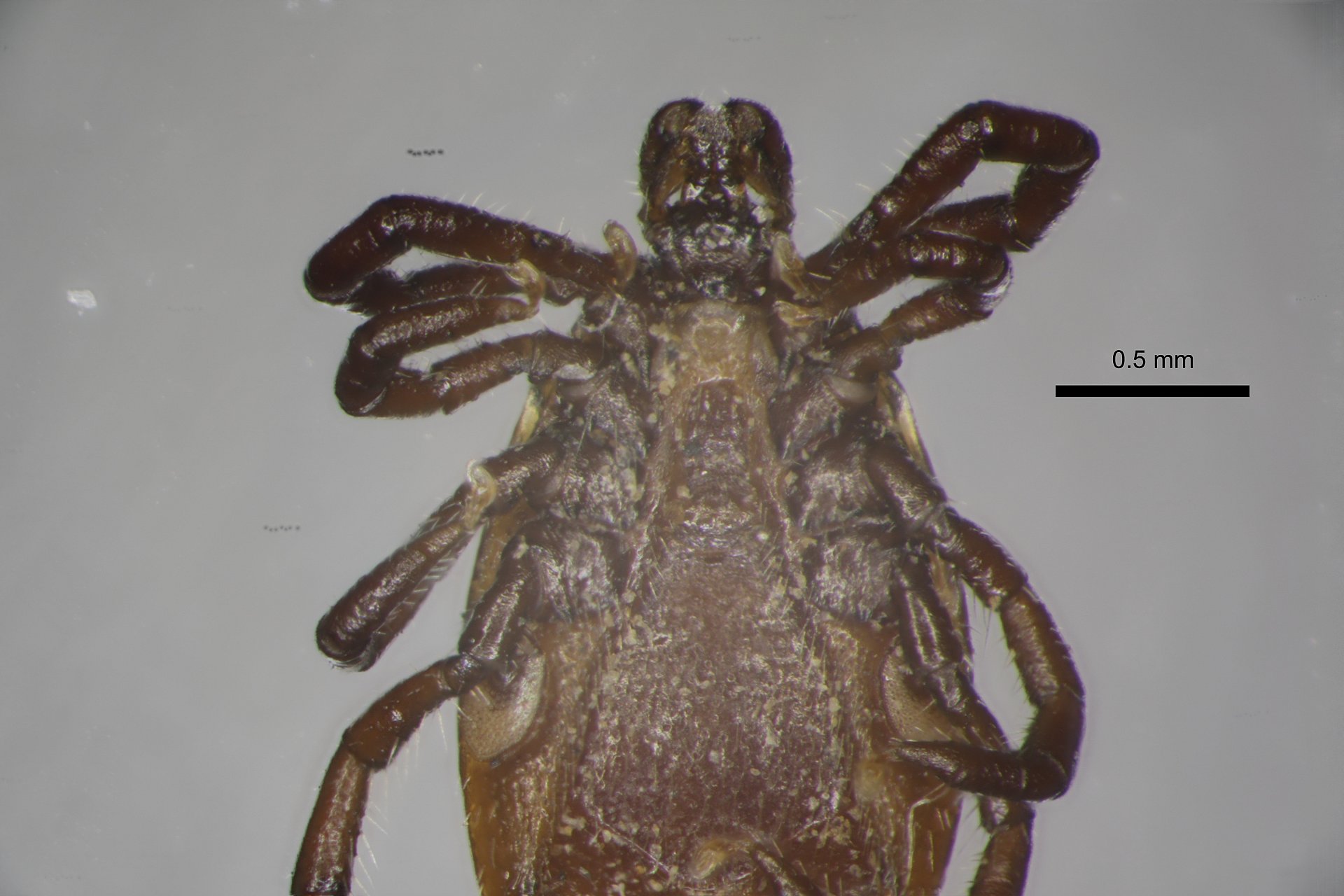
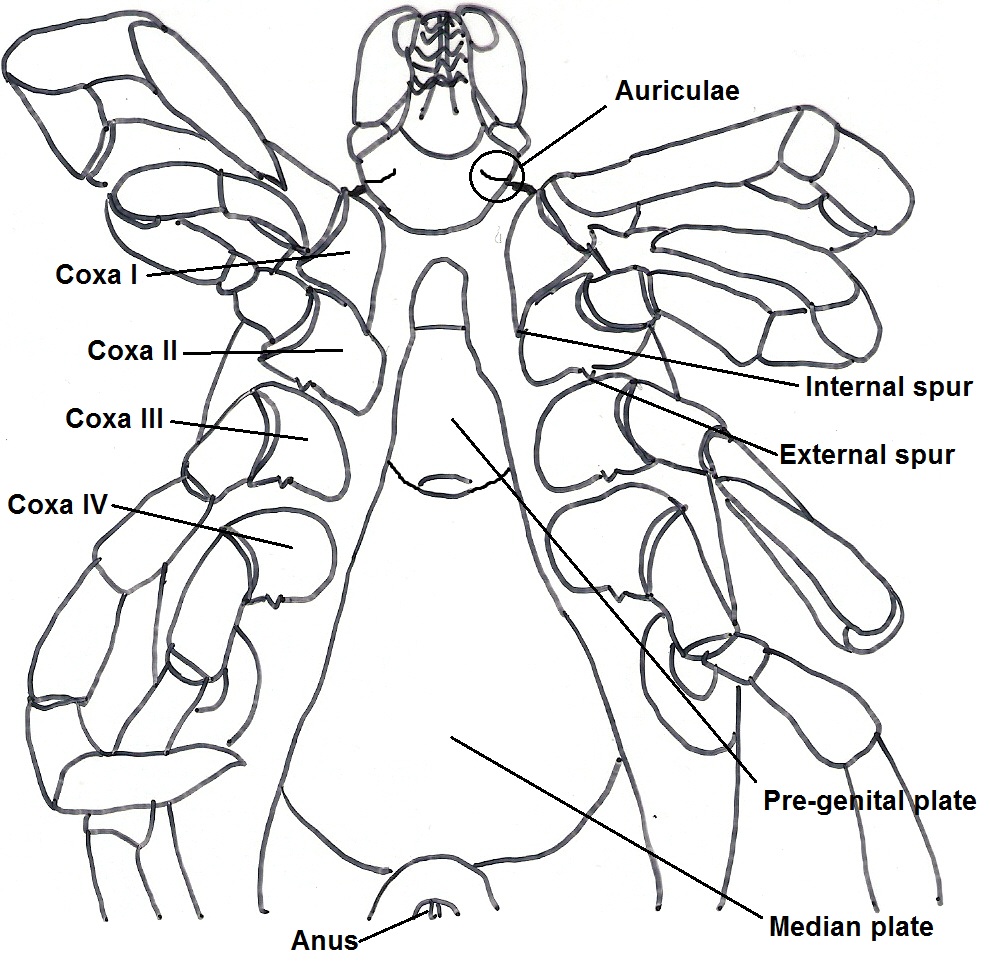
Adult male ventral features
- Auriculae are distinct
- Coxae I: long and distinct internal spurs
- Coxae II-IV: indistinct external spurs
- Pre-genital plate approx. 2x as long as it is broad
- Median plate long and narrow
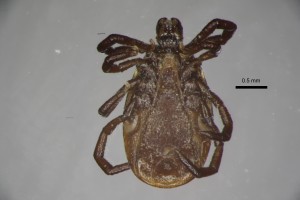
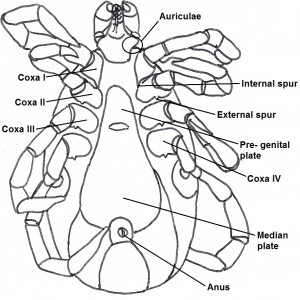
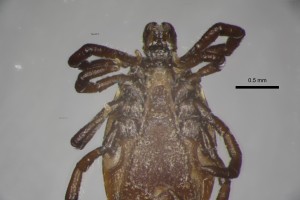
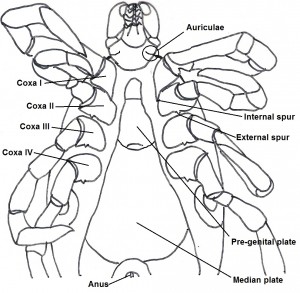
(Specimen courtesy of the Natural History Museum, London)
Adult male ventral view. (Click on picture for a close up)